
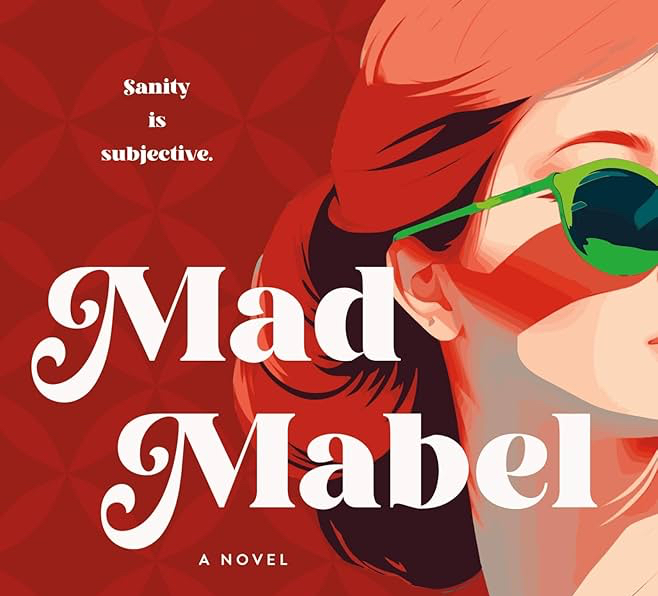
Domestic thrillers have a formula, and Sally Hepworth has spent a decade perfecting it: take a seemingly ordinary suburban setting, drop in a woman with secrets, apply pressure until everything cracks.
It works because Hepworth understands that the most terrifying thing isn’t a stranger, it’s someone you’ve already let in. Mad Mabel keeps that instinct and does something more daring with it.
The premise announces itself with the novel’s best line: there are two kinds of people no one ever suspects of murder: little girls and old ladies. Elsie Mabel Fitzpatrick is both, depending on which timeline you’re in.
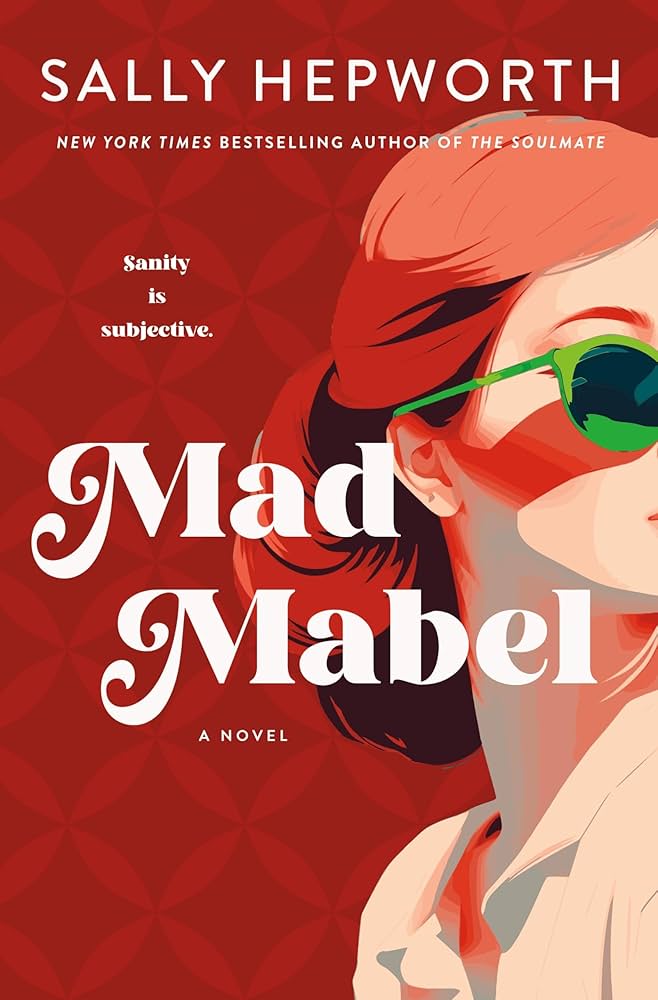
At eighty-one, Mabel is a fixture on Kenny Lane, the kind of gruff, minding-everyone’s-business neighbor who people tolerate rather than love. In her youth, she was Mabel Waller, the youngest Australian ever convicted of murder. She was a girl whose disfigured appearance and social aloofness made her the town’s preferred scapegoat long before any crime was committed.
Mabel has spent six decades building a new life under a new name. Then a neighbor turns up dead, and everything she’s hidden begins surfacing again.
The dual-timeline structure—alternating between the “then” of Mabel’s traumatic childhood and the “now” of Elsie’s present-day unraveling—is Hepworth’s most emotionally sophisticated to date. The “then” chapters function as a slow accumulation of dread, building a portrait of how a community constructs a monster out of a misunderstood girl.
A cruel nickname, a convenient accusation, the natural human tendency to need someone to blame. Consequently, by the time the present-day mystery takes hold, you’re not just asking who killed the neighbor; you’re asking what truth is worth, and who gets to tell it.
Hepworth handles the emotional weight with more care than she has before. This is a writer known for dark charm and propulsive plotting, and those qualities are fully intact here.
But Mad Mabel is also, unexpectedly, a book about grief, found family, and the strange tenderness that can exist between the elderly and the very young. Much of that tenderness runs through Persephone, the seven-year-old neighbor who attaches herself to Elsie with the magnetic certainty of a child who knows, instinctively, that she has found something real.
Because Persephone is a quiet masterstroke. Children in thrillers tend to exist as plot devices or as symbols of innocence at risk. Here, she serves as moral evidence — her fierce, uncomplicated affection for Elsie functions as the novel’s most persuasive argument. There’s a reason, Hepworth seems to suggest, that small children and animals always know.
And so, the present-day framing device—Elsie choosing to tell her story for the first time, to two young YouTube journalists—takes a beat to find its footing. However, it ultimately pays off by forcing Elsie’s voice into the foreground. Her narration is sarcastic, watchful, and frequently very funny. In the hands of a less confident writer, a protagonist this guarded could become exhausting. Hepworth keeps her completely alive.
Thus, the ending is likely to divide readers, and that division is itself revealing. Some may find it too tidy, others may view it as earned and oddly earnest. What’s clear is that Hepworth made a deliberate structural choice rather than a safe one. A thriller’s ending only provokes strong feelings if the story has done its job.
Mad Mabel is, in short, the best book Hepworth has written. It has everything her readers come for: the dark wit, the suburban claustrophobia, the twist that recontextualizes everything. Plus something more besides. It’s the rare domestic thriller that leaves you thinking not just about the crime, but about the women at its center, and for a while yet after finishing.
Mad Mabel, from writer Sally Hepworth, is published by St. Martin’s Press. Hepworth is the New York Times bestselling author of The Good Sister, The Soulmate, and Darling Girls, among others. Mad Mabel publishes April 21, 2026 and is available in hardcover, ebook, and audiobook formats wherever books are sold.
Follow us on X and on Instagram!
Like us on Facebook!
Quinn Quē

Quinn Quē is a storyteller & journalist writing regular interviews, reviews, and features. They've been fascinated with the multidisciplinary arts since a child, particularly film, literature, and television. They love microblogging, so feel free to hit them up on Substack Notes or Tumblr about any recent articles or just to shoot the pop culture breeze!