
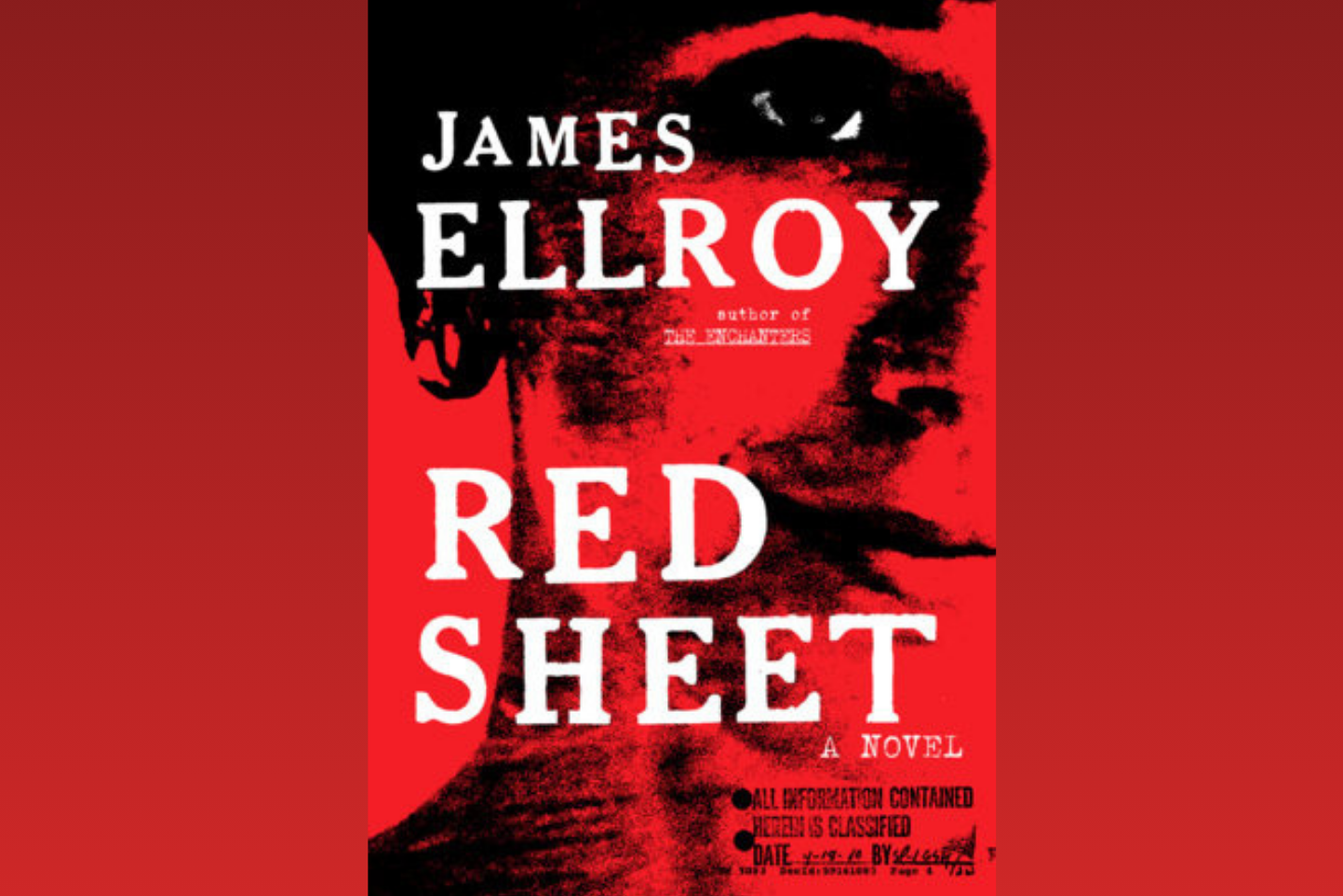
There’s a particular kind of American crime novel that doesn’t want to comfort you. It wants to drag you into a room with no windows and make you sit with what you find there.
Red Sheet by James Ellroy is that novel — and then some.
It’s October 1962, and the Cuban Missile Crisis has just concluded. Attorney General Robert Kennedy, paranoid about domestic Communist reprisals, orders a red probe of Los Angeles and injudiciously hands the wheel to Freddy Otash — stone-cold criminal, dope fiend, and the most magnificently compromised detective in American fiction.

What follows is 544 pages of Ellroy at full tilt.
The prose hits like a broken bottle: short, percussive, and unapologetic. Ellroy’s telegraphic style has always demanded active reading, and Red Sheet is no exception. Fans of the Freddy Otash books, like Widespread Panic and The Enchanters, will find this the most ambitious entry yet.
Red Sheet is explicitly and combatively anti-communist, invoking Whittaker Chambers in its epigraph and refusing to treat that as a wink. It scorns the Hollywood Ten, rehabilitates the Blacklist, and makes a case — through the crooked geometry of noir fiction — that the American left’s mythology around the Red Scare was more self-serving than honest.
Indeed, Ellroy wants to scramble your assumptions. He mostly succeeds, not because he argues his case cleanly, but because he buries you in enough period texture and moral ambiguity that the revisionism lands before your critical defenses go up.
A novelist-cum-polemicist doing his best at the double duty.
The cast of historical walk-ons is characteristically dense. Nixon, Haldeman, Ehrlichman, Hugh Hefner, and Tom Bradley — all appear, refracted through Ellroy’s funhouse mirror. None of them escapes unscathed. Nixon, in particular, gets something stranger than condemnation: a kind of twisted interiority that makes the real man almost legible. Definitely not idealized.
Readers coming in cold on the Freddy Otash mythology will find the opening pages disorienting. The plot mechanics — a red-front trade union, and a Halloween killing that may connect to Nixon’s campaign — accumulate fast and don’t stop to wait for you.
Moreover, the ideological argument occasionally tips into haranguing. The novel will tell you, repeatedly, in Freddy’s voice and in the architecture of every scene. For readers sympathetic to the revisionist thesis, this reads as conviction. For others, it may read as the author’s thumb on the scale.
Ellroy has always been political. The question is whether the fiction earns its argument on its own terms, and Red Sheet largely does. The corrupt trade union at the story’s center is rendered with enough specificity to function as something more than allegory.
Truly, Red Sheet is Ellroy at his most crazed and his most deliberate simultaneously — a neat trick if you can pull it off.
The love story — Freddy and folk singer Judy Henske — provides the book its emotional center of gravity, and it’s more tender than anything you’d expect from a novel this feral. But there’s an ambient coldness that makes full investment difficult. You witness these people. You don’t inhabit them.
Still, for readers who want American crime fiction that takes actual intellectual risks, who are tired of mysteries that think hard questions about history are someone else’s problem, Red Sheet is exactly what the genre needs.
It dares you to look, and you should take the dare.
Red Sheet by James Ellroy is available June 9, 2026. It is the third entry in the Freddy Otash series, following Widespread Panic and The Enchanters.
Follow us on X and on Instagram!
Like us on Facebook!
Quinn Quē

Quinn Quē is a storyteller & journalist writing regular interviews, reviews, and features. They've been fascinated with the multidisciplinary arts since a child, particularly film, literature, and television. They love microblogging, so feel free to hit them up on Substack Notes or Tumblr about any recent articles or just to shoot the pop culture breeze!