
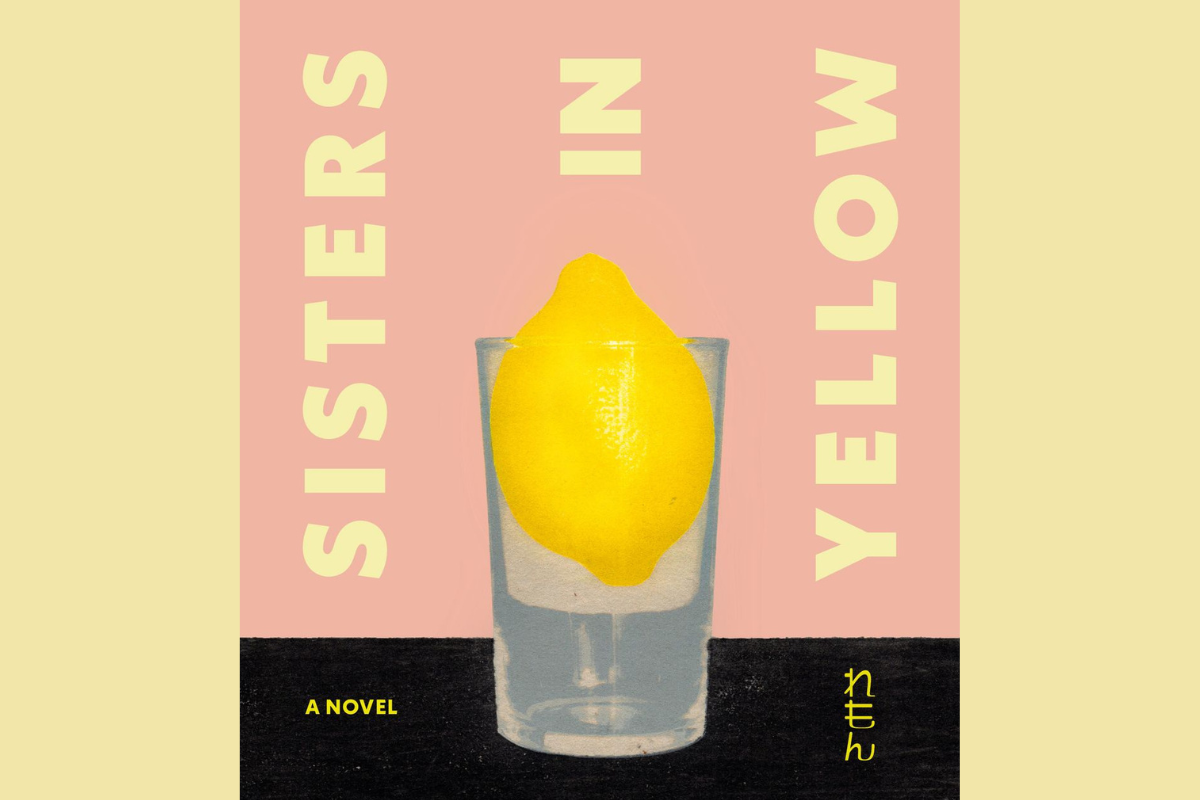
Mieko Kawakami has never been interested in flattering Japan. Her previous book, Breasts and Eggs, dissected reproductive autonomy and the pressures on working-class women with surgical precision. Her novel Heaven went somewhere even darker, mapping the logic of adolescent cruelty from the inside.
With Sisters in Yellow, Kawakami pivots to noir — and the result is her most plot-driven book to date, as well as one of her most emotionally exposing.
The setup is deceptively simple. Hana is fifteen years old, poor, and stuck. She lives in a small apartment in suburban Tokyo with her young mother, who works as a hostess at a dive bar. Then Kimiko enters her life — older, luminous, full of apparent possibility.
Together, they open Lemon, a bar in the narrow alleyways of Sangenjaya. Two more young women join them. For a while, it feels like freedom.
Yet, it isn’t. Sisters in Yellow is, at its core, a novel about what poverty does to people who weren’t built to survive it. Kawakami draws on her own experience—she worked in hostess bars as a young woman to support her family—and that biographical intimacy shows on every page.
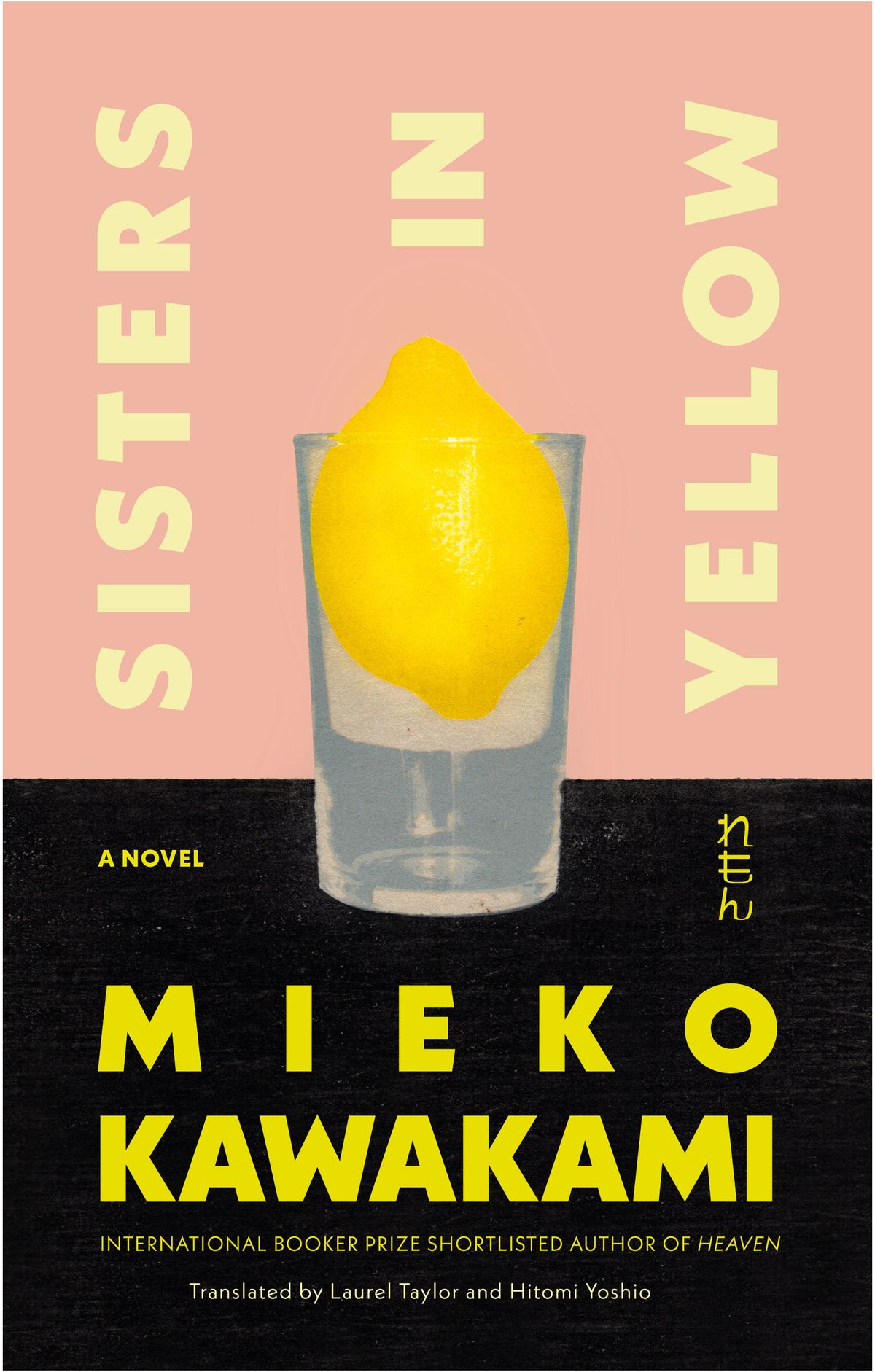
These characters don’t feel invented. They feel observed, remembered, and quite possibly grieved.
What distinguishes this from Kawakami’s previous work is the structural ambition. The novel moves across two timelines: the 1990s, when the four women build their lives at Lemon, and the present, as characters reckon with the consequences of a crime. It is, explicitly, a crime novel—Kawakami’s first foray into noir—and she handles genre conventions with enough confidence to keep the suspense genuinely taut.
Furthermore, the 1990s setting proves to be more than an atmospheric backdrop. Japan in that decade was defined by a widening gap between its self-image and material reality; a society still insisting on a middle-class ethos while poverty quietly metastasized in the margins.
Kawakami is interested in that gap. Her characters inhabit it, suffer because of it, and eventually react to it in ways the novel dares you to judge.
And that moral ambiguity is the book’s most distinctive quality. Kawakami refuses to distribute blame cleanly. She doesn’t want you to be comfortable. The central question—are criminals born bad, or are they made?—is never answered with a definitive stance, because Kawakami understands that the answer depends on what world you’re willing to see.
However, Sisters in Yellow is not without its friction. At over 400 pages, the novel’s pacing is uneven. The first half builds with real deliberation, perhaps too much deliberation for readers accustomed to the compact intensity of Heaven. Some will find the slow accumulation of domestic detail rewarding; others may feel the story takes too long to reveal its stakes.
The ending, conversely, has a fizzling aspect. After so much buildup, the resolution can feel like it dissipates rather than lands. That tension between setup and payoff is a genuine structural issue, not a matter of taste.
Nevertheless, the writing itself is mostly solid. Kawakami uses the senses— smell, texture, the weight of cheap fabric, the sound of a particular kind of laugh—in ways that feel rare in translated Japanese fiction. Her language, rendered here by translators Laurel Taylor and Hitomi Yoshio, is precise and immersive without ever tipping into ornamentation.
The relationship between Hana and Kimiko forms the emotional nucleus of the book. It’s a bond that readers of Kawakami will recognize: intense, asymmetrical, defined by need and admiration and something that resists clean labeling.
Like the friendships in Breasts and Eggs, this theme is both sustaining and dangerous. Both women are right about each other in ways they can’t quite articulate. That complexity is what lingers.
Indeed, Sisters in Yellow sits in interesting conversation with Natsuo Kirino’s OUT, another novel about marginalized women in Japan driven to crime by economic desperation. But where OUT reaches for horror and sensation, Kawakami stays close to the lived texture of poverty. There is less catharsis here, and more discomfort. Whether that’s a feature or a flaw depends entirely on what you’re asking fiction to do for you.
Ultimately, Sisters in Yellow is not Kawakami’s easiest novel, nor necessarily her most immediately satisfying. But it may be her most important.
It asks us to look at who gets left out of the national story—who works in the bars, who lives in the cramped apartments, who makes decisions that society would rather not understand—and it asks with genuine moral seriousness rather than cheap provocation.
For readers already inside the Kawakami oeuvre, this is essential. For newcomers, it’s a demanding but worthwhile entry point into one of the Top 20 most significant literary voices working in Japan today.
And despite the cultural distinctions, much of the core understanding makes it well through the international translation.
Sisters in Yellow is a novel by Japanese author Mieko Kawakami, recently published in English by Picador (Macmillan) with translation by Laurel Taylor and Hitomi Yoshio. The novel was originally published in 2023 as Kiiroi ie (Yellow House) in Japanese, by the Chuokoron-Shinsha house. It won the 2024 Yomiuri Prize for Literature. The English edition arrives in hardcover on March 17, 2026.
Follow us on X and on Instagram!
Like us on Facebook!
Quinn Quē

Quinn Quē is a storyteller & journalist writing regular interviews, reviews, and features. They've been fascinated with the multidisciplinary arts since a child, particularly film, literature, and television. They love microblogging, so feel free to hit them up on Substack Notes or Tumblr about any recent articles or just to shoot the pop culture breeze!