
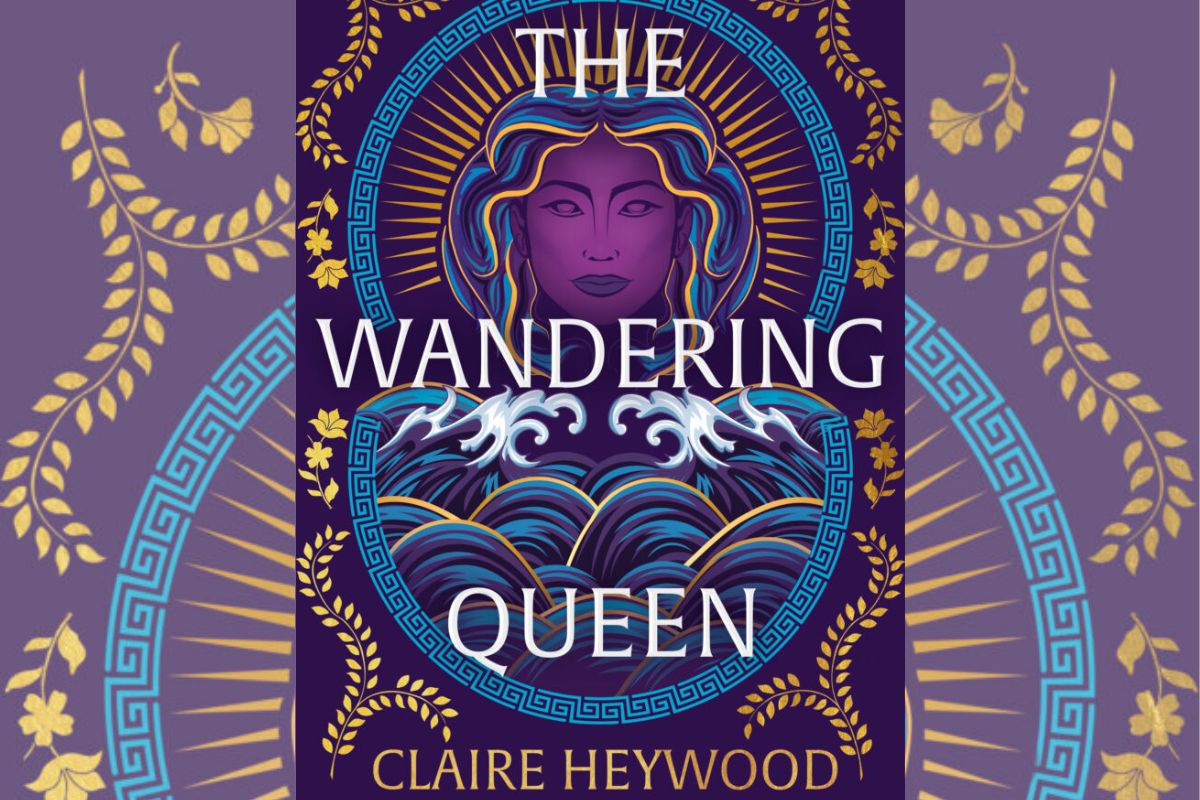
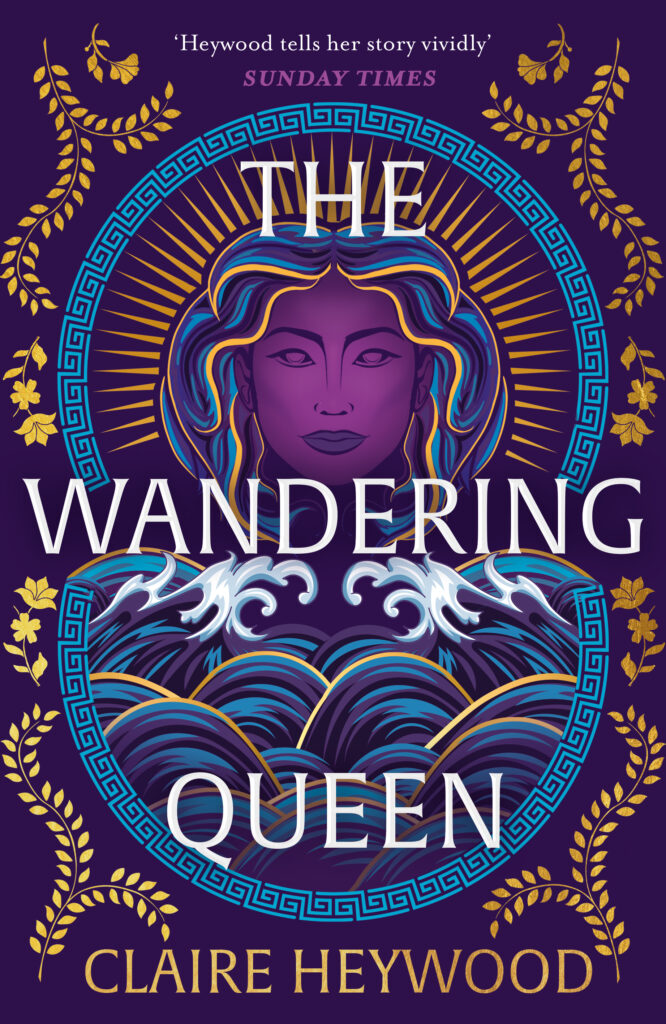
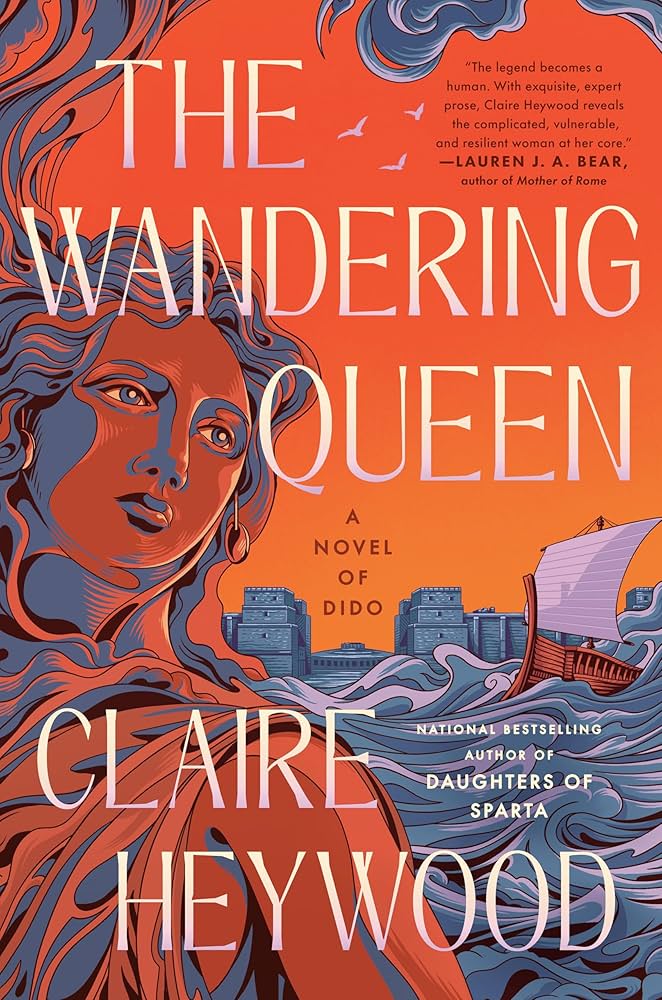
In The Wandering Queen, author Claire Heywood retells the myth of the legendary Queen Dido, who has appeared in famous works of art from The Aeneid by the Roman poet Virgil to the classic Dido and Aeneas opera from the late 1600s.
Hers is a story that has captured imaginations for centuries.
Dido’s tale is almost never the same twice, though. These variations of her life, of her legend, make her the perfect heroine to be rewritten for a modern audience.
Enter Heywood, whose sophomore novel The Shadow of Perseus is one of the greatest retellings of this decade.
What makes Heywood stand out from other authors specializing in myth retellings is her extensive research and desire for historical context. Her brilliant author’s note at the conclusion of The Wandering Queen is one of the highlights of this book.
But first, let’s dive into the story itself.
This novel, told in a dual timeline format, puts Dido, or Elissa as she is formerly known, at the forefront of her own story. Switching from Elissa, princess of Tyre, and Dido, queen of Carthage, readers learn her backstory of how she came to found the legendary North African city.
As the eldest child and only daughter of the king, Elissa is poised to co-inherit the throne with her little brother, Pygmalion. Instead, when her father dies, his last will and testament is destroyed and a false one is produced, naming the much younger–and more malleable–Pygmalion as sole heir.
Elissa is effectively shunned from the palace and the running of the kingdom. While this greatly infuriates her, she soon finds true love with Zakarbaal, the high priest of one of the city’s temples.
For a time, Elissa is happy, helping the people of Tyre through her and her husband’s work at the temple. Though she cannot help her aching desire to want to rule her people competently and generously, unlike her brother and his greedy band of councilors.
When tragedy strikes and her husband, deemed a threat to Pygmalion’s rule, is taken, Elissa knows she can no longer safely reside in Tyre, the only home she’s ever known. With a few faithful followers, they set sail in the night and escape her brother and his council’s bloody reign of terror.
Through their search to find a new home safe out of her brother’s clutches, Elissa is renamed Dido, which means “wanderer,” by her people. On their journey, she proves herself as queen, but this is the shortest part of the novel.
Landing on the shores of Libya, Dido is given the chance to begin again and reigns undisputed for a decade, helping build a new city.
There is a 10 year gap between the dual timelines of her life, and the Carthage chapters begin with the unexpected arrival of Aeneas, prince of Troy. Aeneas and a small band of Trojans have themselves been wandering at sea for many months, after a war with the Greeks and the fall of the legendary city of Troy. Hoping to settle in Italy and form a new city, they encounter a storm and are shipwrecked at Carthage.
When Aeneas and his Trojan refugees appear, the world is turned upside down for Dido. She had vowed to never love or marry again, but this Trojan prince makes her inwardly challenge her vow. With their shared griefs and similar experiences of positions of power thrust upon them in dire circumstances, Dido and Aeneas are drawn to one another.
After a few months, Aeneas, feeling without purpose and neglecting his true destiny, longs to leave Carthage. Here is where the story reaches its end.
Traditionally, Dido is depicted killing herself after her lover leaves. The Wandering Queen changes her fate, a wise choice.
The arc with Aeneas ultimately feels too rushed. It isn’t fully fleshed out, and, thus, is not entirely convincing. While readers may expect fiery passions or reckless decisions made in the name of love, it’s not to be found here. This part of the story almost feels dull, but it’s the most well-known aspect of Dido in the literary and artistic cannon.
Readers can imagine what her life is like going forward, but we don’t get to see it for ourselves.
One strong suit of The Wandering Queen is how it shows Dido is much more than the tragic lover Aeneas abandons. Yet, nearly every aspect of this book still revolves around her relationship to the men in her life. First with her father, who trains her as his clever and competent protege, then with Zakarbaal, and finally, the story is framed by her relationship to Aeneas, ending when he leaves Carthage’s shores.
This isn’t to say the romance with her first husband isn’t a vital part of the book. Theirs is a tender love that leaves its mark on her life and, indeed, on this book. Their love story is one of the strongest aspects of The Wandering Queen, as opposed to Aeneas and Dido’s relationship.
This novel does a standout job of reimagining her background. Dido is not Greek; she is a Canaanite by birth and North African by way of immigration. As such, her world is not the Greek world commonly found in myth retellings of recent years.
The Wandering Queen had the chance to explore settings not often described in other books, retellings or historical fiction. What did the glittering palace at Tyre look like? Just how sprawling or impressive is the city of Carthage? After all, these are settings not often explored. Heywood missed an opportunity to showcase her writing skills by bringing these lush and exotic settings to life.
Many novels, include myth retellings and historical fiction, not just fantasy, include maps to help establish locales and orient readers. Places like Tyre and Carthage may not be as familiar as more traditional settings like Greece and Troy. The inclusion of a map would have been helpful to imagine not only Dido’s sea journey, but Aeneas’s, too.
Dido’s comment to Aeneas about having never heard of Troy is jarring. Troy was one of the largest cities and mighty royal powerhouses of the ancient world — at least in myth. Dido, a princess of another prosperous, if not as prominent, city, should have at least been familiar with Troy.
Additionally, so much of the novel seems to happen in Dido’s own mind, with her thoughts and feelings taking center stage, seeming to break the golden rule of “show–don’t tell.” Readers are told of Dido’s emotions and griefs. Combined with a lack of world building, this unfortunately made the novel, already moving at a slower pace, more dull and drab than it should have been.
Reframing the myth and adding historical context and backdrop, instead of fantastical or mythological elements, is what works best here. Dido is not only some queen of legend. She is a real woman with her own life apart from Aeneas, forging her own path in the ancient world.
The changes made by Heywood add to centuries old traditions; they work well and add a hopeful spin to the remainder of Dido’s tale. Choosing to not just focus on her life before founding Carthage, as well as not only depicting her as lover to Aeneas, is a smart move.
As Heywood writes in her author’s note, Dido’s story has grown and morphed over the millenniums. The idea of weaving a patchwork narrative, bringing together so much of Dido’s story and legend is brilliant; it is just not executed as well as Heywood is surely capable.
The Wandering Queen is available now wherever books are sold.
Follow us on X and on Instagram!
Like us on Facebook!
Amanda Larch Hinchman

Amanda Larch works as a writer and editor when she’s not in the middle of a good book. Learn more about her work and view her portfolio at www.amandalarchwriter.com/ and keep up with her on Goodreads @_groovyginger_.