
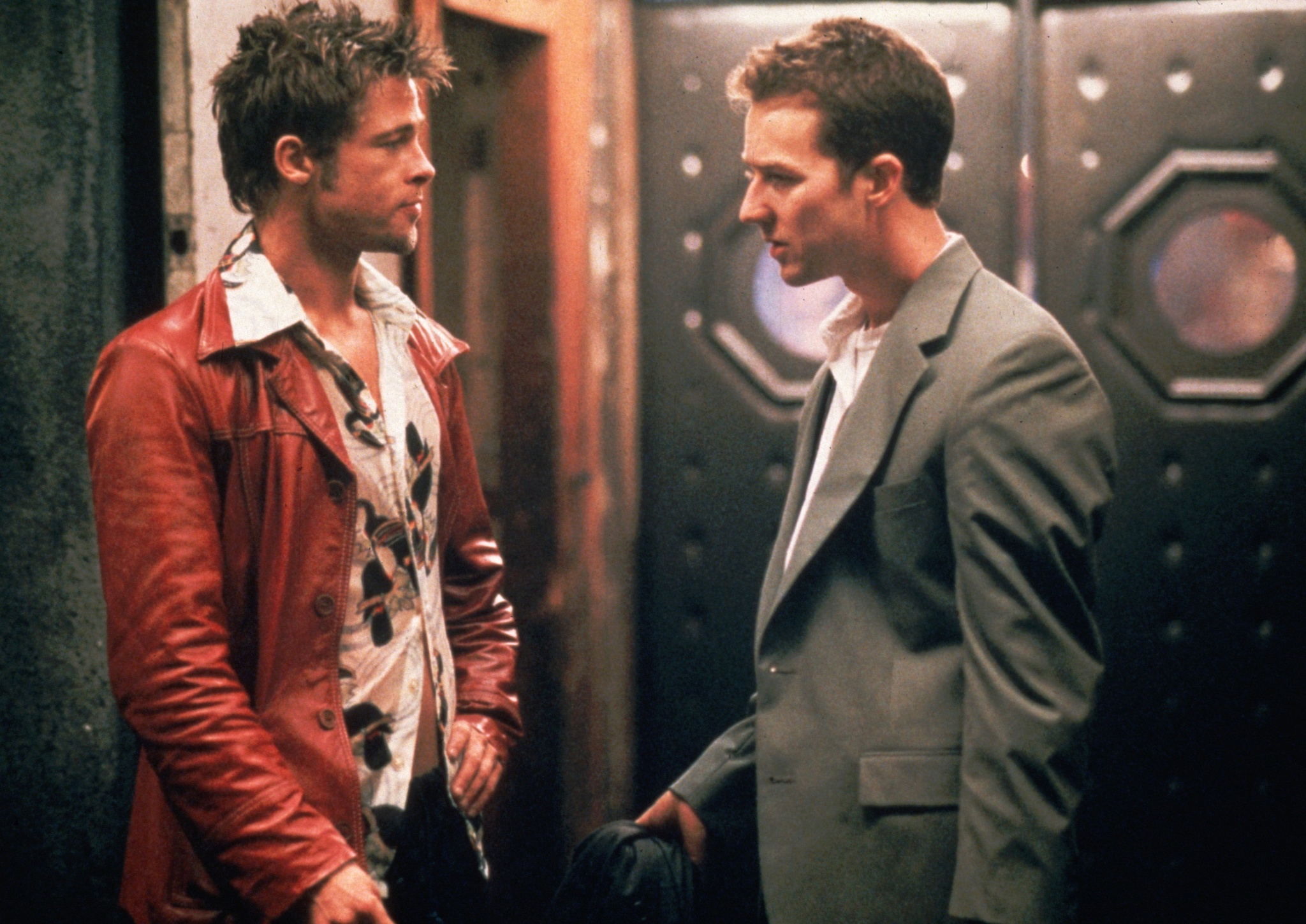
Fight Club was one of the most controversial films of 1999. It was also the second film of that year that featured a surprising twist ending for the record books, coming just two months or so after the groundbreaking film, The Sixth Sense. Director David Fincher’s Fight Club is now back in theaters with a 4K remastered print and is just as relevant now as it was then.
This film’s theme of aggressive behavior that spirals out of control serves as a cautionary tale for those who think their day-to-day routines may be too frustrating or overbearing. Fincher’s movie focuses on underground boxing clubs that are started by a narrator with no name (played by Edward Norton) and a wild and charming, but reckless, character named Tyler Durden (the always terrific Brad Pitt).
Norton’s narrator works as a recall coordinator for a major car company. Frustrated because he is unable to sleep, he starts to join support groups for people with illnesses he doesn’t have. At a support group for testicular cancer, he meets the solemn Marla Singer (a fun Helena Bonham Carter).
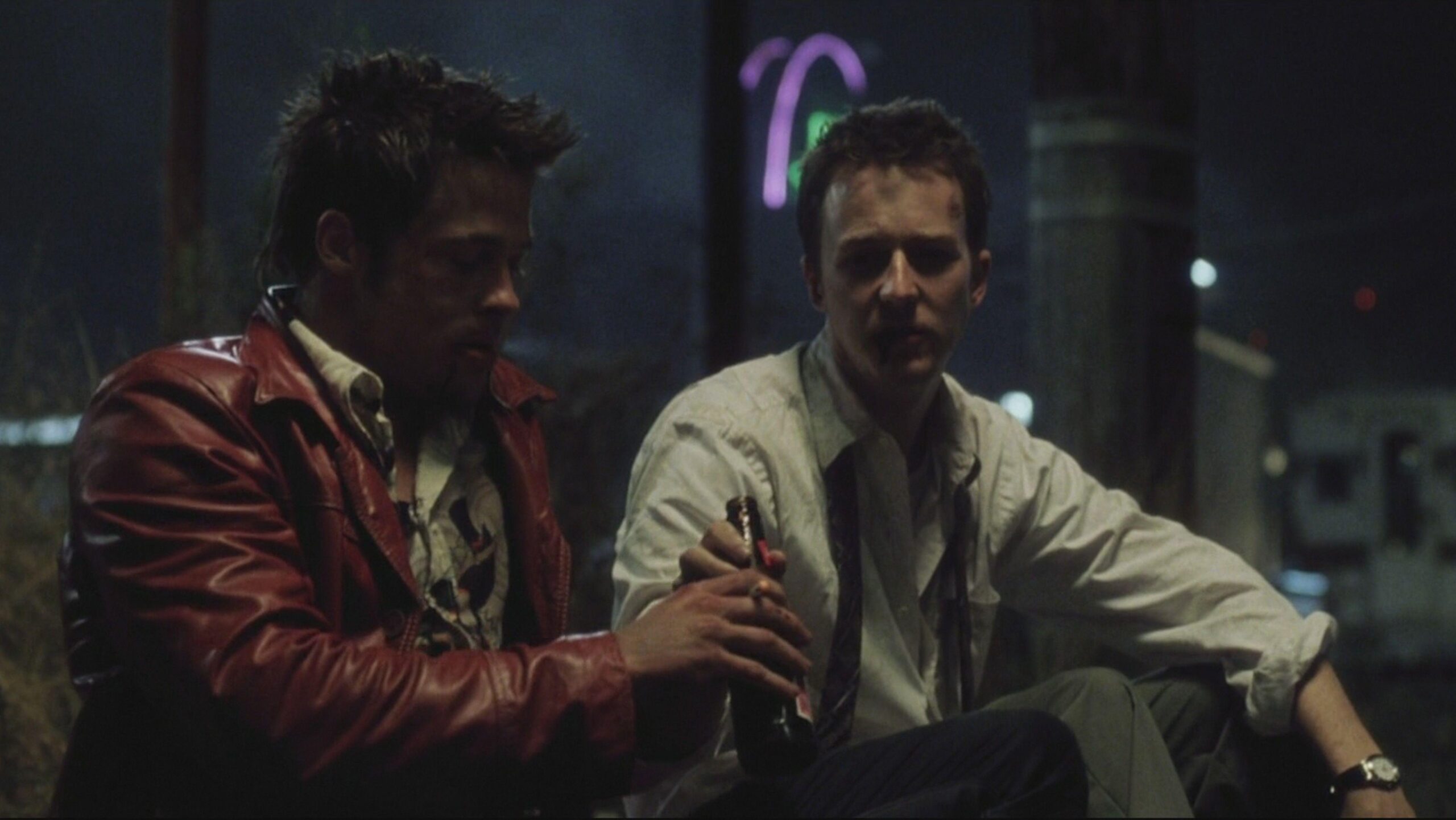
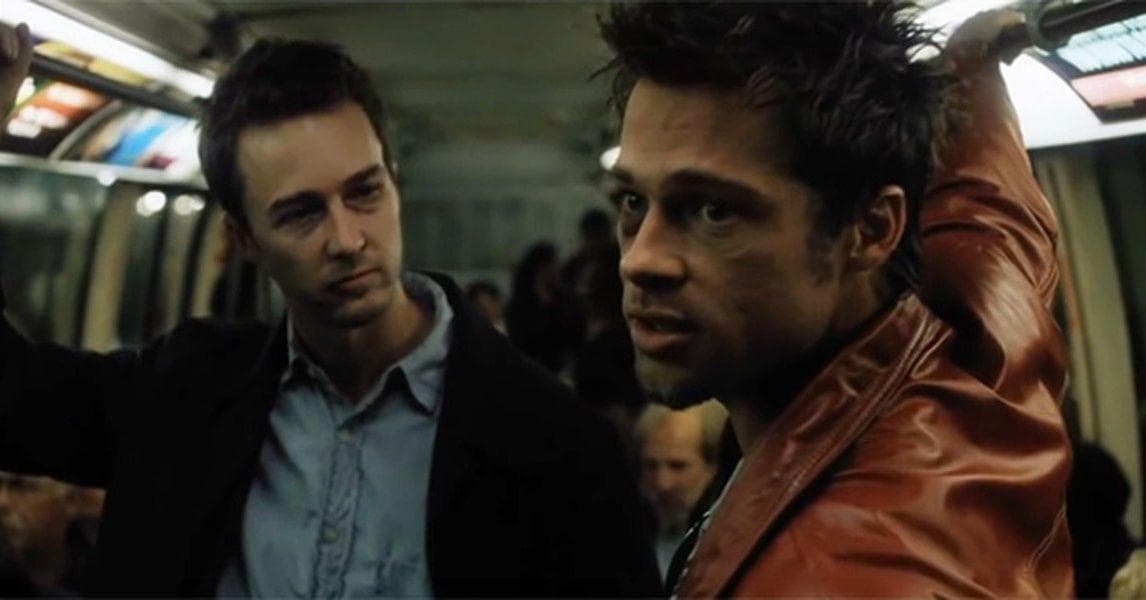
Traveling for business frequently, Norton’s character meets Pitt’s Tyler Durden on a plane, where the two guys realize they have the same suitcase. Tyler sells soap and works in a projection booth at a movie theater for a living. Later on, when Norton’s apartment burns to a crisp, he is torn between calling Marla or Tyler for help, and he chooses Tyler.
This film is extremely challenging to watch at the beginning. There was a lot of controversy in 1999 regarding the fact that the main character attends support groups for diseases he doesn’t have. It seemed a bit offensive at the time (and still does), but serves to define the lack of moral values of the main character at the film’s outset.
Fight Club settles into an entertaining, if bloody at times, groove as Tyler and our narrator shoot the breeze and become best friends. They begin to fight each other and other local men who join their “fight club.” Eventually, this club expands into something much more frightening called Project Mayhem, where the members of the boxing groups go out and slowly begin to wreak havoc on society.
Bob (Meat Loaf at his best) is the most memorable member of the fight club. Bob is a dying man who is large in size and very emotional when the narrator first meets him at the support group. Another noteworthy character is that of the blonde one played by Jared Leto, who gets beaten beyond belief in a key moment later in the picture.
Pitt and Norton are spectacular. Pitt has a natural charisma that he utilizes to full effect as he makes fun of advertisements and tells members of the fight club that the world is pulling the wool over their eyes and that nobody really cares about them. Pitt is quite entertaining to watch and plays his sociopathic character to perfection.
Helena Bonham Carter is at the top of her game here. Carter has never been quirkier than in her work in this film. Marla steals clothes from the local laundromat and sells them in a hysterical scene early on that helps define her character’s disrespectful behavior.
Norton is at his best when his boss is about to fire him and… if you didn’t see the film, you’re in for a treat.
Norton has tremendous energy and speaks the frustrations of his character out in such a way that one could think could be normal until we learn the film’s big plot reveal towards the end. That genius plot twist is one of the greatest in motion picture history.
Fincher’s Fight Club doesn’t glorify violence. Instead, the movie shows the consequences of erratic behavior. Society sets expectations and there’s a genuine purpose for that.

Defying those expectations of society would cause chaos. Our two main characters in Fight Club are looking to set the debt record back to zero for everyone in order to create a fair world that would achieve financial equilibrium. That is a noteworthy goal that helps the viewer relate to the narrator, even though everyone in the audience will realize he’s mad.
In 1999, this film broke boundaries with its violence and with its fearlessness. It wasn’t afraid to take big risks, and those risks didn’t necessarily help the film connect with mainstream audiences back when it was released. Fight Club earned a mere “B-” CinemaScore grade on opening night, but has since become a cult favorite.
Fight Club is an example of a brutal movie where the violence serves a grander purpose.
As a cautionary tale, Fincher’s movie is near perfect and makes for a thought-provoking tale of what could happen when people go too far in order to challenge the ideals society sets for us. This movie reminds us that the world isn’t perfect and every day is really a “fight” for survival.
Fight Club is now playing in theaters in its 4K remastered format.
Follow us on X and on Instagram!
Like us on Facebook!
Thomas Duffy

Thomas Duffy is a Critics Choice member who has written film reviews for most of his life, starting at age 11 when he crafted his first full length movie critique on the film, "Roxanne," a Cyrano story featuring Steve Martin. As a result of that review and other movie obsessive writing, Thomas was awarded a creative writing award in sixth grade. Thomas is the proud author of nine books, including two highly acclaimed novels, "To Never Know" and "Social Work." Thomas can be found on X (formerly known as Twitter) or at a New York City movie theater watching the latest hit or independent movie. You can also run into him at Tribeca or at the New York Film Festival.