
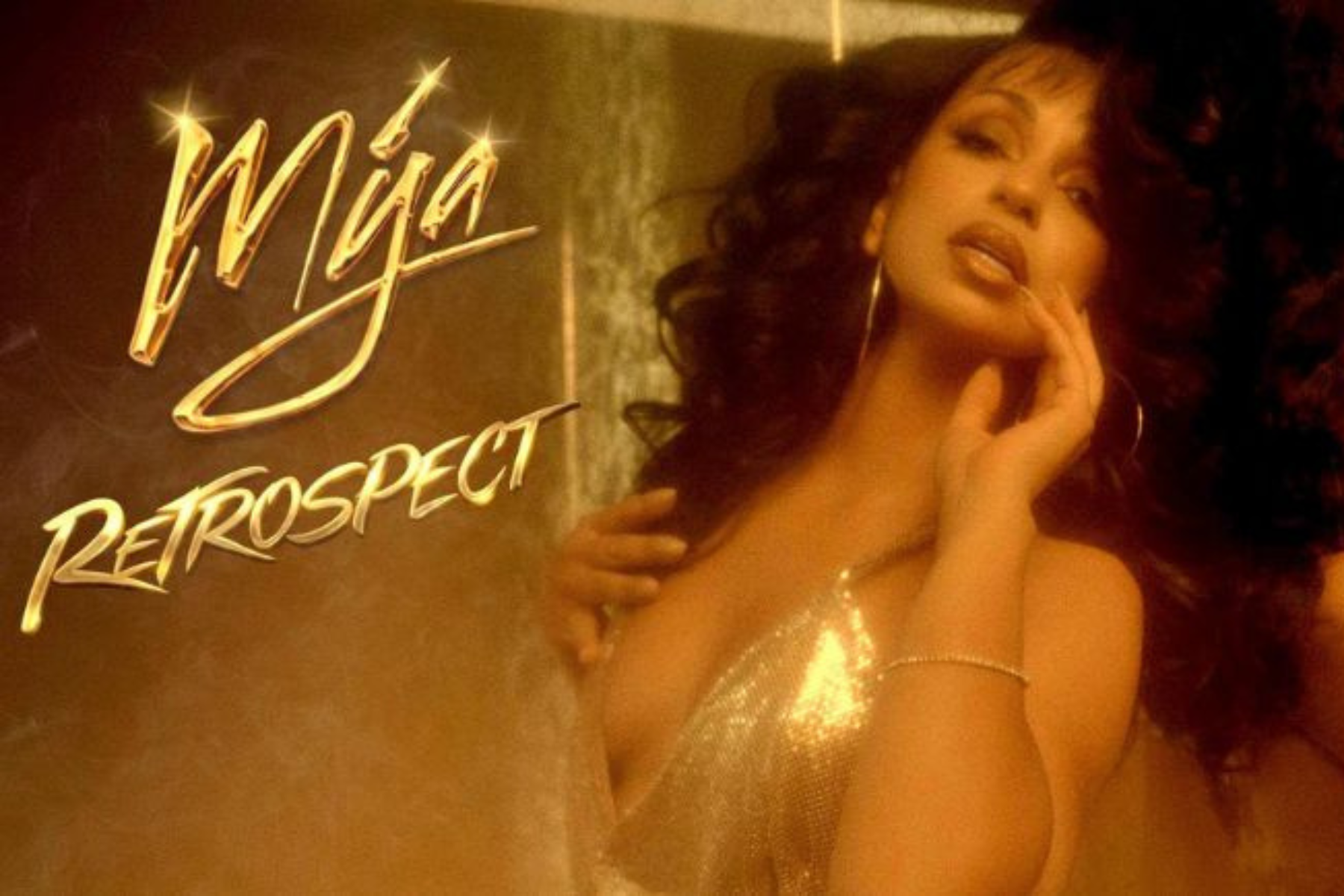
Before streaming algorithms, viral moments, and curated playlists, there were house parties, skating rinks, family cookouts, and records spinning in the living room.
Those memories form the foundation of Retrospect.
Mýa’s ninth studio album is a love letter to the funk and soul music of the 1970s and 1980s, the soundtrack of her childhood and the artists who inspired her long before she became a star herself.
Released eight years after T.K.O. (The Knock Out), the project embraces nostalgia without becoming trapped inside it.
The lengthy gap between releases was not the result of creative hesitation. As an independent artist, Mýa has spoken openly about the challenges of creating, funding, and releasing music on her own terms. That makes Retrospect feel even more rewarding and worth the wait.
Rather than chasing contemporary trends, she uses the album to reconnect with the sounds that first sparked her love of music, creating a project that feels joyful, intentional, and unmistakably personal.
From the opening moments of “Give It To You,” introduced by legendary DJ D-Nice, the album immediately establishes its mission. This is a celebration. The synths sparkle. The basslines groove. The production embraces vintage textures without feeling trapped by nostalgia.
The result is an album that feels familiar in the best possible way. An album that only a legendary artist like Mýa could pull off.
Mýa and longtime collaborator MyGuyMars build an immersive sonic world filled with warm keyboards, live-sounding instrumentation, shimmering guitars, and infectious rhythms. The influences are easy to hear.
Traces of Prince, Michael Jackson, Rick James, Chaka Khan, and classic disco live throughout the project. Yet Retrospect never feels like imitation.
It feels like appreciation.
Tracks such as “Saturday Night,” “Just a Little Bit,” and “Ain’t Another Me” capture the album’s strongest qualities. The arrangements are vibrant and energetic, while Mýa’s vocals glide effortlessly through every groove.
Nearly three decades into her career, she still possesses one of the most recognizable voices in R&B, balancing smooth precision with undeniable charisma.
And she sounds completely comfortable here.
That comfort extends beyond the production choices. There is a noticeable sense of freedom throughout the album. Without the pressure of chasing radio formats or streaming trends, Mýa allows the songs room to just exist.
The performances feel relaxed without becoming complacent, polished without sounding overly calculated.
The features add variety without overwhelming the project.
Appearances from Snoop Dogg, Too $hort, Joyner Lucas, 21 Savage, Dwight Wright, Phil Adé, and D-Nice introduce different textures across the album. Some collaborations land more effectively than others, but the guests generally complement the record’s blend of old-school influences and modern sensibilities.
Snoop Dogg, in particular, fits seamlessly into the album’s funk-forward world, matching Mýa’s energy without ever overshadowing it. His laid-back presence meshes seamlessly with the album’s funk-forward aesthetic, adding another layer of nostalgia without making the music feel dated.
What ultimately separates Retrospect from many nostalgia-driven projects is its emotional purpose.
Mýa has spoken about wanting the album to evoke the sense of togetherness that surrounded the music she grew up with. Cookouts. Roller rinks. House parties.
Family gatherings. Those memories are woven throughout the record’s DNA. Even when the lyrics focus on romance or self-confidence, there is an underlying sense of joy and connection that gives the project its warmth.
You can hear it in every groove and rhythm and even in Mýa’s laughter on the tracks.
The album is not entirely flawless. At times, the commitment to its aesthetic causes portions of the tracklist to blur together. A few songs rely on similar tempos and textures, occasionally slowing the album’s momentum.
The project also runs slightly longer than necessary, and some of the guest-assisted versions do not elevate the original tracks enough to fully justify their inclusion.
The decision to include both the solo and feature-driven versions within the main album feels somewhat redundant at times, especially when they appear only a few tracks apart rather than serving as bonus material or standalone remixes.
That approach may simply be a byproduct of operating independently, where maximizing the value and reach of each recording can carry greater importance than traditional album sequencing. Still, those issues are relatively minor within the larger experience.
Retrospect succeeds because it is exactly what it set out to be. It is an homage to the artists and sounds that helped shape Mýa’s musical identity. It is a reminder that joy can be revolutionary. And it is proof that after nearly thirty years in the industry, Mýa remains one of R&B’s most reliable and versatile performers.
The album may look backward for inspiration.
But the smile it leaves behind feels entirely current.
What’s your favorite track from Retrospect?
Follow us on X and on Instagram!
Like us on Facebook!
Tim H

Tim is a creator and creative with a deep passion for TV, movies, music and pop culture. With a sharp eye for storytelling and a love for all things on screen, he brings entertaining, thoughtful, and often hilarious commentary to his growing community. Whether he’s breaking down a plot twist, highlighting overlooked characters, or sharing his unfiltered reactions, Tim makes screen time feel like a conversation with your favorite binge-watching bestie. In addition to being a creator, Tim co-hosts a podcast called Rated T&T where he dives even deeper into fandom, music, and media alongside his co-host, delivering hot takes, deep dives, and lively fan-focused discussions and interviews that feel like a group chat brought to life! Streaming on Spotify, Apple Music, iHeartRadio and YouTube! Follow along: TikTok & IG (Tim): @casualfandomwithtim | TikTok & IG (Rated T&T): @ratedtandtpodcast