
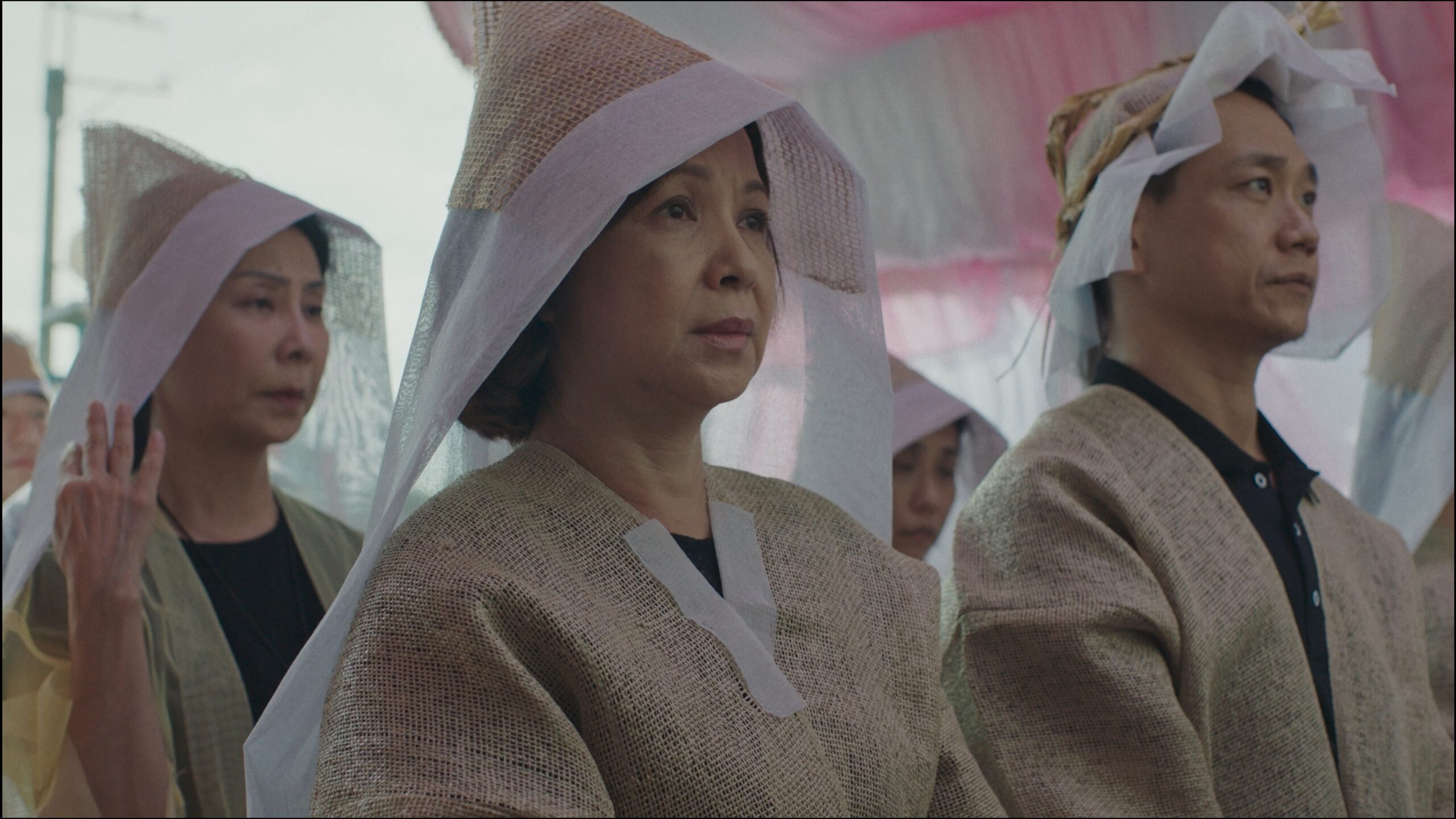
If Eldest Daughter Syndrome is something that intrigues you, we would highly recommend checking out YuHan Tsai’s newest short film, DUA JI. The short will have its world premiere at SXSW, allowing more eyes to get on this beautiful story of grief, love, and life.
By telling the story of a mother whose passed away and the reaction her different children have, Tsai gives viewers a look into the intimate moments of one woman’s life and what the loss of her mother means to her. As any older sister, Big Sis has to confront what her life looks like now after having given so much of it to her mother.
Eulalie Magazine spoke with YuHan Tsai about the idea behind this short, the challenges of bringing her words to the screen, and her thoughts on Eldest Daughter Syndrome.
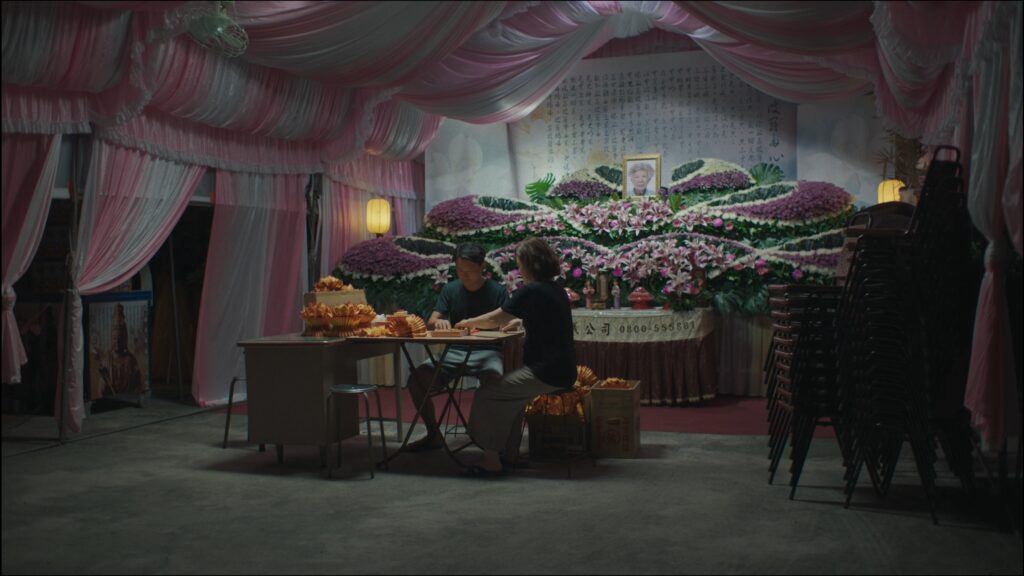
Eulalie Magazine: From the very beginning of the short, the viewer can tell that the focus is on Big Sis. Every scene carefully places her at the center of everything. How did you work on the script to make sure that this stayed consistent? How did this affect the way you filmed?
YuHan Tsai: Starting from Big Sis’s perspective was something I was very certain about as soon as I finished the outline stage of the script. That decision really helped me later on, especially in larger scenes, to stay focused on developing a visual language that extended outward from her point of view.
Because I was writing with Big Sis as the central axis from the beginning, I think what was actually more challenging was how to authentically and effectively portray the other characters within a story that revolves around her. Figuring out how much space to give them and balancing their presence in the film without weakening her centrality was something I spent more time on.
Since I was very clear about the core of the story, many shots and angles were designed around her. The only time the weight becomes more balanced is in the scenes between Big Sis and her brother, because to me, he is another major character. When they are together, their emotional weight is more equal.
I also discussed this a lot with our cinematographer, Murdo Barker-Mill. We both felt that an important component of the film is the image of a family coming together. So in scenes where the sisters and brother are together, we used wider shots to capture the family as a whole.
Eulalie Magazine: In recent years, people have begun to discuss Eldest Daughter Syndrome. Do you think this is something Big Sis relates to? How did you try to portray this in your script?
YuHan Tsai: I do think so. But I also believe that Eldest Daughter Syndrome doesn’t necessarily only exist in the actual eldest daughter. It can exist in whichever sibling takes on the emotional responsibility and caretaker role within the family.
I think Big Sis in the story is someone who can definitely relate to that. When I was writing and filming, I actually didn’t know this term. It was only after we finished shooting that my production designer, Tinco Liao, started sending me many posts about Eldest Daughter Syndrome. I even joked with him that we accidentally caught up with this topic. I’m also happy that this issue is being talked about more.
Eulalie Magazine: Why was it important for you to share this story? What motivated you to write it and film it?
YuHan Tsai: I believe that expressing a character’s emotional state and inner world through story and cinematic language is one of the most effective ways to create empathy. That is also why I love cinema.
In this story, I don’t think anyone is right or wrong. It’s more about how everyone stands in a different position. I chose Big Sis’s perspective because I hoped that through her character, people who don’t understand — or who might think these feelings are not a big deal — could truly feel them through the film.
This story was also inspired by my mother. I grew up observing her from the side, and as I became older, I had many conversations with her about how she felt. At the time, I wanted to write something for her.
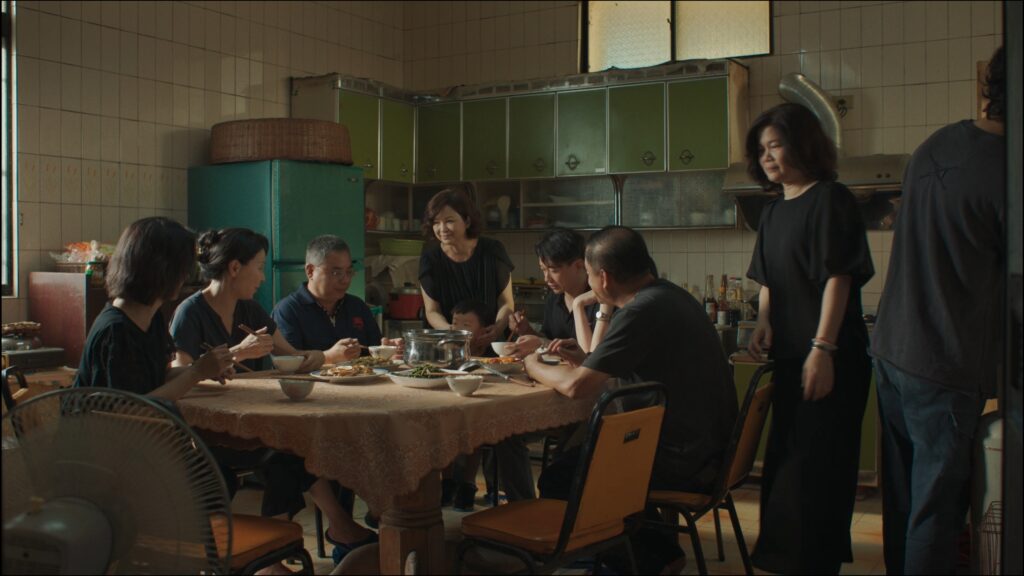
Eulalie Magazine: Do you think someone like the First Son could ever truly comprehend what Big Sis is feeling in that moment?
YuHan Tsai: Not necessarily. But I do believe the character in the film is capable of understanding his sister. At the same time, he has his own position — the expectation that he will one day manage the family, and now also the responsibility of taking care of his own family.
I also know that some people genuinely don’t see anything unusual about this. They might deeply believe that this is simply what should be done. So it really depends on the person.
But I deeply believe that, at our core, everyone is capable of empathizing with these feelings. In the end, we are all human beings with emotions. We shouldn’t divide understanding based on age or gender.
Eulalie Magazine: Is there a particular moment in the short that was hardest to film?
YuHan Tsai: The bonfire scene and the final scene are the ones I remember most clearly.
For the fire, I wanted it to be big enough to feel grand and powerful. But that day the wind was very strong, ashes were flying everywhere, and fire was very difficult to control. We also had many actors involved in blocking at the same time. Thankfully, Murdo Barker-Mill and I were very clear before the shoot about exactly which shots we needed. Otherwise, it really could have been a disaster. I’m very happy with what we captured.
The final scene — where she leaves the house — was also shot on a very windy day. There were many actors involved in the blocking, and we had to coordinate with the speed of the Steadicam, the final bow, and most importantly, Big Sis’s final expression. I remember we did more than ten long takes. Originally, we planned to shoot more coverage. But when Murdo and I saw that particular long take, especially under such challenging conditions, we both felt that if we got this shot, then our ending was complete. We didn’t need more.
So the entire crew and cast kept repeating the movement in strong wind and light rain until we finished. I have so much respect for Kuei Mei Yang, our lead. Under those conditions, and with such high demands for performance in that one long take, she kept delivering exactly what the character needed emotionally. I truly respect her and am very grateful that she agreed to be part of this film.
Eulalie Magazine: What would you like viewers to take away from this short?
YuHan Tsai: I hope they can feel for Big Sis, or relate to this situation.
After I finished writing it, I jokingly told my collaborators that I hoped the audience would cry together with Big Sis. If they cry with her, that means they truly relate. That would make me very happy.
Follow us on X and on Instagram!
Like us on Facebook!
Lara Rosales

By day, Lara Rosales (she/her) is a solo mom by choice and a bilingual writer with a BA in Latin-American Literature known as a Media Relations Expert. By night, she is a TV enjoyer who used to host a podcast (Cats, Milfs & Lesbian Things). In addition to Eulalie Magazine, you can find her work published on Tell-Tale TV, Geek Girl Authority, W Spotlight, Collider, USA Wire, Mentors Collective, Instelite, Noodle, Dear Movies, Nicki Swift, and Flip Screened.