

Superhero fatigue has become one of Hollywood’s favorite buzzwords, but Supergirl doesn’t struggle because audiences are tired of capes. It struggles because it never fully commits to what kind of film it wants to be.
Equal parts space western, coming-of-age story, revenge tale, and superhero blockbuster, the film spends so much time juggling its identities that none of them receive the attention they deserve. The result is a movie filled with interesting ideas, memorable production design, and a committed lead performance that never quite comes together as a satisfying whole.
The film’s greatest success is Milly Alcock.
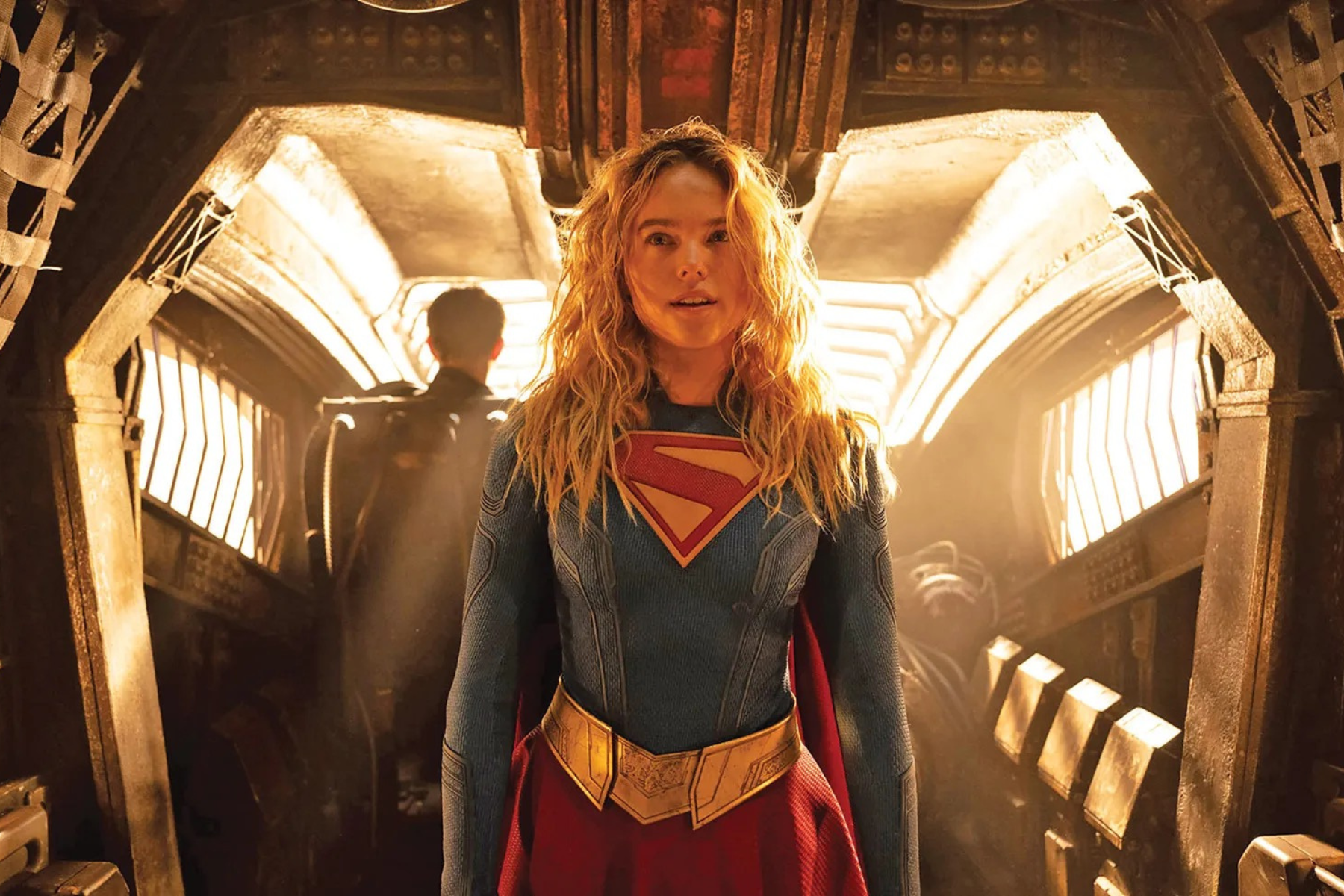
After making an immediate impression in Superman, Alcock steps comfortably into the spotlight as Kara Zor-El, portraying a version of Supergirl that feels noticeably different from her famous cousin. She’s sarcastic, emotionally guarded, impulsive, and visibly carrying years of unresolved trauma.
Rather than simply recreating Superman with a different costume, Alcock gives Kara a distinct personality that immediately establishes her as her own hero. Even when the screenplay falters, she remains consistently engaging. Unfortunately, the same can’t be said for the story surrounding her.
The central narrative follows Kara as she reluctantly accompanies Ruthye, a young girl seeking revenge after the murder of her family. While revenge stories often thrive on moral ambiguity and emotional conflict, Supergirl rarely digs beneath the surface of either character’s motivations.
Their relationship has moments of genuine warmth, but it develops exactly how viewers expect, following familiar story beats without offering many surprises along the way.

That predictability becomes the film’s biggest obstacle.
Almost every major plot development feels like something audiences have already experienced in countless superhero films over the past decade. The emotional revelations arrive on cue, the action sequences appear exactly when expected, and character arcs resolve with little resistance.
Instead of challenging its characters or audience, Supergirl often settles for simply moving everyone toward the next set piece.
Ironically, the film is at its strongest whenever it slows down.
The quieter moments exploring Kara’s grief, survivor’s guilt, and lingering anger hint at a much richer character study than the movie ultimately delivers. Those scenes allow Alcock to showcase the emotional complexity hiding beneath Kara’s abrasive exterior, reminding viewers that this isn’t simply another reluctant hero learning to save the day.
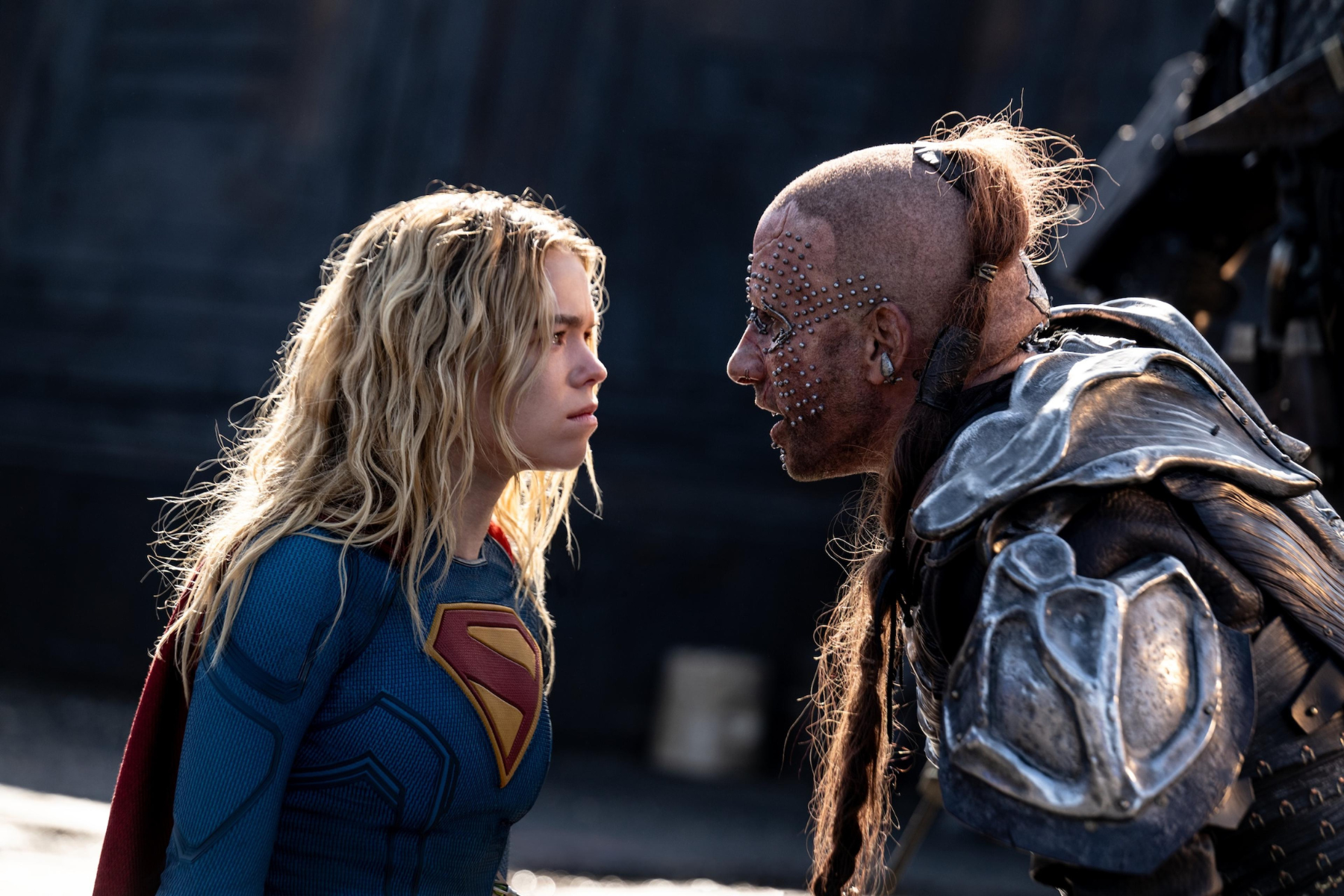
There’s genuine pain beneath her confidence, and the film briefly finds something compelling whenever it allows that vulnerability to breathe.
Visually, however, Supergirl rarely disappoints.
The production design gives the galaxy a worn-in, lived-in quality that helps distinguish it from many recent superhero films. Alien worlds feel appropriately strange without becoming visually overwhelming, while the practical creature effects, makeup, and costumes contribute significantly to the film’s identity.

Even when individual story beats feel uninspired, the environments themselves remain interesting enough to keep viewers invested in where Kara’s journey will take her next.
The supporting cast is more uneven.
Eve Ridley brings sincerity to Ruthye, though the character is often limited by dialogue that repeatedly reinforces her motivations instead of allowing them to develop naturally. Jason Momoa clearly enjoys himself as Lobo, injecting bursts of energy whenever he appears, but his role feels more like a tease for future installments than an essential piece of this story.

Meanwhile, the film’s primary antagonist never evolves beyond a serviceable obstacle. Despite an intimidating visual design, the villain lacks the depth necessary to elevate the central conflict beyond a standard revenge narrative.
Perhaps the most frustrating aspect of Supergirl is how often it brushes against greatness before immediately pulling away.
The themes of grief, identity, forgiveness, and purpose are all present, but they’re explored just enough to remind viewers of the stronger movie that could have been. In place of trusting those emotional ideas to carry the story, the screenplay repeatedly defaults to another action sequence or comedic beat, preventing the film from building meaningful momentum.

That inconsistency ultimately defines the entire experience.
There are individual moments that work exceptionally well. Alcock delivers a confident debut as Kara. The visual world feels expansive and imaginative.
Several emotional conversations land exactly as intended.
Yet every step forward seems to be followed by another that undercuts the film’s momentum, making it difficult to become fully invested in Kara’s journey.
Supergirl isn’t a disaster, nor is it the exciting leap forward many hoped would follow Superman. Instead, it occupies an awkward middle ground: entertaining enough to justify a watch, but too formulaic and emotionally restrained to leave a lasting impression.
With a stronger screenplay and a greater willingness to trust its characters over spectacle, Kara Zor-El could have had the breakout solo adventure she deserves.
Instead, Supergirl feels like a promising beginning still searching for its identity.
Supergirl is now playing in theaters!
Follow us on X and on Instagram!
Like us on Facebook!
Tim H

Tim is a creator and creative with a deep passion for TV, movies, music and pop culture. With a sharp eye for storytelling and a love for all things on screen, he brings entertaining, thoughtful, and often hilarious commentary to his growing community. Whether he’s breaking down a plot twist, highlighting overlooked characters, or sharing his unfiltered reactions, Tim makes screen time feel like a conversation with your favorite binge-watching bestie. In addition to being a creator, Tim co-hosts a podcast called Rated T&T where he dives even deeper into fandom, music, and media alongside his co-host, delivering hot takes, deep dives, and lively fan-focused discussions and interviews that feel like a group chat brought to life! Streaming on Spotify, Apple Music, iHeartRadio and YouTube! Follow along: TikTok & IG (Tim): @casualfandomwithtim | TikTok & IG (Rated T&T): @ratedtandtpodcast