
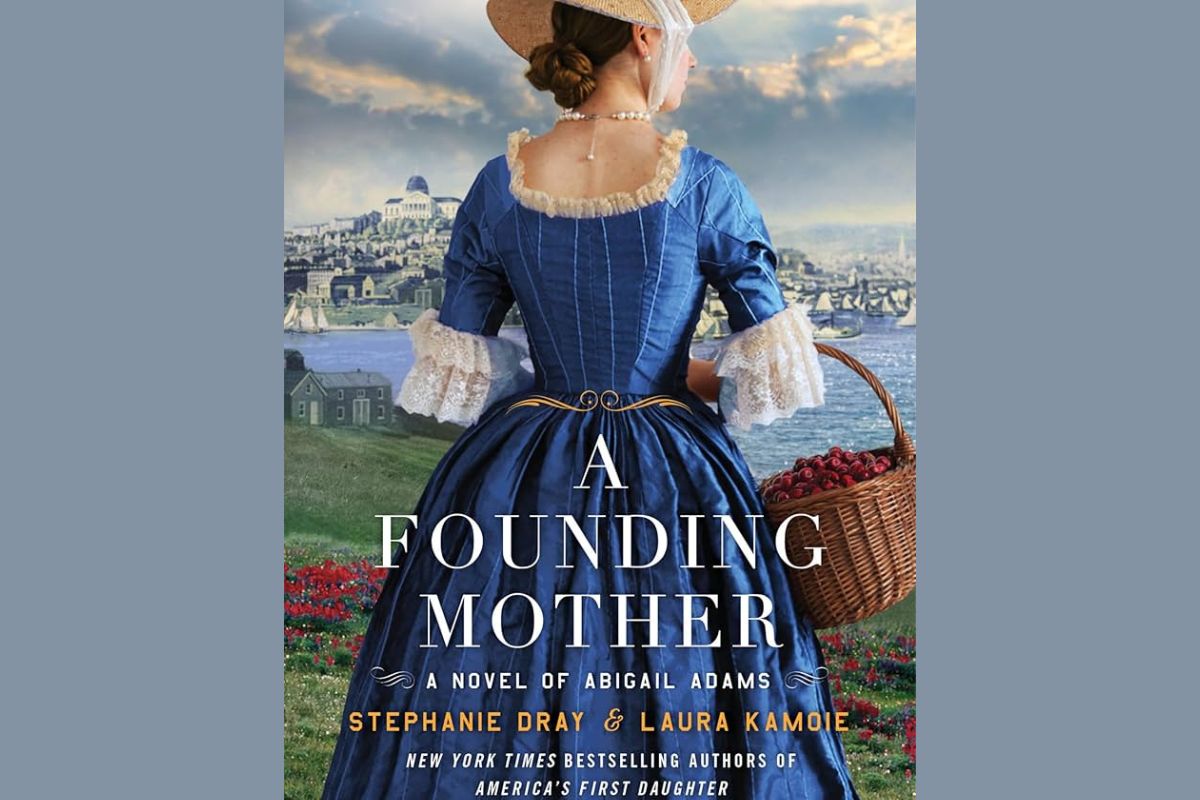
Stephanie Dray and Laura Kamoie have made magic again with their third co-authored novel, A Founding Mother.
Previously penning My Dear Hamilton about Eliza Hamilton and America’s First Daughter following Patsy Jefferson, the duo have turned their attention to the formidable and inspirational Abigail Adams, who is truly one of the mothers of the American Revolution.
This novel details the harrowing days of the Revolution through the aftermath of John Adams’ presidency.
Spanning the majority of Abigail’s life, A Founding Mother begins with the days leading up to the Revolution, when she is a young woman and a simple country lawyer’s wife. As her husband, John Adams, rises in prominence, the growing family begins to spend more time in Boston rather than the Massachusetts countryside.
Through Abigail’s eyes, and sharing her sense of patriotism, readers experience important events like the Boston Massacre, the Boston Tea Party, and public readings of the Declaration of Independence, and her emotions, like fear and excitement surrounding this changing world, are palpable.
Once elected to Congress, John becomes more involved in American politics, and amidst the dangers of the war, Abigail and the children must move back to the countryside, further from any battles but where everyday circumstances are no easier to bear. To Abigail’s dismay, John is also selected to serve as ambassador to France.
In the face of a war-torn ocean crawling with the enemy British, he decides to leave his wife behind in relative safety.
This essentially splits up the Adams family, as their two oldest sons, Johnny–aka John Quincy–and Charlie travel with their father, and their other two children, Nabby and Tommy, remain with Abigail.
Abigail is left to fend for herself and her children the best she can with little to no money, also caring for neighbors, family, and tenants who rely on her. If this were not bad enough, her husband is an ocean away, and his letters–when and if they reach her–eventually turn cold and heartless.
Abigail must harden her heart and carry on in the business of simple survival as war rages on throughout the country. When the war finally draws to a close, John’s importance only increases, and he is selected to remain an American ambassador in Europe.
Distraught, John surprisingly sends for Abigail and their grown daughter Nabby to join him. After years of separation, Abigail is increasingly anxious about being reunited with her husband — especially as his letters never improved in sentiment toward her.
Thankfully, their reunion is sweet and tender, and though their marriage may never be the same as it once was before the war, they can begin to make amends. For a few years, the majority of the Adams family remains in Europe, serving their new country in Paris and London, meeting nobles and royalty, putting the interests of their beloved United States forward.
While here, John and Abigail develop a friendship with Thomas Jefferson, another leader of the American Revolution. Eventually, though, it’s time for the family to return to America, where John becomes vice president to President George Washington.
Abigail throws herself into her role as second lady of the United States, working closely with First Lady Martha Washington, and doing all she can to advise her husband, keeping an ear to the ground in her political sphere.
Navigating a newfound freedom in a burgeoning nation, Abigail has internal struggles with her family, too; this novel blends history on a large scope with the very real turmoil experienced by the Adams family.
After two four-year terms, Washington is ready to retire, and John Adams is elected to be the nation’s second president. Abigail once again rises to the task. Her experience as the vice president’s wife prepared her for her duties as First Lady, where she must entertain and do her best to pacify, or even sway, political adversaries like one-time friend Thomas Jefferson and the young upstart Alexander Hamilton.
Once John’s four years are up, he runs for reelection. Sadly, he does not win. The Adamses must now go through more change in their life, and they move back home to their beloved countryside estate, Peacefield.
This does not mean, however, that they can leave politics out of their lives forever. There’s still plenty of intrigue, as well as family troubles. A Founding Mother balances between both, and as John and Abigail’s eldest son John Quincy furthers his political career, the novel prepares to draw to a close.
John and Abigail are able to celebrate their 50th wedding anniversary, and she reflects on all the choices of her life. Her love for her country and for her family are twin flames that have burned all her days.
This novel paints an intimate portrait of a marriage, of motherhood, family, and country.
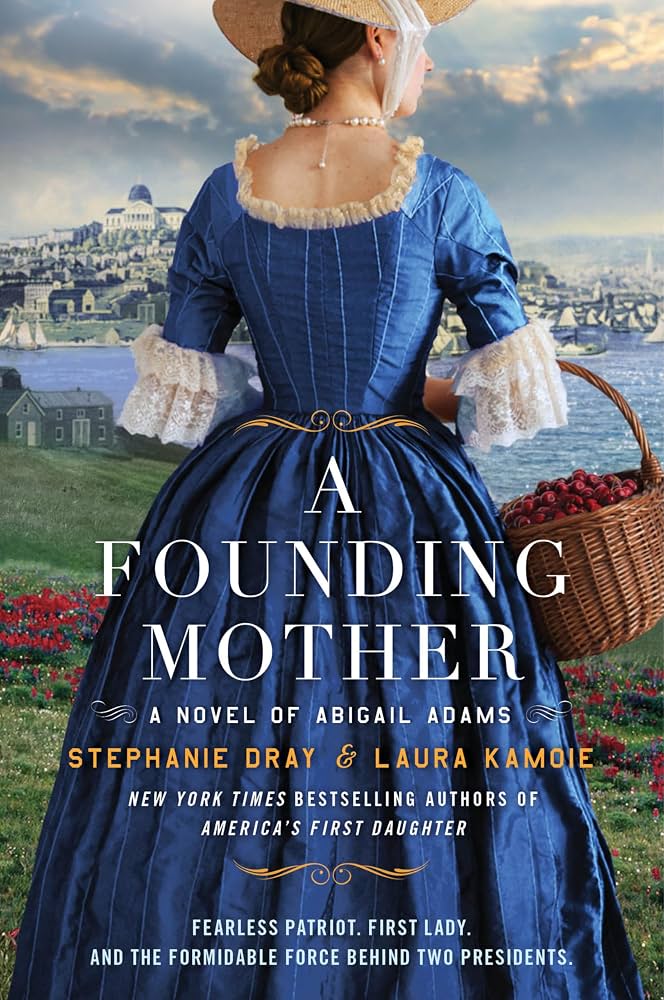
A Founding Mother has many strengths. This is a story that draws readers in immediately with its action and wonderful New England settings; from the beginning, you’re immersed in Abigail’s tale.
As this hefty novel goes on, though, the plot tends to slow into the second half. Readers have to really be invested in the history and Abigail’s story for it to be rewarding throughout.
Remembered for many aspects of her life, not least of which is her dedication to women’s rights of the day, there is no doubt Abigail Adams is a loveable character presented in this novel. She’s resourceful, opinionated, and cheeky.
She opposes slavery and fights for the rights of women, urging her husband to “remember the ladies,” in a real quote from one of her letters to John. Ultimately, she had to deal with women being left behind in the realm of politics, a poignant aspect this novel explores.
Abigail Adams and many of her closest family, friends, and confidants left behind dozens of letters for posterity. The authors quote from these liberally and use them as inspiration. However, sticking to authentic language of the time period represented where possible, some of the dialogue can be a bit tough for modern audiences.
Along with Abigail, the supporting characters shine in this novel. Many well-known and awe-inspiring historical figures cross paths with her. The authors of A Founding Mother excel at taking these larger-than-life people and making them feel so human, bringing them to life fairly and accurately from Abigail’s point of view.
As the title suggests, A Founding Mother details Abigail Adams as a mother to the country as much as to her own children. Her four children who survived to adulthood, Nabby, Johnny (aka John Quincy), Charlie, and Tommy, are all very different but beloved by their parents. John and Abigail raise their children and grandchildren all while America grows in independence, too.
The Adamses had their fair share of struggles in life; it is politics that affect Abigail’s family’s health and happiness as much as illness or alcoholism. With such a large scope, the authors had to decide which events of Abigail’s life should, or should not, be included.
So, some things are glossed over in passing mentions while other events go into more detail, though they may seem less important or interesting.
It would have been nice to explore some of the results of her children’s childhood experiences that affected them well into adulthood, as this is something that is briefly hinted at toward the very end. They dealt with extended separation from their parents, not to mention the traumas of a bloody war.
Having Abigail reflect a little more and extending the novel to a more dramatic death-bed ending would not have been amiss.
Especially because this story is unflinching in its portrayal of death and loss. These were the realities of 18th-century America.
It feels a tad unsure where it should end, and, compared to the swell of patriotism found in the beginning of the novel, feels a bit distraught for the future of the nation. Perhaps that is the authors’ point.
Overall, this is a poignant, touching, and timely novel. There’s no better time to read it than for America’s 250th anniversary.
Follow us on X and on Instagram!
Like us on Facebook!
Amanda Larch Hinchman

Amanda Larch works as a writer and editor when she’s not in the middle of a good book. Learn more about her work and view her portfolio at www.amandalarchwriter.com/ and keep up with her on Goodreads @_groovyginger_.