
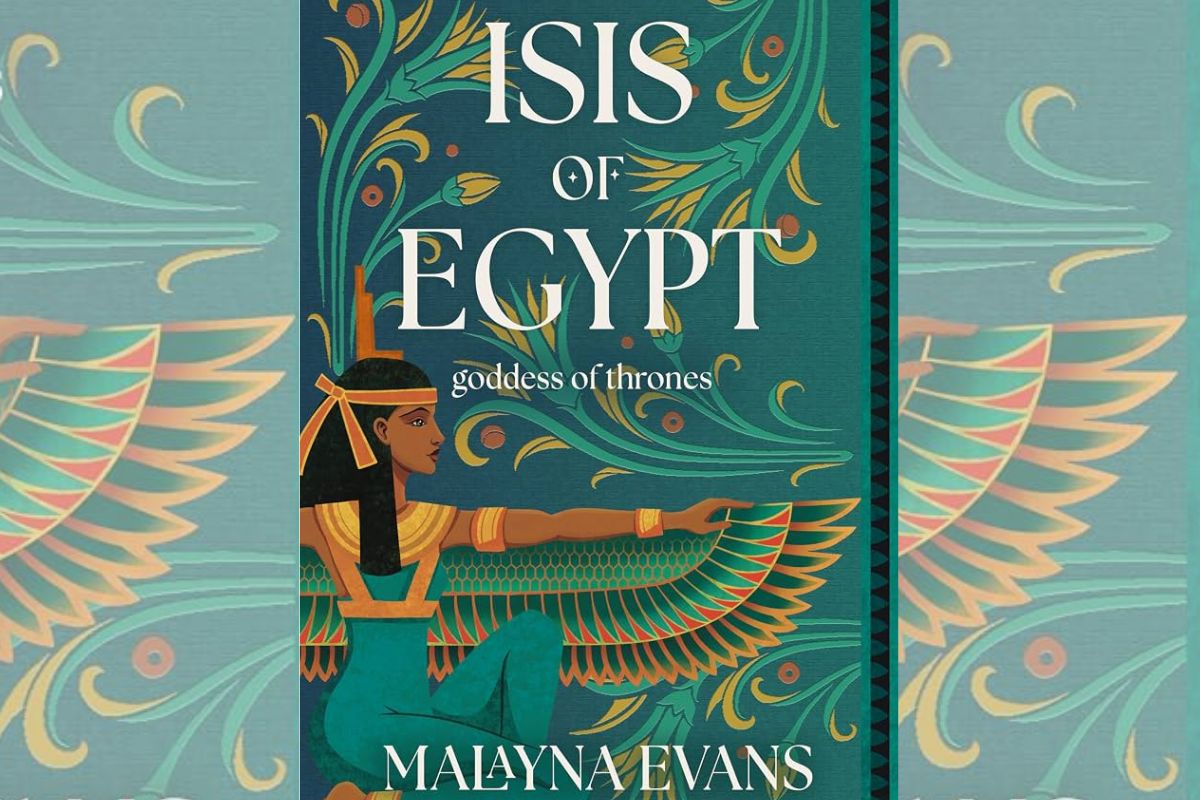
Bringing ancient Egypt to life, Isis of Egypt: Goddess of Thrones, the second novel by author Malayna Evans, is lush with gods and goddesses, magic and power, and heartache and hope.
Following the life of the goddess Isis, who shares her story in a first person POV, we begin when Isis and her siblings, Osiris, Nephthys, and Set, are born fully grown in the verdant Egyptian landscape. Evans takes this Egyptian creation myth and diffuses it neatly.
These four gods and goddesses are powerful beings, each with unique gifts and resources. It’s not long before they are distinguished by their distinct personalities. Osiris is a natural leader, full of empathy and compassion. Set is tricky, greedy, and motivated by chaos.
Our heroine, Isis, is the goddess of magic and thrones, and her powers strengthen as she matures. She is a healer as well as a magician.
Aside from Osiris, it’s clear Isis is the most powerful of her siblings. She and Osiris are drawn to one another and eventually become husband and wife.
However, their sister Nephthys has to hide her own feelings for Osiris and instead, in an effort to move on, becomes involved with Set — a move that sets into place a disastrous chain of events for all of them.
At this point in the world, the great primordial creator god Atum rules over everything as king of Egypt’s deities. He is the great-grandfather of Isis and her siblings. Yet he is dispassionate and selfish, and Set sees in him the perfect example.
When mortals are created, Atum does nothing to care for their well-being, while Osiris and Isis do their best to improve the lives of humans. When two young girls close to Isis become sick and die of the plague, she knows things have to change in the hierarchy of the gods.
From here, Isis concocts a clever, but complicated, plan to strip Atum of power. She achieves this feat, and as the goddess of thrones, she crowns her husband, Osiris, as the ruler of gods and mortals alike. He is sure to rule fairly and justly, with Isis the power behind the throne.
All is well, for a time. Set grows increasingly jealous of his brother’s power, coveting it for himself. Nephthys becomes helpless to stop Set’s plotting.
When Set does the unthinkable and tricks Osiris into disappearing, Isis transforms into a mortal woman, traveling the entirety of Egypt to look for him.
What she finds is Osiris’ corpse.
Desperate, she uses her magical abilities to bring Osiris back to life for a short while, and the consequences will change everything.
Isis gives birth to a son, Horus, and raises him in secret with a few trusted confidantes — away from the prying eyes of the increasingly reckless Set.
The mortal world is also in danger, afflicted by plague and other sufferings, as Set does not concern himself with humans. Isis knows Horus is the only way forward. Together, they must defeat Set and restore balance.
The rest of the novel deals with Horus coming of age and Isis striving to avenge Osiris while coming to terms with old wounds from the past. She is tested again and again and comes out stronger each time.
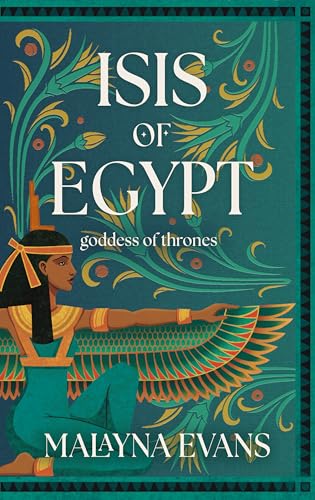
Isis of Egypt: Goddess of Thrones has a wonderful cast of characters, including the pantheon of Egyptian gods, from Anubis to Hathor, Bes and Thoth. Evans brings them brilliantly to life — it’s easy to them imagine stepping from the artwork of ancient tombs into the pages of this book.
The ancient world is brought to life in this story; readers can almost see the thriving settlements along the Nile, or the rich palaces of antiquated wealthy cities. Another significant female character is a mortal queen Isis meets on her travels who plays a key role in this tale.
While a captivating story, the novel has a few key struggles. Modern language and sentiment is peppered throughout, with phrases like “triggered” and “unhealthy relationships” used.
This takes readers out of the ancient setting and into a modern train of thought; today’s attitudes can’t always translate to days of old. Nor should they.
And speaking of setting, it is unclear when this book takes place. Simply put, the timeline is messy. No specific Egyptian pharaohs are ever mentioned, yet the city of Alexandria is.
Some readers may not know or catch this detail, but Alexandria is a Greek city established in the north of Egypt hundreds of years after the great pyramids are built, so it can be hard to determine when this story takes place.
As a myth retelling, the myths in question should be old, ancient, and reverent to the ancient Egyptians. In other words, the story should take place time immemorial, to borrow the old phrase.
The pacing of this novel is a bit uneven, too. With a slow start, the plot finally picks up about halfway through.
Additionally, this novel uses an odd narrative device. It’s as if Isis is looking back through time, recounting events in a memoir-type format, yet we never actually catch up to the present.
This “looking backward” type of storytelling grows a little stale, but on the other hand, when used sparsely or wisely, can help motivate the reader. The only issue with this is that a book should be so captivating on its own readers need no further motivation to keep reading.
The amount of over-explaining and recounting the same events every few pages — as if readers could not remember key plot points — diminishes the quality of the book, too.
Above all, the ending isn’t entirely satisfying. As much as Isis longs for justice — it’s an ideal she is passionate about and heralds constantly — there is no real justice served to the story’s villain. Set pretty much gets away with his crimes against Osiris, and Isis is forever separated from her beloved husband, who becomes king of the underworld.
This is tragic. The ending suffers for this choice.
Isis is one of the most powerful goddesses. Why can’t she use her magic to find a way to be reunited with Osiris?
Set’s downfall is a fundamental part of the mythology behind Isis, Osiris, Set, and Horus, the child of Osiris and Isis who avenges his father. It’s not as if the author — or Isis — preaches forgiveness for Set, either. So ultimately, the ending leaves a bitter taste in readers’ mouths.
In her author’s note, Evans even states she uses bits and pieces from Isis’ various mythology, changing — or adding — elements that best suit the story. So why leave Osiris and Isis eternally separated when she had the power to adapt their story?
It’s not fair to either of them or to readers invested in their love story, which makes up a significant part of the first half of this book and is the driving force of Isis’ quest and the remainder of the plot.
Some positives of Isis of Egypt: Goddess of Thrones are the overarching themes of sisterhood and family. Isis and Nephthys are key characters just as Osiris, Anubis, and Horus are, but their story is complicated and with an interesting, tragic depth.
Isis herself is an unusual main character. She is arrogant. She is often selfish.
Despite all this, she is still compulsively likeable. A strong woman with a mind of her own, Isis is a goddess who knows what she want and will stop at nothing to achieve it.
Overall, Isis of Egypt: Goddess of Thrones is a retelling focusing on the gods and goddesses of Egypt rather than Greece. It stands out among similar novels, but small pitfalls bring down the novel’s quality. It is worth the time, with a story rich if not fast-paced, but the ending may not be believable or enjoyable.
Isis of Egypt: Goddess of Thrones is available now wherever books are sold.
Follow us on X and on Instagram!
Like us on Facebook!
Amanda Larch Hinchman

Amanda Larch works as a writer and editor when she’s not in the middle of a good book. Learn more about her work and view her portfolio at www.amandalarchwriter.com/ and keep up with her on Goodreads @_groovyginger_.