
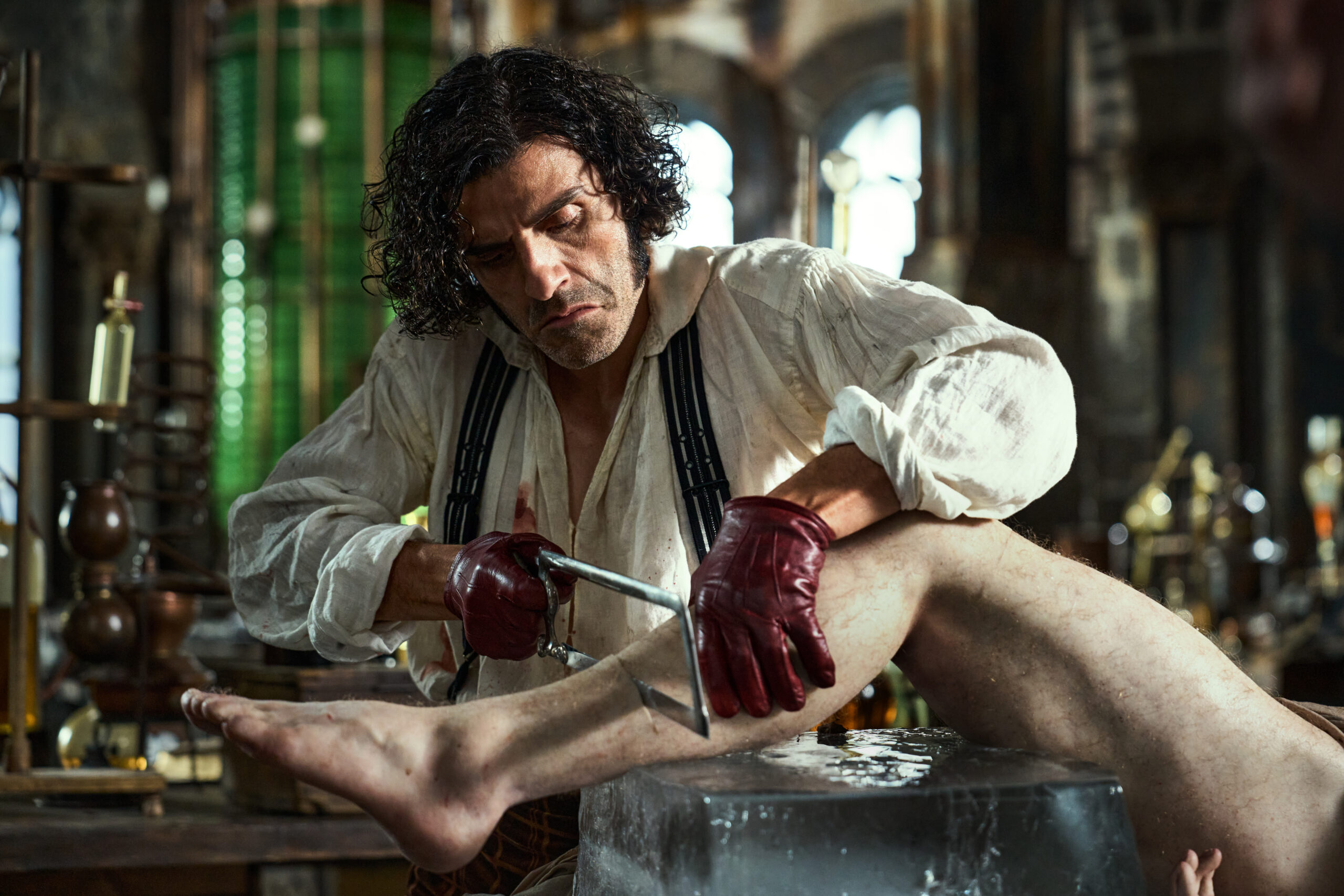
Guillermo del Toro’s Frankenstein (2025) is a gorgeous gothic adaptation of the novel that doesn’t offer a complete retelling. It’s a beautiful masterpiece, a homage to the source material that pays respect to adaptations that came before.
Del Toro knows it’s an honor to take on an iconic story like Frankenstein, and he knew he had a job to do: to do it well. He takes what we already know about the tale and makes it his own, bringing even more depth to the journey that the Creature embarks on — even more than we’re used to.
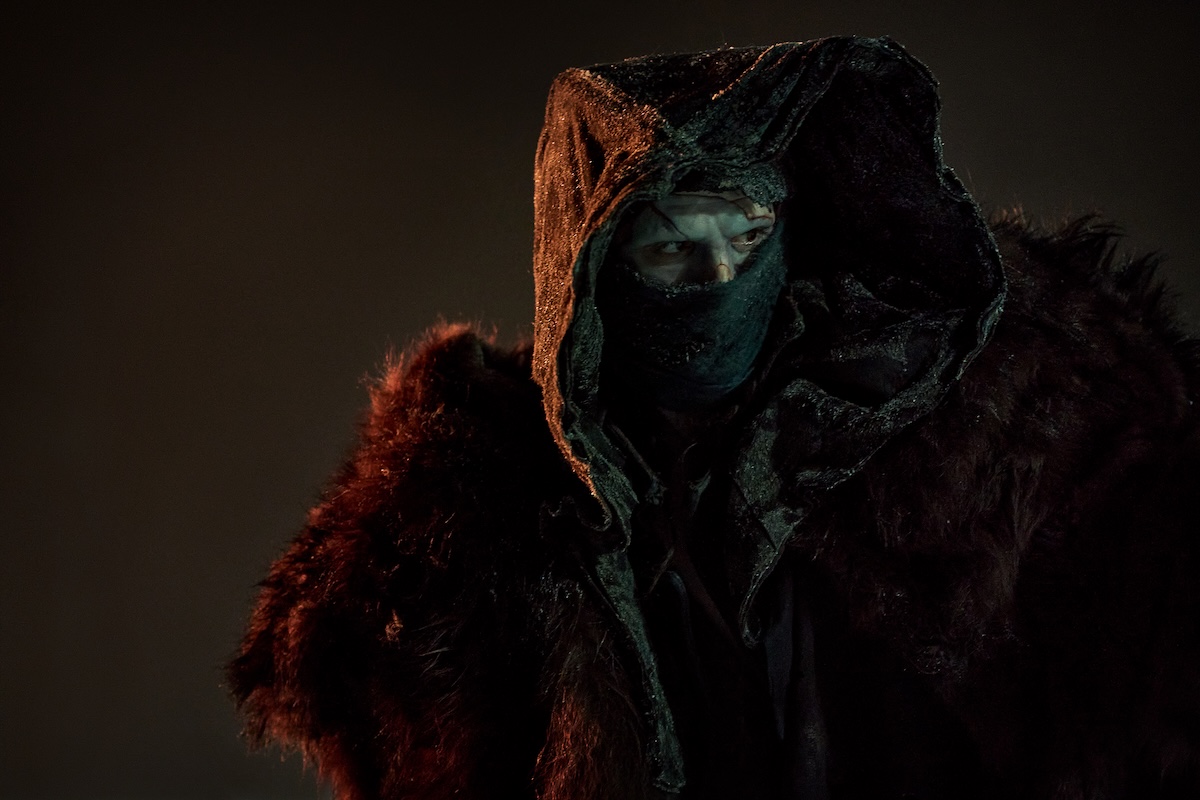
Frankenstein immerses the viewer into Frankenstein’s story as he’s about to meet the consequences of his creation.
Instead of following the familiar formula of watching Frankenstein’s (Oscar Isaac) descent into madness and the Creature (Jacob Elordi) coming alive, unraveling traits as he navigates the world, we meet the Creature in the midst of one of the most human emotions of all: anger.
It’s true gothic storytelling told in two tales: Frankenstein’s tale (Part 1) and the Creature’s tale (Part 2). Throughout the film, it’s evident that this is purposeful, as themes like symmetry are introduced.
Frankenstein and the Creature’s tales are symmetrical and mirror each other. Frankenstein’s tale shows the audience his descent into madness and essentially becoming a monster. It begins with his childhood and difficult relationship with his father, leading up to his mother’s death and, of course, the creation of the Creature.
The Creature’s tale begins right when Frankenstein tries to destroy him and leaves him for dead. He embarks on his journey and stumbles upon a farm where a family lives. In his tale, we witness the Creature explore his “humanness.”
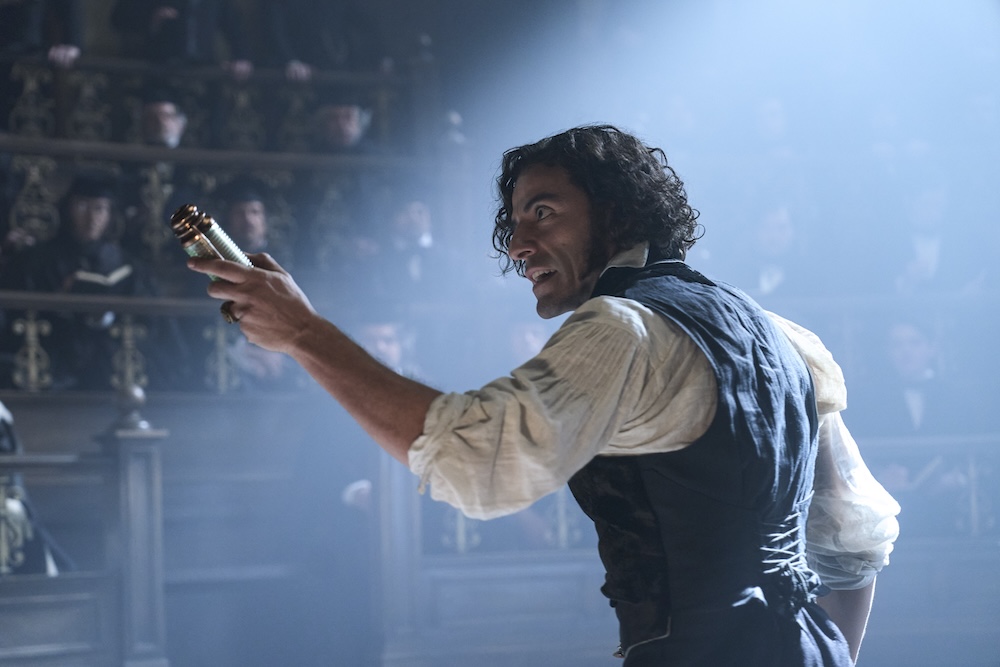
In del Toro’s Frankenstein, a perfect blend of both prior adaptations comes to fruition. It stresses the idea of the Creature adapting to his surroundings — studying the humans he secretly lives with and learns about life through their eyes.
Oscar Isaac is the perfect Victor Frankenstein and blends madness and passion. His Frankenstein is charismatic, and as the film plays out, you can’t tell if you want to root for or against him, until Jacob Elordi’s Creature is introduced.

Elordi does a fascinating and fantastic job of conveying this with his physique and mannerisms. As the Creature, he speaks with his eyes and movements, and leaves an impression on the audience by pulling on their heartstrings with his innocence to the world.
The core of the Creature’s character is that he is experiencing the world in an endearing way while also visually looking like what he is—a creature. The makeup job on Elordi’s Creature pays homage to the classic stitches and green we are used to seeing in mainstream media, but makes it a bit more believable in del Toro’s version of this world.

Mia Goth portrays Elizabeth Valenza, and in this adaptation, Elizabeth is her own sort of scientist and serves as the voice of reason. She sees the humanness in the Creature and the monster in Frankenstein.
Del Toro cleverly uses her as Little Maria, who befriends the Creature in the original movie from 1931.
It’s not the only instance where del Toro pays homage to the original; much of it comes from the costume design. Elizabeth’s wedding dress is reminiscent of Elsa Lanchester’s in Bride of Frankenstein (1935).
With the themes of man versus monster, mortality, and human emotion, Guillermo del Toro’s Frankenstein pays respect to Mary Shelley’s novel and honors adaptations that came before.
With a limited theatrical run, you can watch Frankenstein (2025) on Netflix on November 7th.
Follow us on X and on Instagram!
Like us on Facebook!
Samantha Barker

Samantha Barker is a writer and fangirl from New Jersey. When she's not rewatching Daredevil or listening to the Beatles, she's cosplaying and attending comic-cons with her friends. Sam also co-hosts a podcast called Fangirl Confessions and writes for her Substack, Samantha, etc. Connect with her on X: @0nyourleftsam and IG: @onyourleftsam.