
How do you make a 50+ year old album feel fresh? How do you make it relevant again? For Lindsey Buckingham and Stevie Nicks, it’s easy.
The pair’s debut album — and the only record they put out as a musical duo — had its first reissue in decades this September.
This is the album that spurred Mick Fleetwood to ask Lindsey to join his band, Fleetwood Mac. We all know the story: Lindsey refused unless Stevie could join, too. Mick agreed, and rock ‘n’ roll history was made.
Long overshadowed by Fleetwood Mac heavy hitters like Rumours and Tusk, mostly due to its lack of accessibility, Buckingham Nicks is just as strong and shows the beginnings of what’s to come for the musical duo.
Like a fortune teller, Buckingham Nicks predicts the decades long ups and downs that the pair would face in their tumultuous relationship, though a reconciliation seems to have taken place for this reissue.
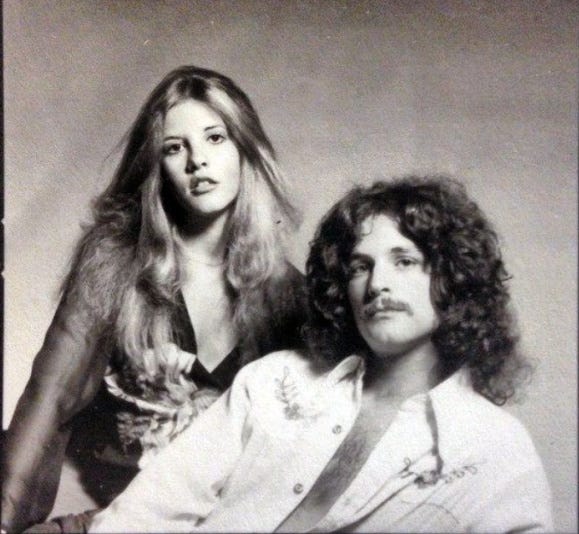
Released in 1973, about two years before the two joined Fleetwood Mac, this is a solid record with the unique musicality and lyricism fans have come to know and love.
If you’re like me, you’re one of the lucky few who owns a coveted original pressing that’s been long sought after by fans, collectors, and purists alike.
Thankfully, it’s now available on physical media again and digitally for the first time ever. Showcasing stunning harmonies and the quintessential ’70s folk rock sound that just can’t be beat, this is a timeless album with deep meaning.
To celebrate the rerelease of Buckingham Nicks, we’re reviewing and taking a deep dive on the album.
Starting strong with the acoustic “Crying in the Night,” the album introduces us to Stevie Nicks’ distinct vocals and songwriting abilities, as well as Lindsey Buckingham’s mastery of the guitar. This is a catchy tune and promises for a fun, satisfying record to follow.
Buckingham’s expert playing takes front and center on an all instrumental track, “Stephanie.” As the title is Stevie Nicks’ real first name, it makes sense that her partner at the time would pen this tender, beautiful tribute in her honor. Even without any vocals, this song brings to light what a shame it was that this album was nearly lost to time.
Next up on the track list is “Without A Leg To Stand On,” kicking things into a higher gear with Buckingham on lead vocals. Even in their origins, it’s obvious the duo are penning songs and deliberately singing to one another.
These two are nearly laying their souls bare; this raw vulnerability produces the best music. It feels like we, as listeners, are digging through their intimate love letters.
After this tune we get into perhaps the best song on the record. “Crystal,” written by Nicks and sung by Buckingham, has been crucial for her throughout her entire career. Another, near identical version, can be heard on the self-titled Fleetwood Mac, the inaugural album Buckingham and Nicks worked on when they joined the band, but there’s something so magical about hearing it for the first time here.
Stevie Nicks also revisited this later in her career, for the 1998 Practical Magic soundtrack. Written for Buckingham, she wanted him to sing it; the 90s version is the first instance we hear her sing lead on “Crystal,” and it’s breathtaking. Not a high energy powerhouse of a rock ‘n’ roll song, “Crystal” is, like most of Buckingham Nicks, soft and poignant. It sticks with you.

Closing out Side 1 on a high note, “Long Distance Winner” begins with one of my all-time favorite Stevie Nicks lyrics:
“Sunflowers and your face fascinate me.”
This line could only have come about during the 70s, but it also could have only come from someone deeply in love. No matter the ups and downs of their personal, and oftentimes volatile, relationship, these two are musical soulmates. Buckingham Nicks is their love child.
The entire song is packed with some of her best writing and gives us our first real taste of electric guitar as Lindsey shreds away, reigning himself in without going into a full fledged solo.
On a casual listen, the songs on Side 1 could nearly run together, such is the tightly produced sound on this album. While distinct lyrically, some of the instrumentation, a key facet of Buckingham’s guitar playing, is not as dynamic as it could be, and is, on some later albums of his. Folk rock can still include some electric instruments without losing its integrity.
Lindsey and Stevie may be pushing each other to be their best lyrically on this album, but Lindsey needs other musicians, like Waddy Wachtel, featured heavily on this record, to bring out the full range of his guitar work. After all, he doesn’t just stick to acoustic guitars on Fleetwood Mac albums.
The second side is more ambitious, and this record has some of the best vocalization of Stevie Nicks’ career. Her voice is clear, powerful, and refreshing.
The halfway point of the album opens with “Don’t Let Me Down Again,” a pleading ditty that sounds like it could be from Rumours. Again, we hear more electric than acoustic, and it’s no stretch to almost hear echoes of later bandmate Christine McVie’s backing vocals, as the three made their harmonizing a trademark of Fleetwood Mac.
This tune feels the most high energy so far, and the soaring vocals are catchy. Here, Lindsey lets loose with his guitar work, and it works perfectly with the haunting vocals that tend to take a back seat.
Another instrumental number, this time a cover, “Django” features a Spanish guitar and some light strings. No vocals are necessary to induce a heartbreaking song. Only one minute long, it leaves listeners wanting more. This is a tune you can sit and daydream to.
As “Django” fades, “Races Are Run” slides into our ears. Here, Stevie’s vocals are highlighted once again, but a slower composition, it feels like the weakest on Buckingham Nicks so far. Sparse instruments and so-so lyrics aren’t as charismatic or compelling, but the harmonies are still a strength.

The blues infused track “Lola (My Love)” begins with some of the most distinctive guitar work yet. It also has a more soulful focus, found in Buckingham’s vocals. It’s a bit more direct and macho lyrically but, thankfully, not bordering on crude.
“Frozen Love” is how you close out an album. Coming in at more than 7 minutes, each second is wisely used with the pair sharing lead vocal duties. This song is fueled by passion, and at its core, a dramatic instrumentation builds to a crescendo that leads us back to the refrain. This is reminiscent of other 70s heavy hitters like The Eagles or the Allman Brothers.
I’m always going to be able to reach you
And if you go forward, I’ll meet you there
Thankfully, they both went forward, and we met them there. The sentiment sounds like a scrapped lyric from something like “Silver Springs,” proof that these two have always made music for one another no matter where they were at in their relationship.
It’s fitting that “Frozen Love” is the only song here credited to both songwriters; everything else aside from “Django” is written by one or the other.
The strengths of Buckingham Nicks are the blending of these two masters’ voices. They simply and fully own their singing. Their sound is not one you would hear in most mainstream music today, when many artists opt for autotune, or the dreaded and often mocked “indie” way of singing remains popular. The 1970s produced some of the best music with the most staying power for a reason.
Few albums from this decade will sound as refreshing and timeless as this 52 year old record. Stevie and Lindsey could not have known just how well they capture and master a sound.
Not a commercial success, Buckingham Nicks eventually faded into obscurity, even though it was enough to capture Mick Fleetwood’s attention when he was looking to go in another direction with his band. We have this album to thank for Rumours, Tusk, and countless classic Fleetwood Mac songs by Lindsey Buckingham and Stevie Nicks. Their roots should be — and now can be–properly celebrated.
What is your favorite track on the album?
Follow us on X and on Instagram!
Like us on Facebook!
Amanda Larch Hinchman

Amanda Larch works as a writer and editor when she’s not in the middle of a good book. Learn more about her work and view her portfolio at www.amandalarchwriter.com/ and keep up with her on Goodreads @_groovyginger_.