
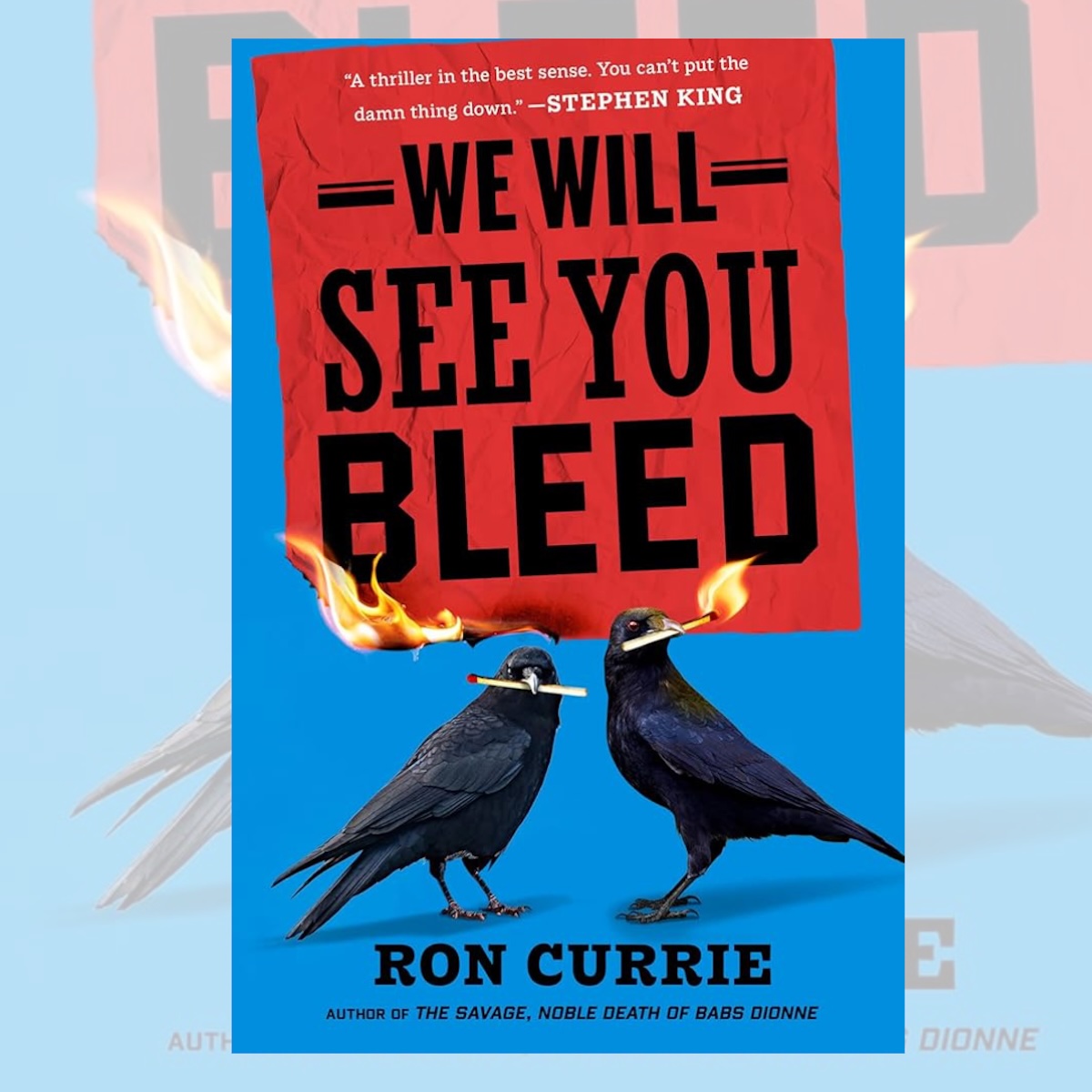
Ron Currie’s We Will See You Bleed opens in late summer 1984 in Little Canada, the French-Canadian neighborhood of Waterville, Maine. The place is already bleeding out.
The paper mill strike has gone a year without resolution. Everyone is broke, exhausted, and losing faith that anything short of blood will move the needle.
Babs Dionne runs the union local. She also killed a man as a teenager, swore off violence, and has held that vow with the grip of someone who knows exactly what she’s capable of.
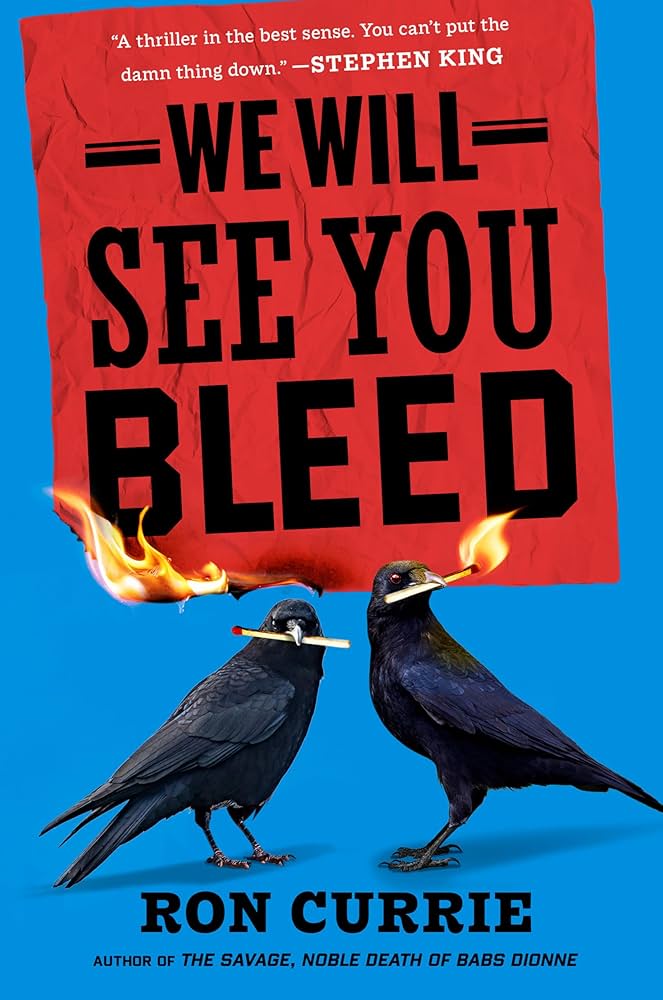
That tension—between principled restraint and the pull of necessary force—is the engine of this novel. Currie lets it foment to brilliant effect.
The setting does a lot of work here. Currie’s Little Canada has a grammar of its own: insular, Catholic, French-speaking, deeply suspicious of outsiders, and bound by loyalties that run older and deeper than any labor negotiation. The granularity is earned, not just researched.
Furthermore, the novel has a structural intelligence. There’s a slow-freight-train quality to how the pressure accumulates—steady, relentless, clearly heading somewhere terrible.
When things finally break, the payoff lands because Currie has been patient enough to build it properly. That’s rarer than it should be in crime fiction.
The men in We Will See You Bleed are mostly broken. The women are furious. Rita’s return functions as both an emotional mirror and a plot accelerant. Their dynamic gives the novel warmth and tension simultaneously.
Babs herself is the real achievement. She’s not a hero in any clean sense. There’s ruthlessness in her, something not unlike the amorality in a mafia character.
Reading closely, it’s clear Babs wants to protect her people. The methods are a different conversation. The novel holds both things without flinching from either.
Rheal’s choices, in contrast, are where some readers may lose the thread. The decisions feel underexplained—not in terms of plot, but in terms of motivation.
Currie doesn’t give quite enough time to those choices. They may feel convenient rather than inevitable, which is not a fatal flaw but a real one.
Nevertheless, the pacing carries the book over its rougher terrain. We Will See You Bleed moves with conviction, and conviction covers a lot of ground. The prose is raw and physical without becoming performatively gritty—Currie has enough craft to know the difference.
The prequel structure is handled cleanly. You don’t need The Savage, Noble Death of Babs Dionne to read this. The world is legible on its own terms, as befits a chronological backstory.
Readers who want more of this woman after finishing will find the back catalog waiting and rewarding.
We Will See You Bleed is not a comfortable book. It is, however, a serious one. This is a novel about what communities do when every legitimate option has been exhausted, and the only thing left is to decide what they’re willing to become.
Ultimately, Currie dramatizes, he doesn’t editorialize. He trusts the situation to carry the moral weight. His bet looks to have paid off.
We Will See You Bleed is a crime thriller by Ron Currie, published by G.P. Putnam’s Sons (Penguin Random House), with a page count just under 400. It is the second installment in the Babs Dionne series, serving as a prequel to The Savage, Noble Death of Babs Dionne. It publishes July 7, 2026 in the United States and is available for pre-order now at major retailers.
Follow us on X and on Instagram!
Like us on Facebook!
Quinn Quē

Quinn Quē is a storyteller & journalist writing regular interviews, reviews, and features. They've been fascinated with the multidisciplinary arts since a child, particularly film, literature, and television. They love microblogging, so feel free to hit them up on Substack Notes or Tumblr about any recent articles or just to shoot the pop culture breeze!