
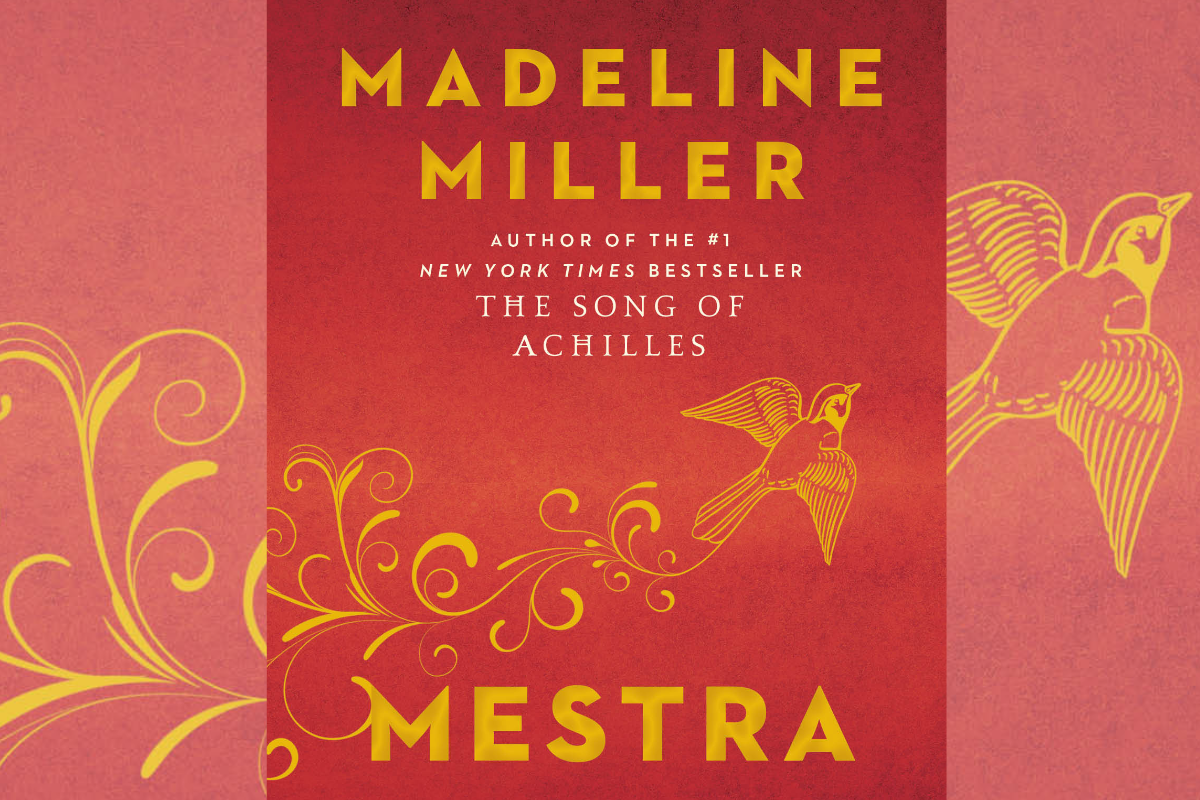
Madeline Miller is back! With the release of Christopher Nolan’s The Odyssey earlier this year, this fall is the perfect time for the queen of myth retellings to release her latest work.
While not her next highly anticipated full-length story or novel, Mestra is an enjoyable, albeit brief, venture for Miller, who has been dealing with health issues.
Mestra marks her first work of fiction since Galatea, another short story, published in 2022, and comes many years after the groundbreaking Circe and The Song of Achilles were published, books that completely transformed the genre.
With Mestra, Miller retells the story of the titular character, who is granted a gift by Poseidon to change into any living creature of her choosing. This is revealed after her father, a king reduced to poverty after he dishonors the goddess Demeter, sells Mestra for food.
Mestra’s father isn’t just poor and destitute. He has been cursed with an insatiable hunger. No matter how much he eats, he cannot satisfy his stomach, and he never gains any weight, always appearing as starved on the outside as he feels on the inside.
As Mestra is taken from her home, meant to be married to the farmer who bought her, they ride past the sea. Here, she recalls an attack by Poseidon, yet, thinking she might have his favor, she silently pleads for help.
Suddenly, she is transformed into a bulking, hairy fisherman. In this guise, she frightens her would-be husband and returns home to her father and the ruin he’s made of their household.
As Mestra tells him of her mysterious ability, her greedy father makes her test its limits. Can she turn into strangers, or only people she’s seen before?
Soon after he has his results, the disgraced king hatches a plan.
He will take Mestra to the marketplace of the city, where she’ll appear as a young woman to be sold for food or money. It may sound barbaric — indeed it is — but this story does take place in ancient Greece where such practices, unfortunately, aren’t too far-fetched.
In many instances, Mestra takes on the form of her beloved cousin before she realizes she can turn into animals, too. Each time, she’s able to escape before any physical harm can befall her.
From here, she becomes the king’s prized horse or a dairy cow for a poor farmer, escaping each time to return home. Her father feasts and feasts with the money he makes, leaving nothing for Mestra.
And still she pities her father, thinking if she can only feed him enough, his hunger will be satiated. It never is.
Eventually, she realizes the cruelties of her father and the harm he has wrought, to people and the goddess Demeter alike. Mestra is faced with a choice. Should she use her unique gift to find freedom for herself or stay and try to help her father?
When he turns on her, the choice is made, and the story comes to a close. There is a happy reunion in store, as well as a newfound lightness in Mestra herself, and her father gets what he deserves in a gross, ironic, twist of fate.
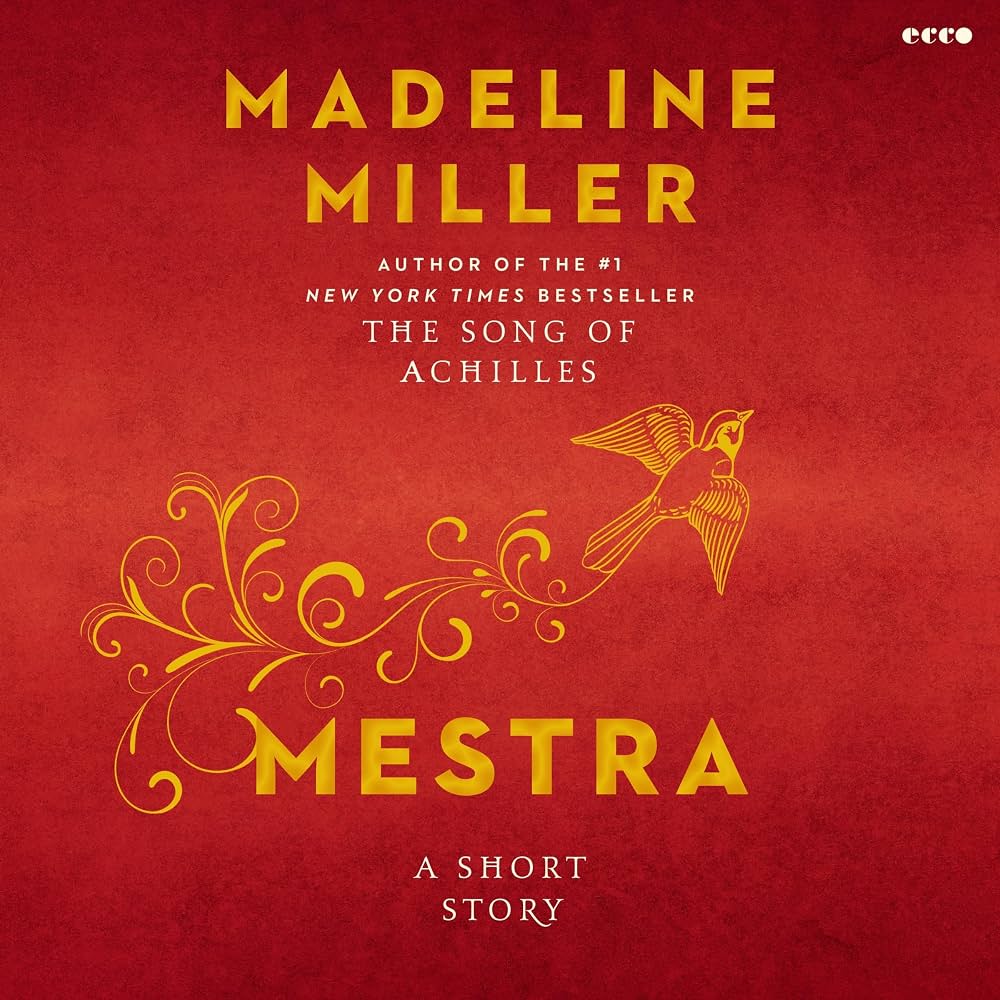
It’s difficult to review such a short story. Just when readers feel fully immersed in this tale, it’s over all too soon.
The story feels a little too straightforward, as well. There’s not as much depth here as can be found in Circe or The Song of Achilles, where Miller had more time and space to explore central themes and character development.
The question is, would we have preferred to wait for Miller’s next full-length story?
Not that this isn’t an enjoyable tale of a woman claiming a power for herself and choosing to live her life rather than be chained to a cursed man, but we would have just enjoyed more of it!
Some themes Mestra begins to explore — or rather, lets readers ruminate on after the story comes to a close — are the depths of family trauma and, indeed, personal trauma. Mestra, above all, relies on herself, but she is full of kindness and compassion for others. Because of these qualities, she makes for an enjoyable heroine in this tale.
As always, Miller delivers a wonderful glimpse into the ancient Greek world. This novella features just enough backstory, and one major highlight is the storyline itself; this is not a well-known myth, and Mestra’s story is safe in the hands of such a talented writer.
There are no other authors vying to retell Mestra’s story, and now, they need not bother, as Miller shows, no matter short or long the book, she is still the queen of myth retellings. With Mestra, she is faithful to the original myth while adding just enough to make her own truth shine through.
We eagerly await any other work she can produce.
So what makes Mestra worth reading? It’s new work penned by Madeline Miller, for one. We get to read of a little-known myth that features a powerful woman with a unique gift. Or is it a talent that she possessed all along?
Miller deftly uses her own talents to weave this tale, and the result are magical — if a little short.
It can be read in one sitting; there’s only a couple months to hit that 2026 reading goal, after all!
What did you think of Mestra? Let us know in the comments!
Mestra is available now wherever books are sold.
Follow us on X and on Instagram!
Like us on Facebook!
Amanda Larch Hinchman

Amanda Larch works as a writer and editor when she’s not in the middle of a good book. Learn more about her work and view her portfolio at www.amandalarchwriter.com/ and keep up with her on Goodreads @_groovyginger_.