
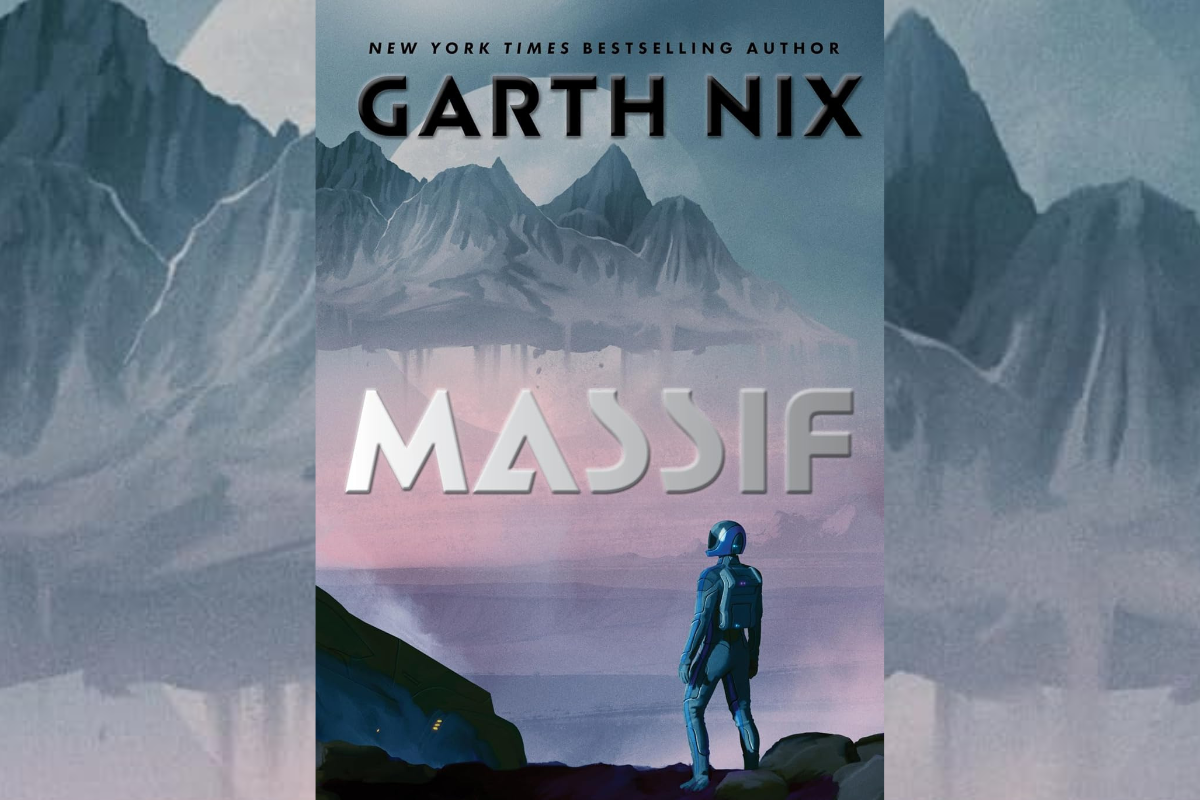
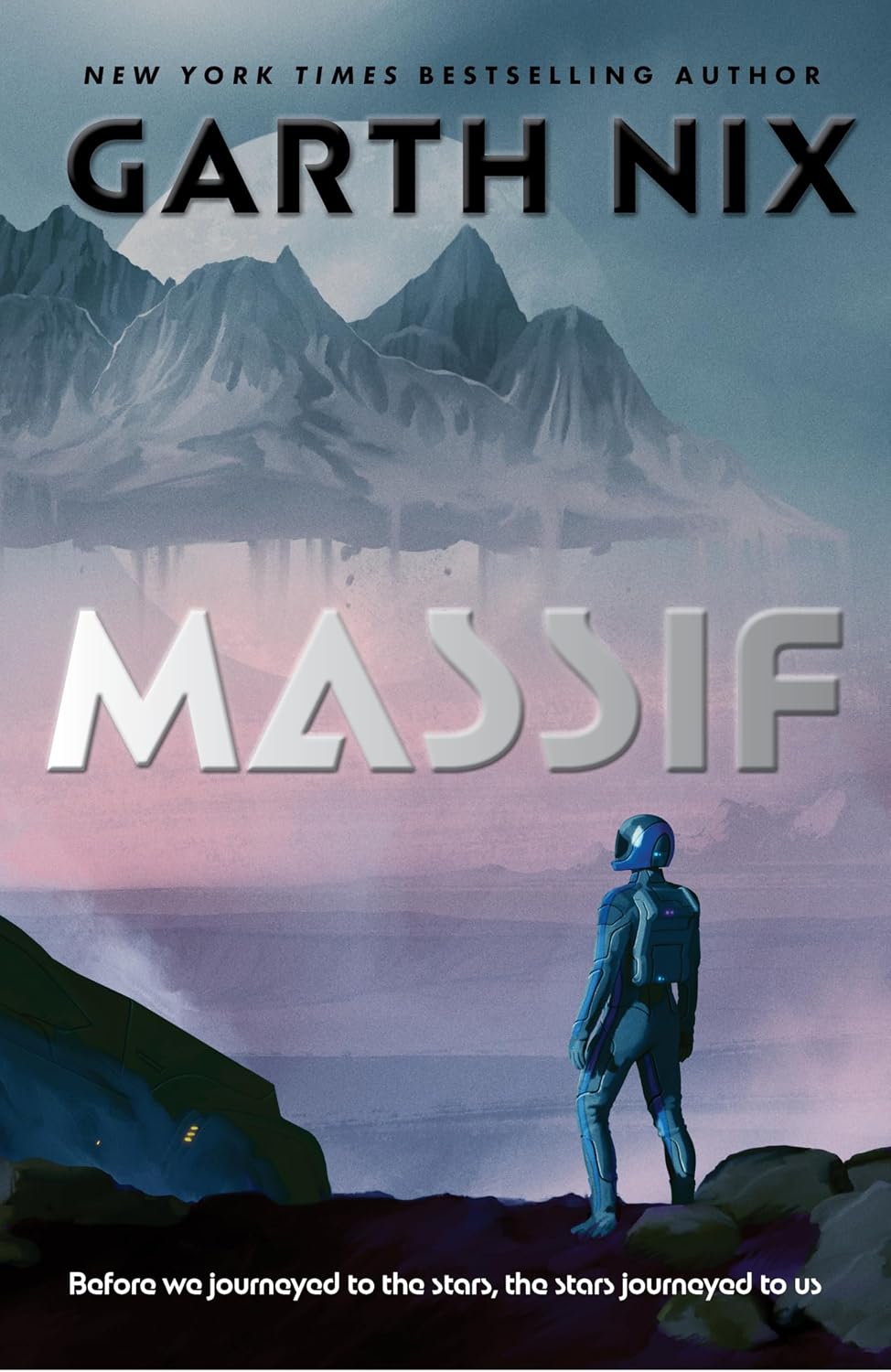
A hundred years from now, a piece of Madagascar breaks free of the Earth and drifts into orbit. That single image is the engine of Massif, Garth Nix’s first outing in adult science fiction.
And for the length of its prologue at least, that image is genuinely thrilling. Each sentient mountain entity, called a Massif, is an avatar, an inscrutable, human-like figure with its own temperament and its own unknowable agenda.
Sure, the pitch is irresistible on paper. Gigantic, living and moving mountain ranges roam the galaxy, and humans hitch rides on them to colonize new worlds. This with brick-like ships called Basics stabilizing the connection through a mental link.
Until we’re thrown into the rockier meat of the core story. The trouble comes after the world-building, with characters who never quite match the liveliness of the premise.
Unfortunately, Nix builds a military adventure around Ship Leader Parnell. The pilot, a rather wooden man of action, drives the corvette Sassafras through an endless, on-again-off-again war between Earth and Mars.
When a routine mission to capture new territory goes sideways, Parnell loses a crew member. He spends the rest of the novel trying to get them back. Along the way, he brushes against a Massif-based delusion. It is a psychic hazard that hints at horror the book is too diffident to indulge.
Therein lies the frustration. Massif keeps its most compelling material—what the Massifs actually are, what they want, and what they’re doing to the humans who bond with them—locked away until the final stretch.
Indeed, for most of its 352 pages, the novel is content to be a rescue-mission war story. Tactical jargon, chain-of-command friction, and the occasional parade are all rendered in exhausting detail.
That authenticity isn’t an accident, of course. Nix served five years in the Australian Army Reserve, in an assault pioneer platoon, and it shows. His soldiers wait, grumble, and follow orders even when they don’t fully understand the objective. All very real.
Alas, readers hoping for a more challenging or cerebral approach will be left largely wanting. What we get feels authentic to military life, but is also, in large doses, a slog.
Nevertheless, an interior designer with confidence in their furniture layout doesn’t make up for the house having no soul. Or no one worth visiting at home.
Truly, the characterization suffers and struggles badly in parts. Parnell is competent, but he’s carrying too much weight as the story’s emotional center.
Worse yet, the crew orbiting him rarely rises above thin sketch-work, especially in the case of a romance subplot that arrives, does its job, and exits almost as quickly as it showed up.
Relatedly, the prose leans hard on exposition in Massif. The opening chapters bring to mind the scrolling text at the start of a Star Wars movie—minus the mercy of brevity.
There is simply a lot to explain, and Nix explains most of it upfront rather than trusting the reader to piece it together progressively through narrative. Too much telling, not enough showing.
Once the info dump clears, the plot does pick up speed. Yet the structural problem persists: an inciting mystery doesn’t detonate until roughly ninety percent of the way through.
As a result, a whole novel’s worth of runway is burnt up before the book can even set its own payoff up properly. Once that arrives, it resolves just enough to satisfy and ends without much room to breathe.
Given the size of the mystery Nix spends hundreds of pages building, that’s a strange choice. It also makes for an odd fit with a book billed as a stand-alone.
Where Massif does work is in its horror-adjacent material. Glimpses of “tentacled horrors,” the drumming-induced delusions, a devastating late fragment from a lost crewman named Kaz—these moments hit with a force the rest of the book rarely matches.
Still, it’s a shame those pages are the exception rather than the rule. In a genre landscape stuffed with Big Dumb Objects, Nix found a genuinely strange and original one, and then mostly used it to move soldiers from point A to point B.
Fans of Nix’s Old Kingdom series may still find stuff to like here, particularly his gift for gallows humor under pressure. But readers coming to Massif hoping for truly adult contemporary speculative fiction, the kind of high-concept swing Isabel J. Kim takes in Sublimation, will likely walk away wanting more than the book is willing to give.
Ultimately, Massif reads like a writer testing the waters rather than committing to something. There’s a better, weirder book buried somewhere in these mountains. The one we got, unfortunately, prefers to stay on the surface.
Follow us on X and on Instagram!
Like us on Facebook!
Quinn Quē

Quinn Quē is a storyteller & journalist writing regular interviews, reviews, and features. They've been fascinated with the multidisciplinary arts since a child, particularly film, literature, and television. They love microblogging, so feel free to hit them up on Substack Notes or Tumblr about any recent articles or just to shoot the pop culture breeze!