
Reasonably well made despite its indulgent length, The Weight has a fatal flaw. It desperately wants to be deeper than it is.
The film clearly seeks to rise above the maudlin, even idealistic, formula it’s ultimately a slave to. To be more than what it really is.
However, a more honest rendering of these Depression-era events would be a tragedy, and this film simply can’t bear that particular burden. Nor the alternative.
Yes, a more honest parable or adventure, playing the formula straight, wouldn’t be trying so hard to hide its sentimentality or its seams either. Both of those alternatives, in fact, would undoubtedly be shorter.
Thus, that means the viewer’s time ends up wasted splitting the difference between competing visions. It is a slog, only partly redeemed by Ethan Hawke’s starring performance.
Padraic McKinley, making his feature directorial debut here after years as an editor, has rendered a story penned by Matthew Booi, Matthew Chapman, and Leo Scherman, set in a depression-era Oregon.
Hawke plays Samuel Murphy, a destitute, widowed veteran turned convict, hoping to get back to his young daughter before the state can make her someone else’s. It is, in many ways, a standard story.
Murphy is a sort of Odysseus by way of Steve Rogers. He’s the archetypal man of many ways, capable of patching up anything from a car to a flesh wound, yet also shockingly principled against all odds.
Of course, his original prison conviction is all a terrible misunderstanding. Of course, his mettle and his morals get tested at every turn.
Once Murphy has proven himself a hard worker at the labor camp he was sent to, Warden Clancy (Russell Crowe) sends him off to haul gold through hostile wilderness alongside a crew of fellow convicts.
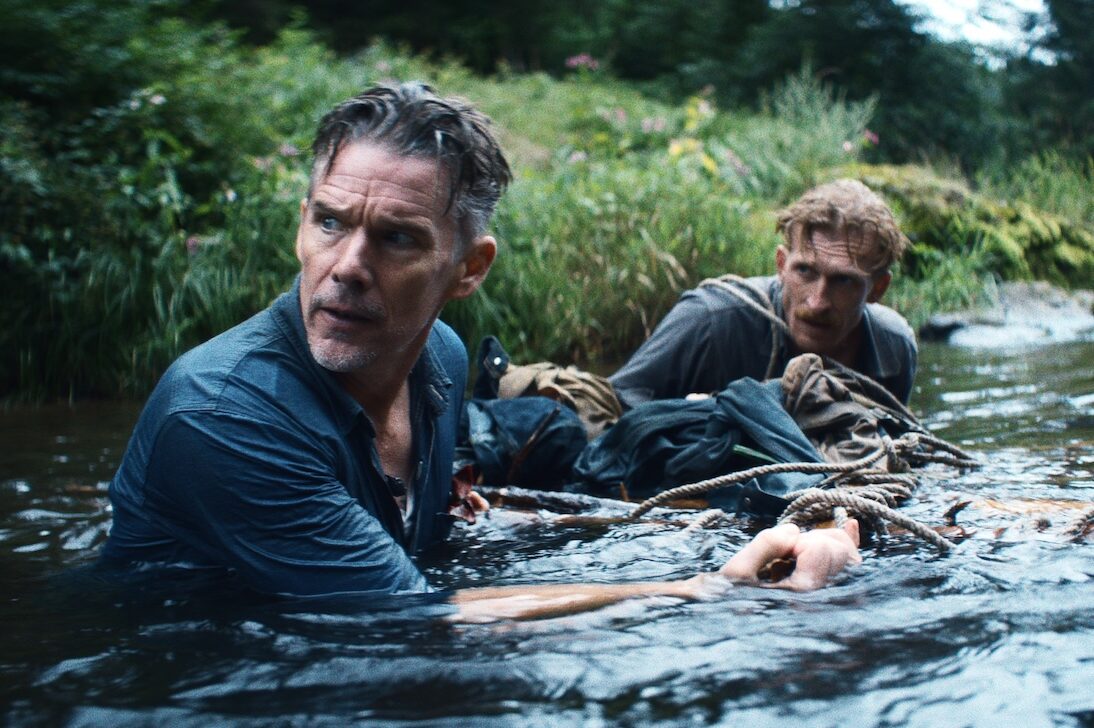
It is no surprise that Hawke is more than able in the role. Still, there’s a dryness to the performance, a certain remove, as though he’s playing the idea of a stoic survivor rather than fully inhabiting one.
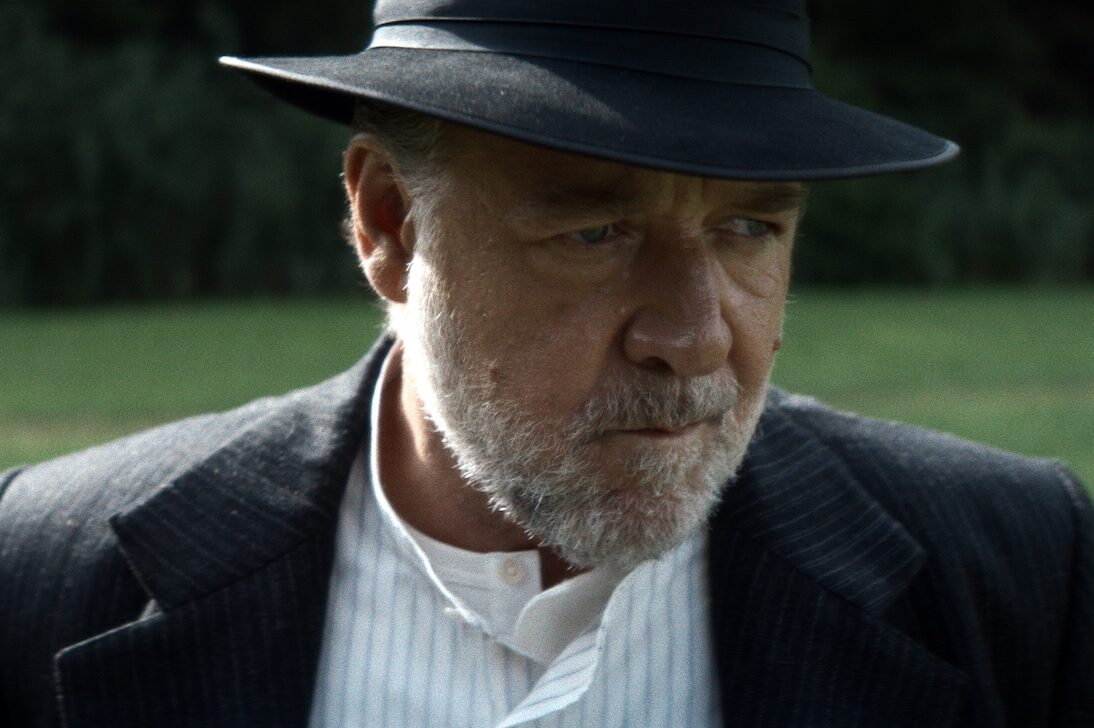
Crowe, for his part, seems to be just showing up in The Weight. His warden registers as complex on paper but barely onscreen. The performance itself feels perfunctory, like a favor called in rather than a character built.
Most of the supporting cast, unfortunately, fare little better. They read as archetypes first and people second, filling out familiar slots (the wisecracker, the brute, the quiet one) rather than surprising us.
Austin Amelio is the clear exception. His convict Rankin alternates between genuine menace, casual bigot, and something surprisingly sympathetic. It’s this unpredictability that makes him the one performance in the ensemble that actually keeps you off balance.
I know it is rare and odd for me to fault a contemporary film for not being cynical enough. The 21st-century cinematic graveyard is littered with ample examples of bitter, grim, and gritty fare.
But the difference splitting mentioned above is intrinsically tied to the film’s core problems. The Weight wants to be a dark rumination on the human narrative yet pulls its hardest punches.
A schmaltzy underdog narrative played straight isn’t gritty enough to register as prestige cinema. Meanwhile, a truly gritty film wouldn’t cop out this hard.
All of Murphy’s ingenious MacGyver moments and trite emotional tethers are stacked on top of one hand against a world that feels like it should swallow him up and push him out as detritus. It’s deeply dissonant.
Consequently, I can only offer the mixed-to-negative assessment given here. That’s largely because the film is well made on the acting and visual side, despite its poor storytelling choices.
The first act, along with chunks of the second, drags noticeably in decently sized stretches. What McKinley probably mistook for atmosphere-building or rapport-crafting instead just feels like wasted time.
In a better story, or one with the courage to take real risks, that indulgence might be forgivable. Here, though, it just adds to the pile.
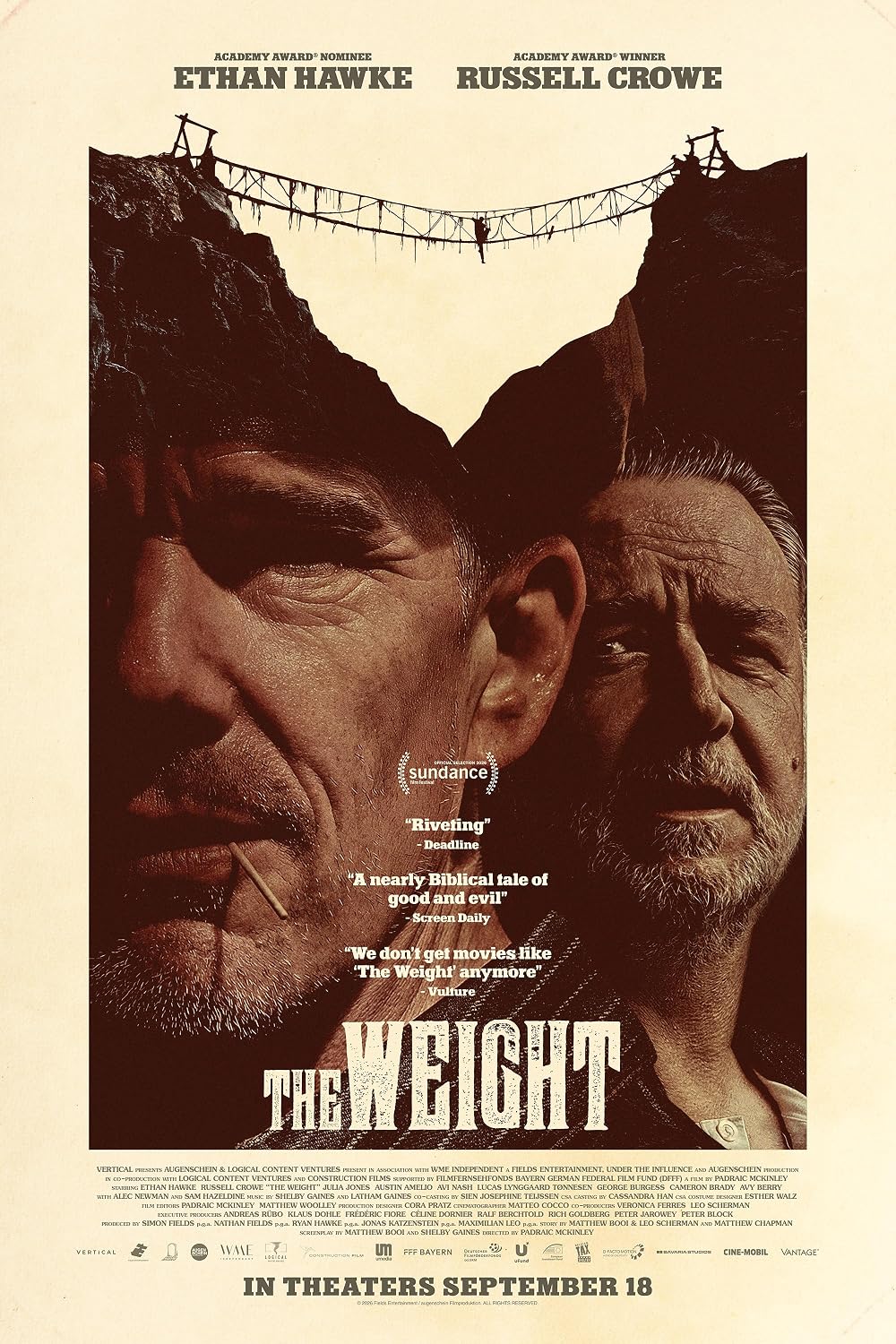
The Weight, from Vertical, hits U.S. theaters September 18, 2026, following premieres at Sundance and the Berlinale earlier this year.
Follow us on X and on Instagram!
Like us on Facebook!
Quinn Quē

Quinn Quē is a storyteller & journalist writing regular interviews, reviews, and features. They've been fascinated with the multidisciplinary arts since a child, particularly film, literature, and television. They love microblogging, so feel free to hit them up on Substack Notes or Tumblr about any recent articles or just to shoot the pop culture breeze!