
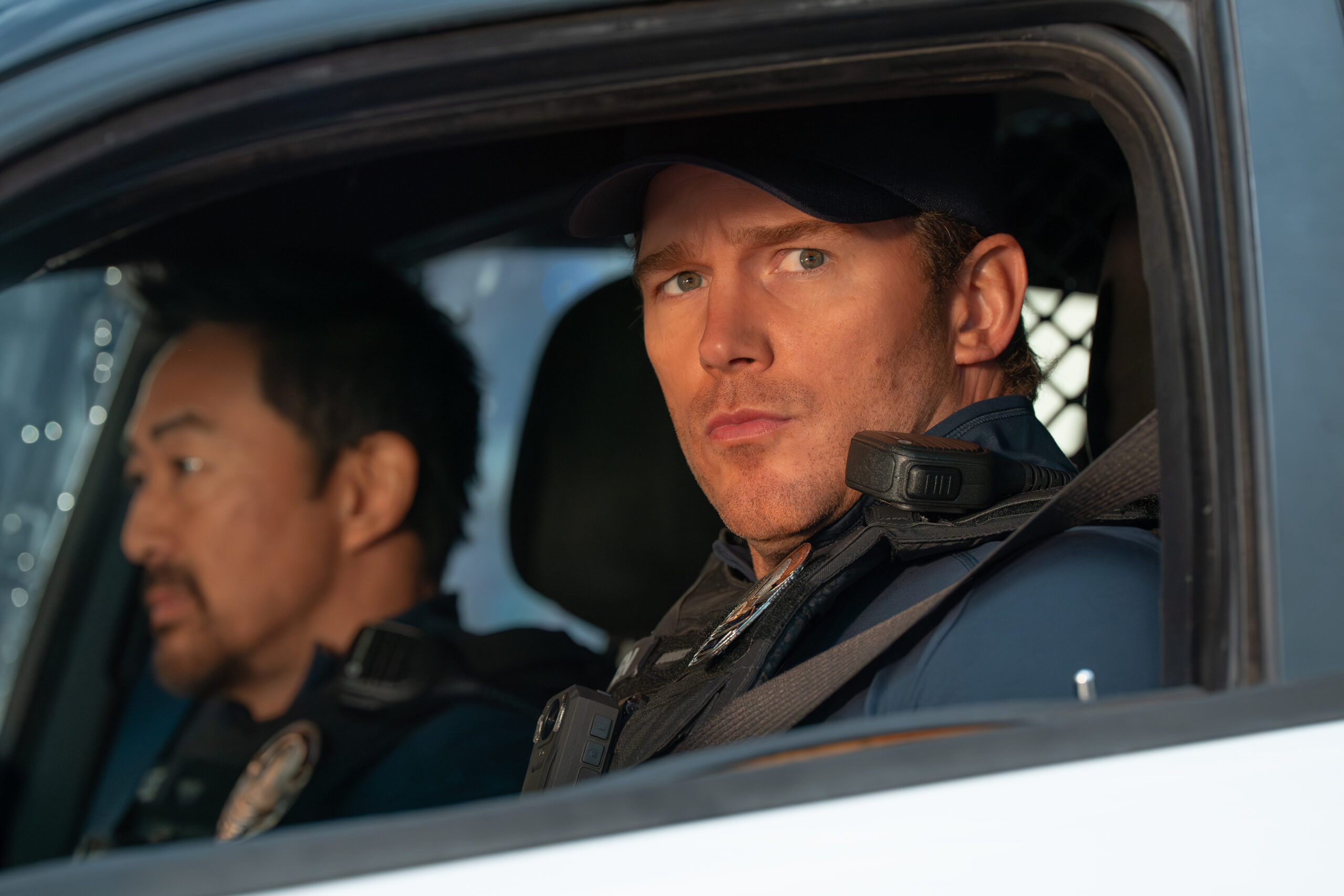
The sci-fi action thriller Mercy raises genuinely unsettling questions about surveillance, privacy erosion, and algorithmic justice.
The 2026 film is directed by Timur Bekmambetov and written by Marco van Belle. Produced by Charles Roven and Bekmambetov, the film stars Chris Pratt as Detective Chris Raven, alongside Rebecca Ferguson, Kali Reis, Annabelle Wallis, Chris Sullivan, and Kylie Rogers.
Released in theaters on January 23, 2026, by Amazon MGM Studios, the film presents a futuristic Los Angeles where AI judges determine guilt or innocence in 90 minutes.

Photo credit: Justin Lubin © 2025 Amazon Content Services LLC. All Rights Reserved.
In a media landscape saturated with AI discourse, the timeliness of the concerns the film raises deserves acknowledgment. Unfortunately, director Timur Bekmambetov’s execution buries the themes under layers of screenlife gimmickry.
The premise is intriguing enough. Detective Chris Raven (Pratt) awakens strapped to a chair in the Mercy Court, accused of murdering his wife, Nicole. He has 90 minutes to prove his innocence to Judge Maddox (Ferguson), an AI program he once championed, or face immediate execution.
However, Bekmambetov’s reliance on the screenlife format—telling the story entirely through security cameras, body cams, drone footage, and computer screens—feels exhausted before the opening act concludes. The technique worked in tighter, more focused films like Unfriended and Searching. Here, stretched across 100 minutes of courtroom procedural, it becomes actively tedious.
Moreover, the format severely limits what should be the film’s greatest assets. Chris Pratt can be a compelling, physical performer when given proper material to work with. Instead, he spends most of the runtime immobilized in a chair, straining to convey urgency through facial expressions alone.
You can see him working hard, but the literal and metaphorical constraints undermine his efforts.
Rebecca Ferguson fares even worse despite her considerable talent. Reduced to playing an emotionless talking head, she delivers lines in a robotic monotone that wastes her range. These two gifted performers never share actual screen space, robbing the film of any meaningful human dynamic.
The supporting cast does what they can with underwritten roles. Chris Sullivan brings welcome reliability as Chris’s AA sponsor, Rob, while Kali Reis struggles with a partner character whose motivations shift arbitrarily as the plot demands. Kylie Rogers spends most of her screen time crying on phone calls, a thankless task for any young actor.
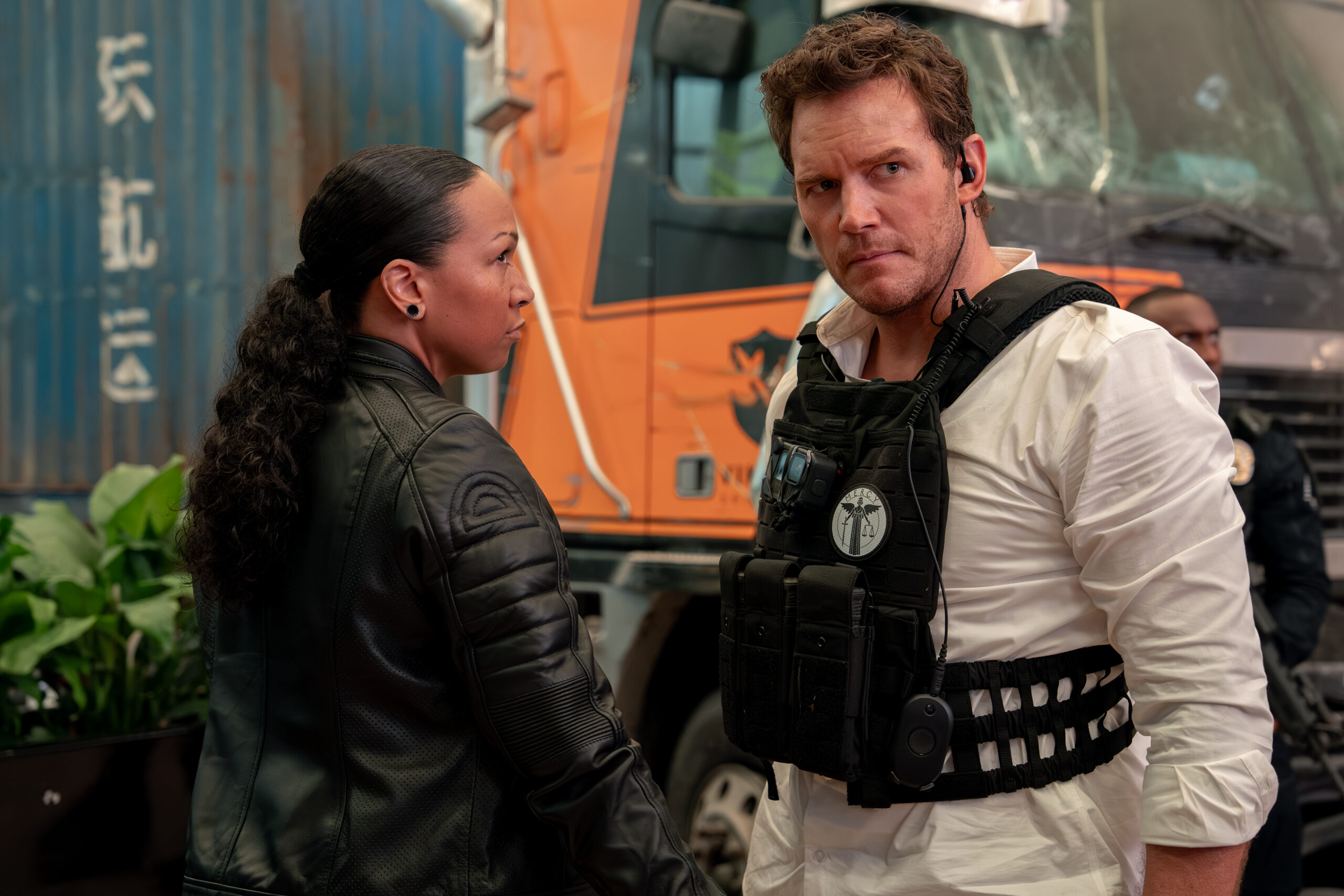
Photo credit: Justin Lubin
© 2025 Amazon Content Services LLC. All Rights Reserved.
Furthermore, van Belle’s script drops breadcrumbs with all the subtlety of a sledgehammer. Plot twists telegraph themselves scenes in advance, and the 90-minute real-time conceit creates pacing issues when early investigative efforts inevitably stall.
The screenplay knows it must stretch to feature length, resulting in repetitive exchanges and obvious time-filling.
The film’s treatment of AI governance veers between cautionary warning and inadvertent endorsement. Van Belle seems uncertain whether to critique algorithmic justice or celebrate technological efficiency. This ambivalence might have worked as deliberate complexity, but here it reads as muddled thinking rather than nuanced exploration.
Nevertheless, certain technical achievements warrant mention. Khalid Mohtaseb’s cinematography works within severe constraints to maintain visual variety. Editor Lam T. Nguyen deserves credit for making the countdown feel genuinely urgent, creating the illusion that events unfold in real time despite obvious impossibilities.
The IMAX presentation, while flashy, adds little substance to the experience. Bekmambetov’s futuristic Los Angeles consists primarily of one courtroom and occasional drone shots, hardly justifying the premium format. The 3D conversion proves competent but unnecessary.
In addition, the final act abandons whatever restraint the film tried to have. A third-act twist that aims for Breaking Bad-style intensity instead lands somewhere between arbitrary and laughable. The climax devolves into standard action movie pyrotechnics that betray the premise’s more cerebral potential.
Ramin Djawadi’s score works overtime to inject emotional weight that the screenplay hasn’t earned. His compositions are professionally executed, but no amount of musical manipulation can make predictable revelations feel surprising.
The film’s greatest failure lies in squandering its own premise. Van Belle identifies legitimate concerns about automated justice, loss of privacy, and society’s increasing willingness to outsource moral decisions to algorithms. These anxieties deserve serious dramatic interrogation, not background dressing for a mediocre thriller.
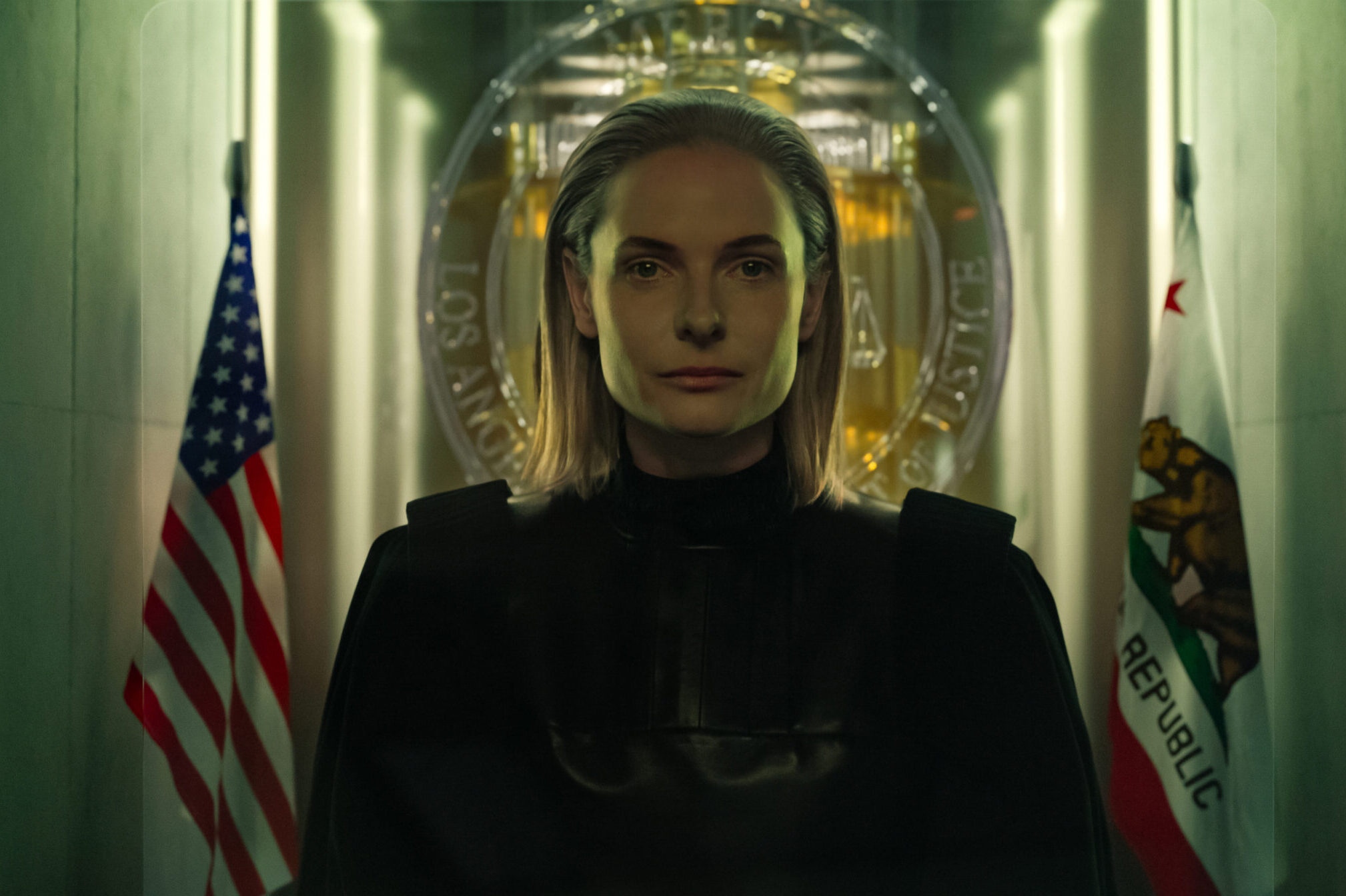
Photo Credit: Courtesy of Amazon MGM Studios
Ultimately, Mercy feels like a missed opportunity. It’s a relevant idea undermined by tired execution. Bekmambetov’s screenlife obsession transforms potentially provocative social commentary into a visual gimmick that overstays its welcome by the halfway mark.
For viewers seeking thoughtful AI cinema, Philip K. Dick adaptations like Minority Report still tower above this derivative attempt. For those wanting tense courtroom drama, literally any episode of Law & Order provides more compelling legal maneuvering.
In a year already crowded with AI-themed entertainment, this film struggles to justify its existence beyond capitalizing on trending topics. The technology it depicts deserves sharper interrogation than Bekmambetov provides.
Mercy is now playing in theaters.
Follow us on X and on Instagram!
Like us on Facebook!
Quinn Quē

Quinn Quē is a storyteller & journalist writing regular interviews, reviews, and features. They've been fascinated with the multidisciplinary arts since a child, particularly film, literature, and television. They love microblogging, so feel free to hit them up on Substack Notes or Tumblr about any recent articles or just to shoot the pop culture breeze!