

Miley has spent most of her career making unpredictability part of the experience. Pop, rock, country, psychedelia and experimental music have all found a place in her catalog, sometimes within the same era. Her willingness to change direction has made even her most divisive projects interesting.
That history makes Bass Persuades a strange album to evaluate.
There is plenty to like across its 10 tracks, and Miley remains one of pop music’s most distinctive vocalists. But coming just over a year after Something Beautiful, arguably one of her boldest experiments, Bass Persuades feels unexpectedly safe.
The album has the pieces of several fascinating ideas without ever deciding which one it wants to pursue. You can hear that problem almost immediately.
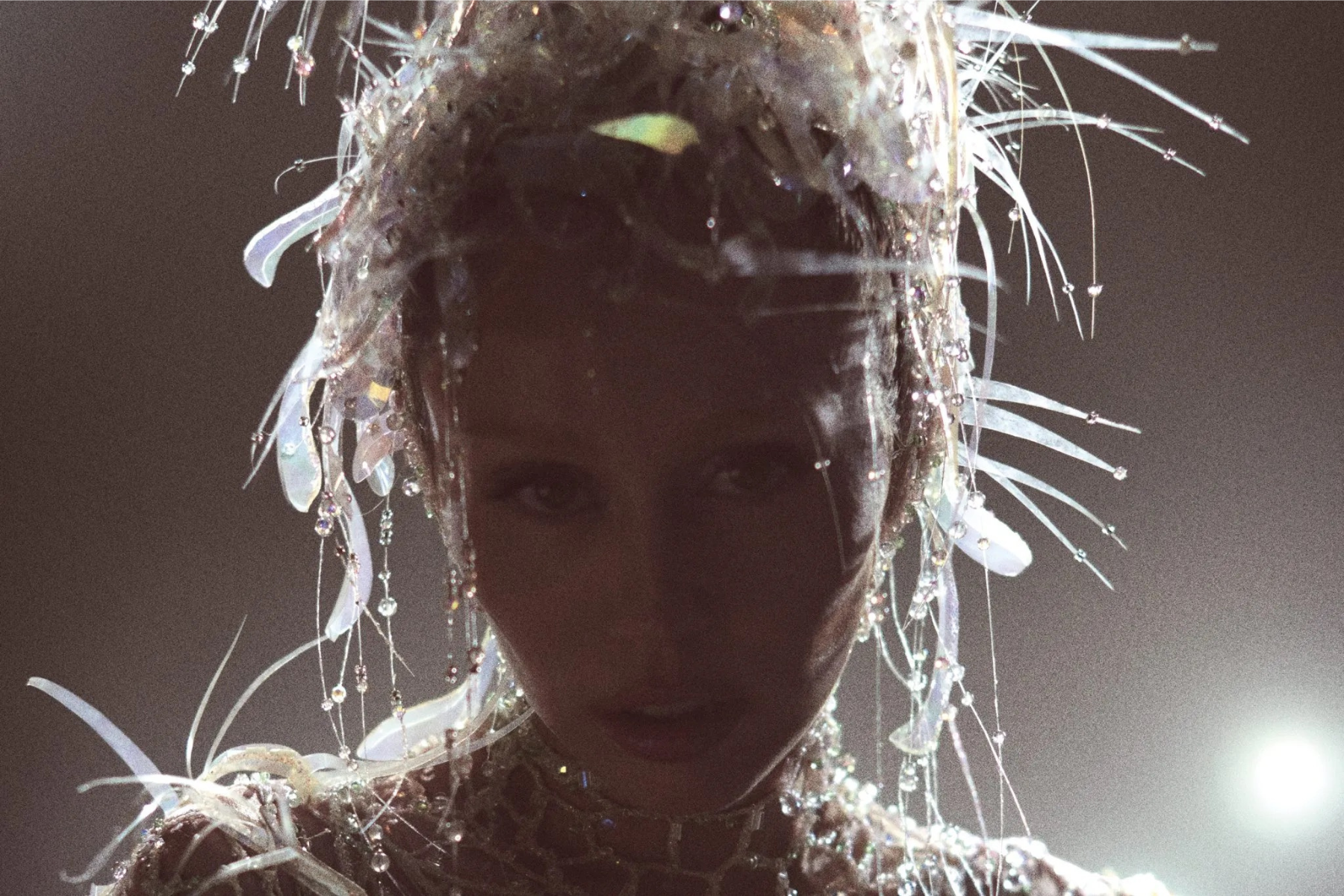
“Bass Persuades” is easily the best song on the album.
The lead single opens the record with an infectious bassline, dance-pop production and an invitation to disconnect from the screen and surrender to the music. It is energetic, sexy and immediately memorable, establishing what appears to be the beginning of a much more dance-driven Miley era.
And then the album promptly changes course.
“Different Religion,” featuring Model/Actriz, moves somewhere darker and stranger before “Let’s Get Married” and “Orbit” pull the record toward softer explorations of love and devotion.
“Orbit” in particular strips things down with acoustic guitar and atmospheric production, giving Miley plenty of room to lean into the vulnerability of her voice.
None of those songs are inherently misplaced on a Miley album. The issue is hearing them together in this particular order.
By the time “Aftermath” brings more movement back into the production, Bass Persuades has already established its most consistent trait: you have absolutely no idea where the next song is going to take you.
That unpredictability is not necessarily a bad thing.
Miley has always been experimental, and some of her best music has come from refusing to stay within one genre. Bass Persuades moves through dance-pop, rock, electronic music and stripped-back balladry, something that reflects the range she has developed throughout her career.
But experimentation and cohesion are not the same thing.
There are clear themes connecting these songs. Love, family, fame, vulnerability and Miley’s complicated relationship with the life she has lived in public repeatedly emerge throughout the record.
She has described Bass Persuades as capturing everything from a full heart to heartache and the parts of life that exist between those extremes. The individual songs support that idea, but the album itself never quite turns those themes into a larger story.
Instead, Bass Persuades often feels like a collection of songs placed next to each other rather than an album designed to take the listener somewhere.
That becomes especially noticeable because Something Beautiful was also stylistically adventurous.
The difference was that its experimentation felt tied to a larger creative vision. Here, the jumps can feel random.
The second half does find more momentum. Tracks like “REDLIGHTS,” “Neon Signs” and “Innocent Ways” move closer to the physical energy promised by the album’s title.
Those moments make it easier to imagine what Bass Persuades might have sounded like had Miley committed more fully to the dance floor without abandoning the stranger instincts that have made her recent work so compelling.
Miley’s voice, unsurprisingly, remains the glue.
Regardless of what surrounds her, that unmistakable rasp can turn even relatively straightforward material into something worth hearing.
The quieter songs allow her vulnerability to come forward, while the heavier production gives her something to push against. Even when the sequencing struggles to connect one idea to another, Miley herself never disappears inside the production.
That is partly why Bass Persuades can be frustrating.
This is not a bad album. There are strong songs here, several moments worth returning to and enough variety to prevent the record from ever becoming boring. Even at its safest, Miley is still capable of delivering a compelling vocal performance.
But we also know what she can do when she takes a real creative swing.
Something Beautiful pushed Miley into some of the most experimental territory of her career. Bass Persuades initially appears ready to build on that freedom, only to repeatedly retreat toward more familiar territory.
The darker and stranger moments scattered throughout the record make the safer choices even more noticeable.
Even ending with a remix of “Bass Persuades” reinforces the problem. The album circles back to its strongest idea instead of finding a finale that pulls everything before it together.
With nine original tracks and that closing remix, it is a relatively compact project, yet its constantly changing direction makes it feel less focused than its length would suggest.
Perhaps that looseness is intentional. Miley has described creating the record in less than a year and wanting it to keep pace with how quickly her life was changing. In that sense, the lack of a clean narrative may reflect exactly where she is.
As an album, though, Bass Persuades needed a little more persuasion of its own.
There is definitely more here to enjoy than dismiss. The title track alone deserves to be one of Miley’s major pop moments, and several songs show flashes of the adventurous artist who made Something Beautiful so exciting.
But for an artist who has spent her career proving how thrilling she can be when she refuses to play it safe, Bass Persuades too often settles for simply being good.
And Miley has already shown us she is capable of much more.
What’s your favorite track from Bass Persuades? Let us know in the comments!
Follow us on X and on Instagram!
Like us on Facebook!
Tim H

Tim is a creator and creative with a deep passion for TV, movies, music and pop culture. With a sharp eye for storytelling and a love for all things on screen, he brings entertaining, thoughtful, and often hilarious commentary to his growing community. Whether he’s breaking down a plot twist, highlighting overlooked characters, or sharing his unfiltered reactions, Tim makes screen time feel like a conversation with your favorite binge-watching bestie. In addition to being a creator, Tim co-hosts a podcast called Rated T&T where he dives even deeper into fandom, music, and media alongside his co-host, delivering hot takes, deep dives, and lively fan-focused discussions and interviews that feel like a group chat brought to life! Streaming on Spotify, Apple Music, iHeartRadio and YouTube! Follow along: TikTok & IG (Tim): @casualfandomwithtim | TikTok & IG (Rated T&T): @ratedtandtpodcast