
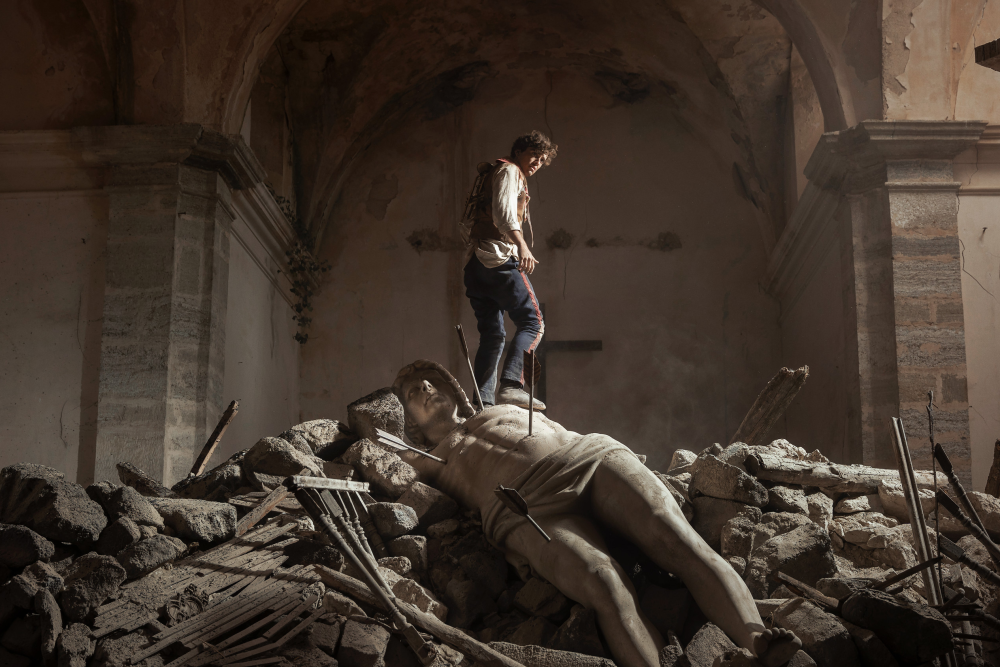
La Bola Negra is an intricate tapestry, weaving together the stories of three gay men across three different times — 1932, 1937, and 2017 — in a way that feels simultaneously grandiose and intimate. It’s difficult to distill into a simple synopsis, functioning as a historical epic, preservation, and expansion.
Directors Javier Ambrossi and Javier Calvo, collectively known as Los Javis, draw upon two texts as inspiration for the film. The 1932 timeline is inspired by an unfinished play of the same name by Federico García Lorca. García Lorca, a famous playwright and poet, only completed four pages of the work prior to being assassinated by Nationalist forces for being gay and a socialist.
This particular storyline follows a young man named Carlos (Milo Quifes) who is blackballed from joining a casino in Granada due to rumors that he is a homosexual. The film expands upon the surviving four pages, working to both preserve and restore the original novel.
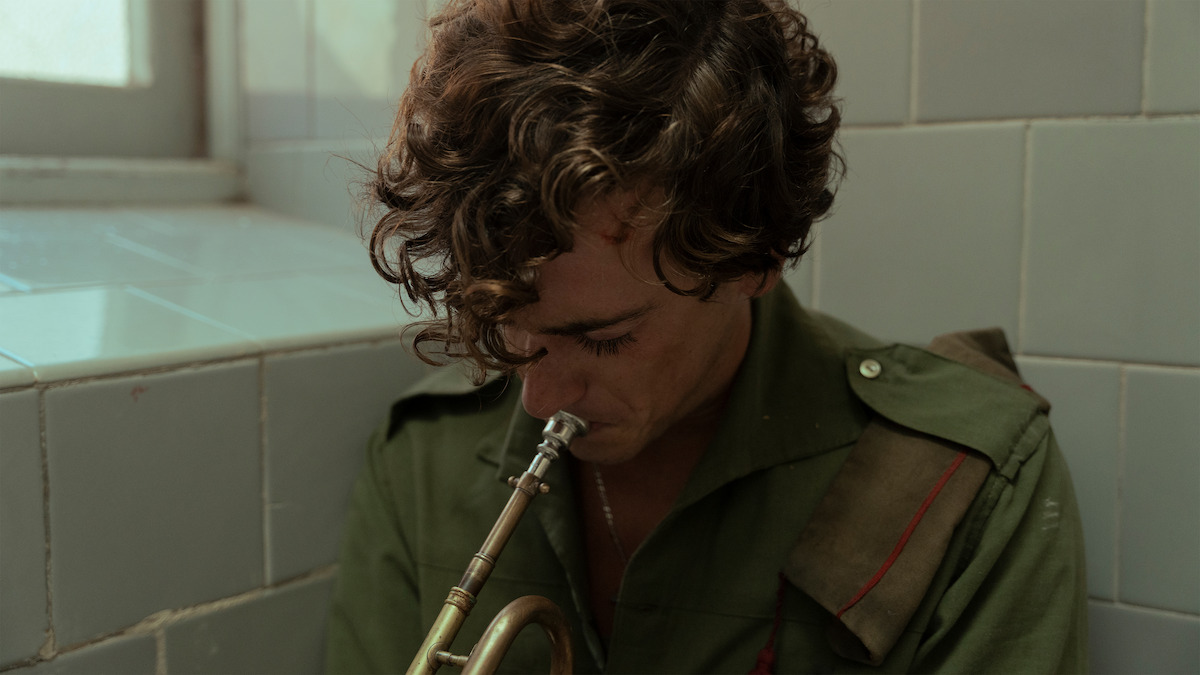
In 1937, we follow Sebastián (Guitarricadelafuente), a musician forced to join the Nationalist army during the Spanish Civil War after an attack on his village. He is tasked with monitoring a prisoner of war, Rafael (Miguel Bernardeau). Despite their presumed political divide, the two form a bond.
This narrative is loosely inspired by the play La piedra oscura by Alberto Conejero, who also cowrites the film. The 2017 timeline serves almost as a stand-in for Conejero’s own life and experiences as writer Alberto (Carlos González) reckons with an unexpected inheritance from his estranged grandfather.
The three timelines intersect and interject in almost a dreamlike way, making the whopping one hundred fifty-five minute runtime move smoothly. Thanks to Alberto Gutiérrez’s seamless editing, the film shifts between time periods fluidly, uplifting the ideas of legacy, lineage, and the evolution of queer identity at the center.
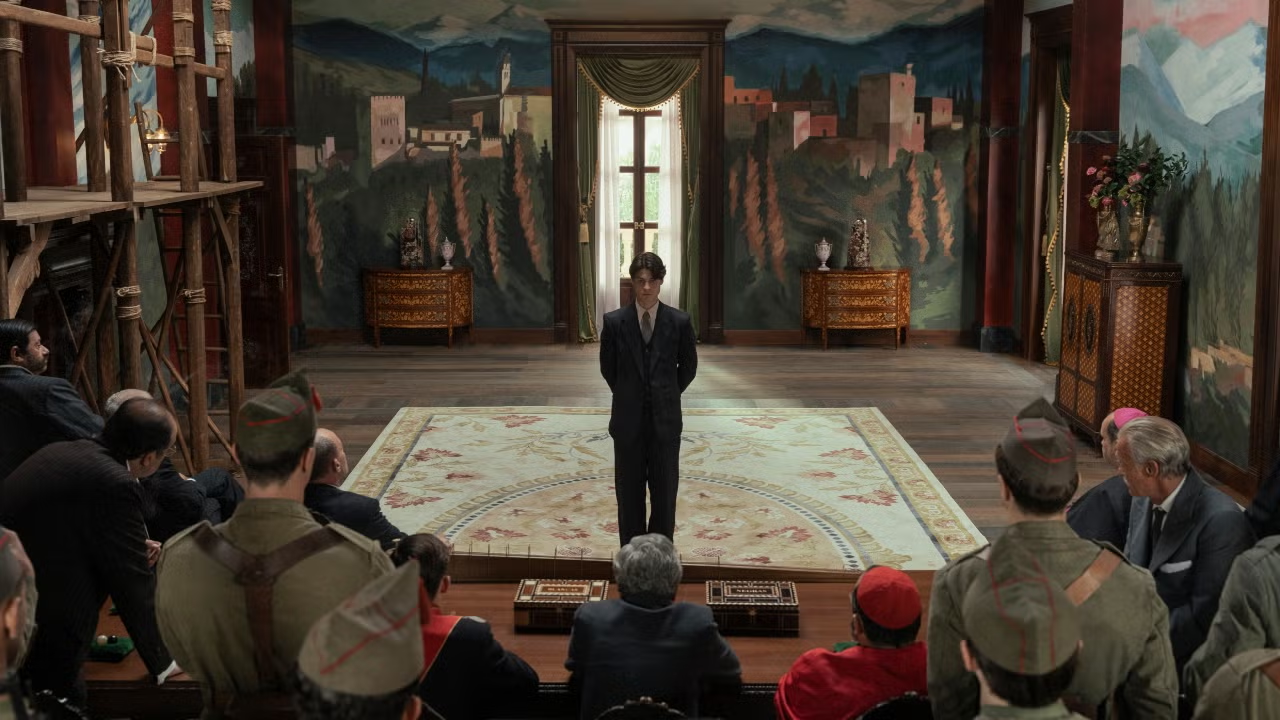
Sebastián, Carlos, and Alberto all deal with suppression and an intense struggle to embrace their lives fully. While Carlos and Sebastián are forced to bury their identities by the systems around them, Alberto’s suppression is self-inflicted.
Gutiérrez positions their respective journeys in way that both informs and juxtoposes each other. Queerness is a unique experience and while the isolation of queerness is felt across the community, it manifests differently.
The edit also highlights the pain-laden path that paved the way for modern queer people to exist in the way they do now. There’s a frustrating dichotomy presented between people who were not allowed to live fully and people who have the ability to and will not.

Los Javis demand your patience, taking care to firmly establish each timeline and their respective characters. Some might take issue with the perceived lack of structure initially. But, when the connections unfurl, the film ascends to a breathtaking new level, allowing each thread to resonate with resounding clarity.
This connective tissue is bolstered by an ensemble that creates strikingly intricate characters who revel in their respective interiority.
Guitarricadelafuente, in his acting debut, demonstrates remarkable control in every scene. Sebastián is on the quieter side, but Guitarricadelafuente brings his thorny, internal struggle to the surface with thoughtful physicality. That battle becomes palpable when he’s in the presence of Bernardeau’s warm Rafael.

González will break your heart as Alberto, a man who hardens himself to everyone around him. He revels in facts over feelings, but González does not use his stoicism as a crutch. He imbues something much deeper in Alberto that becomes tangible when he demonstrates rare moments of softness.
Penélope Cruz practically steals the show in a luminous turn and Glenn Close maximizes her limited screen time beautifully as well. The real secret weapon of the ensemble is Lola Dueñas who plays Teresa, Alberto’s mother. She unabashedly embraces the ugly ways in which Teresa’s pain manifests, but never makes her an inaccessible character.
The subtle characterizations lend themselves beautifully to the theatrical compositions, creating poetic imagery. Gris Jordana’s cinematography frames the brutality on screen with with an elegance that reflects the contrasting expressions of masculinity on display within the film.
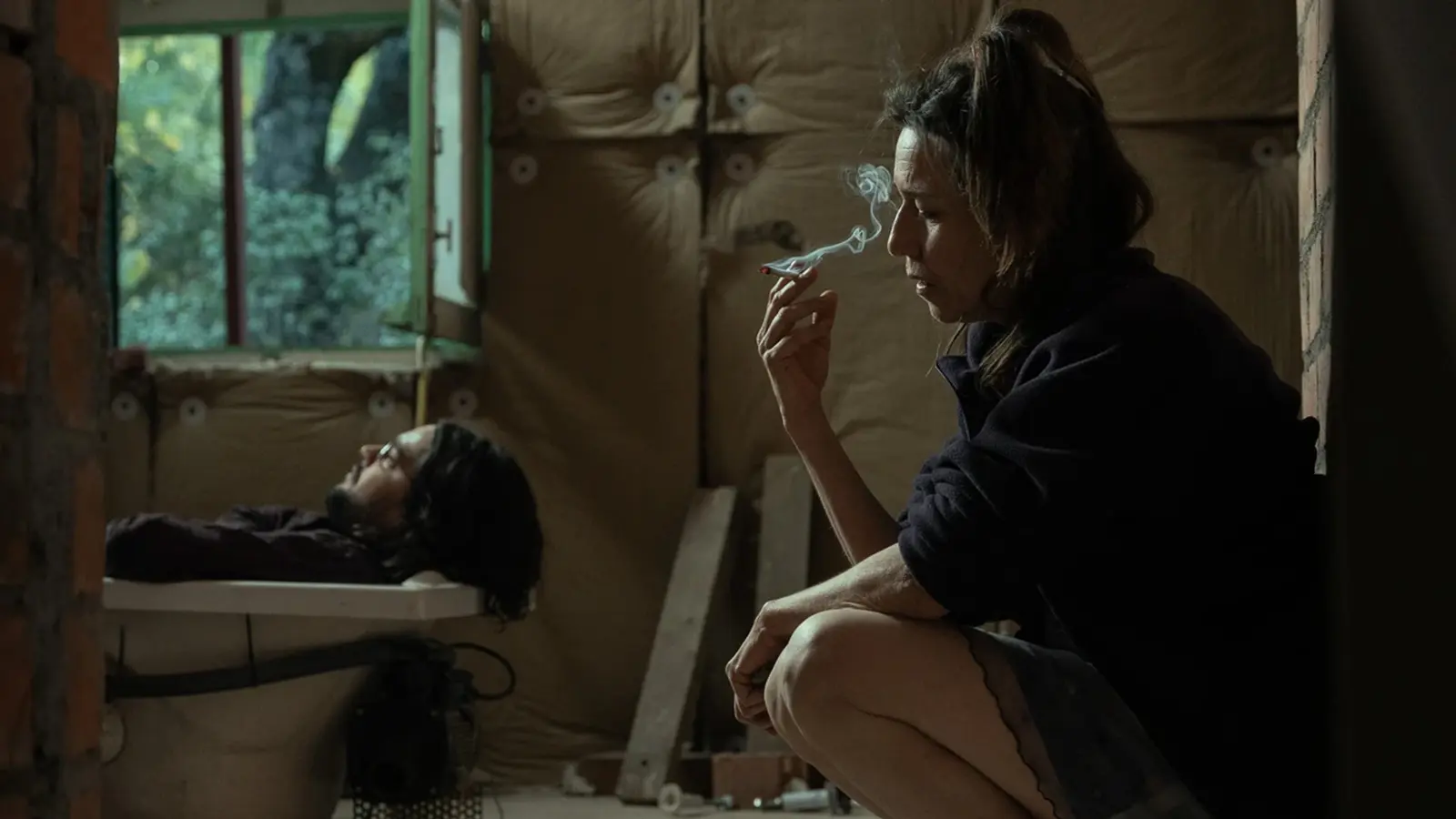
Everything feels intentional, building toward an emotional and profound third act. The messaging teeters into heavy-handed territory, especially in the final stretch where it does feel like the film is ending multiple times, but the emotion feels so earned, it almost doesn’t matter.
La Bola Negra, at its core, is about three men who want to be seen. At one point, Carlos laments, “What if they don’t find me?” and that ache coats the entirety of the film. We fully bask in the despair of having to hide and realizing that we haven’t lived until it’s too late, thus relegating our memory to the shadows too.
But Los Javis craft a profound excavation of queer legacy and identity. They emphasize the duty of younger generations to excavate and carry on the legacies of those who weren’t allowed to live fully. They also affirm the vitality of art in keeping memory alive both within the film and by making the film itself.
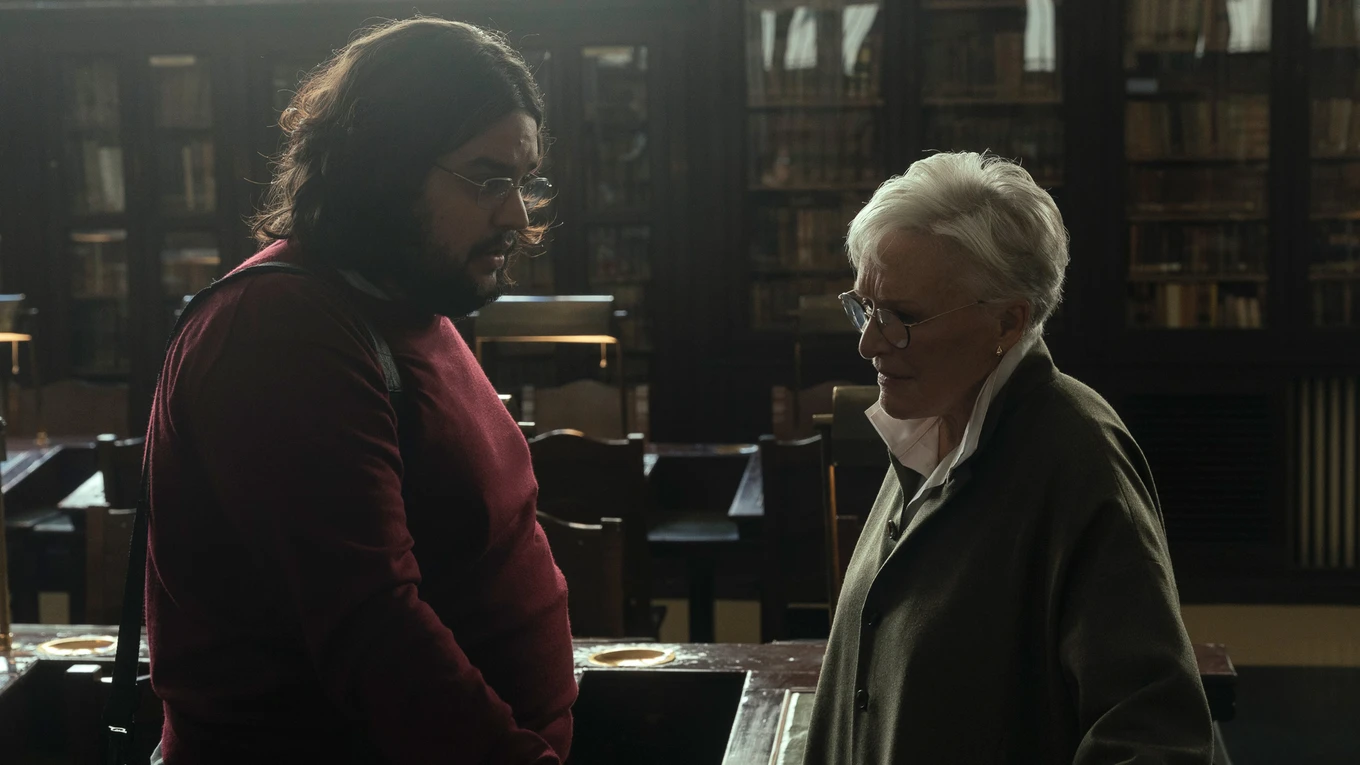
La Bola Negra is riddled with anguish. However, much like the queer experiences its depicting, it ultimately manages to find the light and bask in it. There is pain, yes, but there is also joy to be found once you are allowed to embrace yourself fully.
La Bola Negra opens in theaters October 16th.
Follow us on X and on Instagram!
Like us on Facebook!
Adam Patla

Adam grew up less than 3 minutes away from a movie theater so he was always destined to love all things entertainment. He studied Broadcast & Cinematic Arts at Central Michigan University before working as a talent agent in the Chicago area until 2020. During lockdown he began discussing film and television on TikTok where he cultivated a platform of over 50,000 followers. He is currently a member of Chicago Indie Critics.